
Syria’s Cultural Heritage is Slowly Recovering,
but Some Scars Will Never Heal
14 October 2026
Few sectors reflect Syria’s story of loss and resilience as profoundly as its cultural heritage. In recent months, both tangible progress and symbolic gestures of renewal have begun to emerge across the country. Museums are reopening, archaeological sites are being restored, and new conservation initiatives are breathing life back into places once threatened by conflict. These developments inspire cautious optimism, reinforced by events such as French President Emmanuel Macron’s recent visit and the restitution of archaeological treasures; yet they also serve as reminders of the immense cultural damage inflicted by more than a decade of war. As shown by a recent study, the scale of destruction suffered by the country’s heritage sites is vast, revealing the devastating impact of damaged monuments, the trafficking and looting of antiquities, and the displacement of communities that once safeguarded these cultural landscapes.
As Syria navigates this fragile period of transition, the protection and restoration of its cultural heritage have become more than a matter of preserving the past. They represent an investment in social cohesion, economic recovery, and national identity. The road ahead remains long and uncertain, but each restored monument, recovered artifact, and reopened museum stands as a testament to the enduring resilience of Syria’s people and to the vital role that culture can play in rebuilding a nation.
France Returns Archaeological Treasures
French President Emmanuel Macron’s landmark visit to Damascus last July marked the first visit by a Western European head of state since Syria's leadership transition. The high-profile diplomatic stop comes as Syrian institutions actively work to reintegrate the country into the international community following the collapse of the Bashar al-Assad regime in December 2024. For the occasion, France returned 23 Syrian archaeological treasures that had remained in Paris for nearly fifteen years after being loaned for an exhibition of Syrian antiquities at the Arab World Institute in Paris in 2011. The collection embodies the extraordinary cultural diversity and historical depth of Syria, spanning civilizations from prehistory to the Islamic era: “They date from the ninth millennium B.C. to the 14th and 15th centuries A.D. Every object represents a distinct chapter in Syria's history” said Nivine Saadeddine, curator at the National Museum of Damascus. Among the returned artifacts are Roman bronze objects, Byzantine and Islamic works, Palmyrene funerary reliefs that once decorated monumental tombs in the ancient oasis city of Palmyra, and a richly coloured mosaic panel from Damascus’s Umayyad Mosque (The Jerusalem Post 2026, Türkiye Today 2026).
Maamoun Abdulkarim, Syria’s former director-general of antiquities and museums, declared that already in 2014, under Assad’s regime, some efforts were made to get back the artifacts, without getting any response from the France authorities due to Syria diplomatic isolation, causing also heavy pressure and threats from the Syrian security forces at that time. “I am very happy that, despite everything that happened, the war is over, Syria is reopening to the world and cultural exchange is returning,” he said (NDTV 2026, TCN 2026).
Together, these pieces testify to the succession of cultures that flourished on Syrian soil, including Mesopotamian, Nabataean, Palmyrene, Roman, Byzantine, and Arab-Islamic civilizations. Their restitution thus constitutes both a cultural and a political gesture, symbolizing the recovery of irreplaceable elements of Syria’s national heritage while reflecting a renewed international engagement with the country and its historical legacy, which has long been distinguished by a rich cultural and religious diversity, a delicate balance that Syria now seeks to restore. Abdulkarim said that the return from France sends “a positive message for the future” and could help encourage further international cooperation to recover Syria’s stolen heritage (TCN 2026).
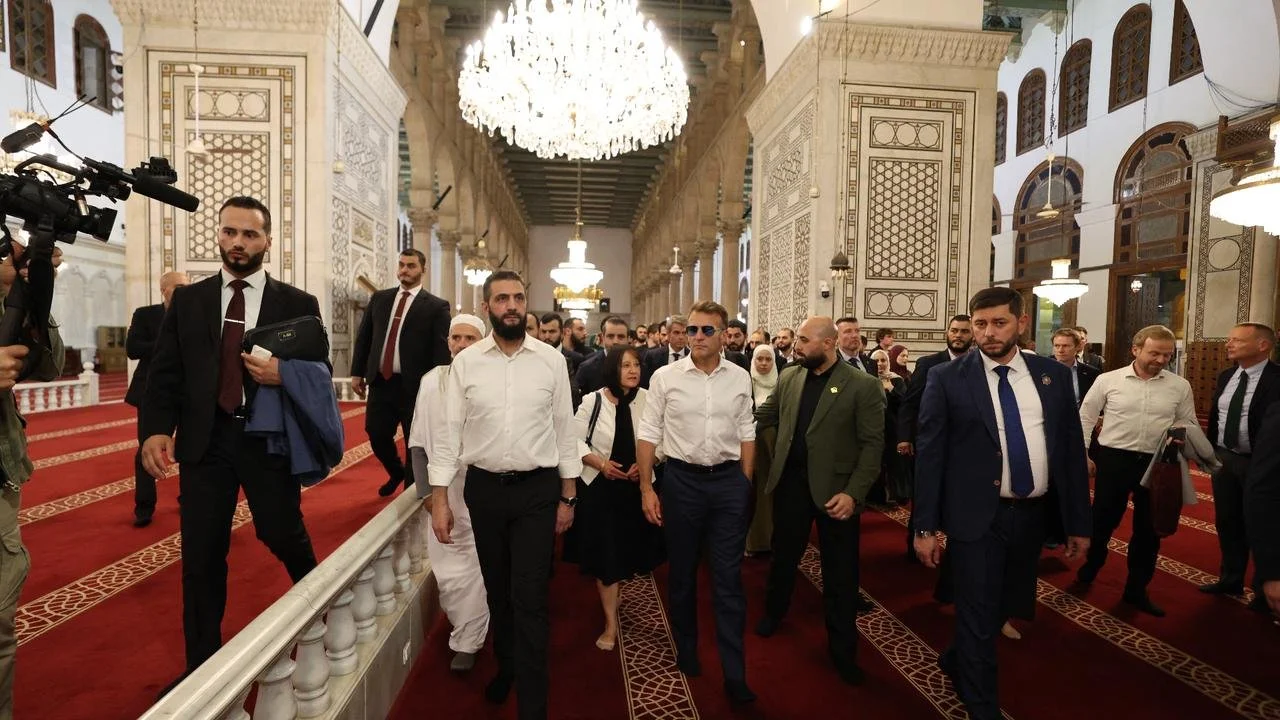
Figure 1. French President Emmanuel Macron and Syrian President Ahmad al-Sharaa visited the Umayyad Mosque in Damascus following a working dinner, providing a highly symbolic public moment ahead of their official meetings. Source: AFP. ”Two presidents, a mosque, a diplomatic reset: Macron’s Syria visit in photos”, Türkiye Today, July 07, 2026 https://www.turkiyetoday.com/region/two-president-a-mosque-a-diplomatic-reset-macrons-syria-visit-in-photos-3223407?s=3.
New Studies on the Looting and Damage of Syria’s Archaeological Heritage
Meanwhile, Abdulkarim pointed out that thousands of Syrian artifacts stolen from archaeological sites during the war are still located abroad. “Recovering them will require years of diplomatic work,” he said. New research has shed light on the scale of the destruction and looting suffered by some Syria's archaeological sites during (and even after) the civil war. Indeed, a recent study conducted by researchers at Dartmouth University employed high-resolution satellite imagery to assess nearly 200 archaeological sites across the country, including major cultural centers such as Palmyra, Mari, and Ain Dara. The analysis identified four principal forms of damage: traditional looting, mechanized looting involving bulldozers, militarization, and construction-related activities, including the establishment of temporary encampments. Most notably, the study found evidence of looting at 59% of the surveyed sites between 2015 and 2025, a dramatic increase compared with the 13% documented during the earlier years of the conflict (Casana et al. 2026, TCN 2026).
Particularly alarming has been the rise of mechanized looting in parts of northern Syria, especially in areas controlled by Türkiye or affiliated militias, where archaeological sites have been systematically bulldozed in the search for valuable artifacts. Formed through millennia of continuous human occupation, these sites preserve fragile archaeological strata whose destruction is irreversible (Casana et al. 2026).
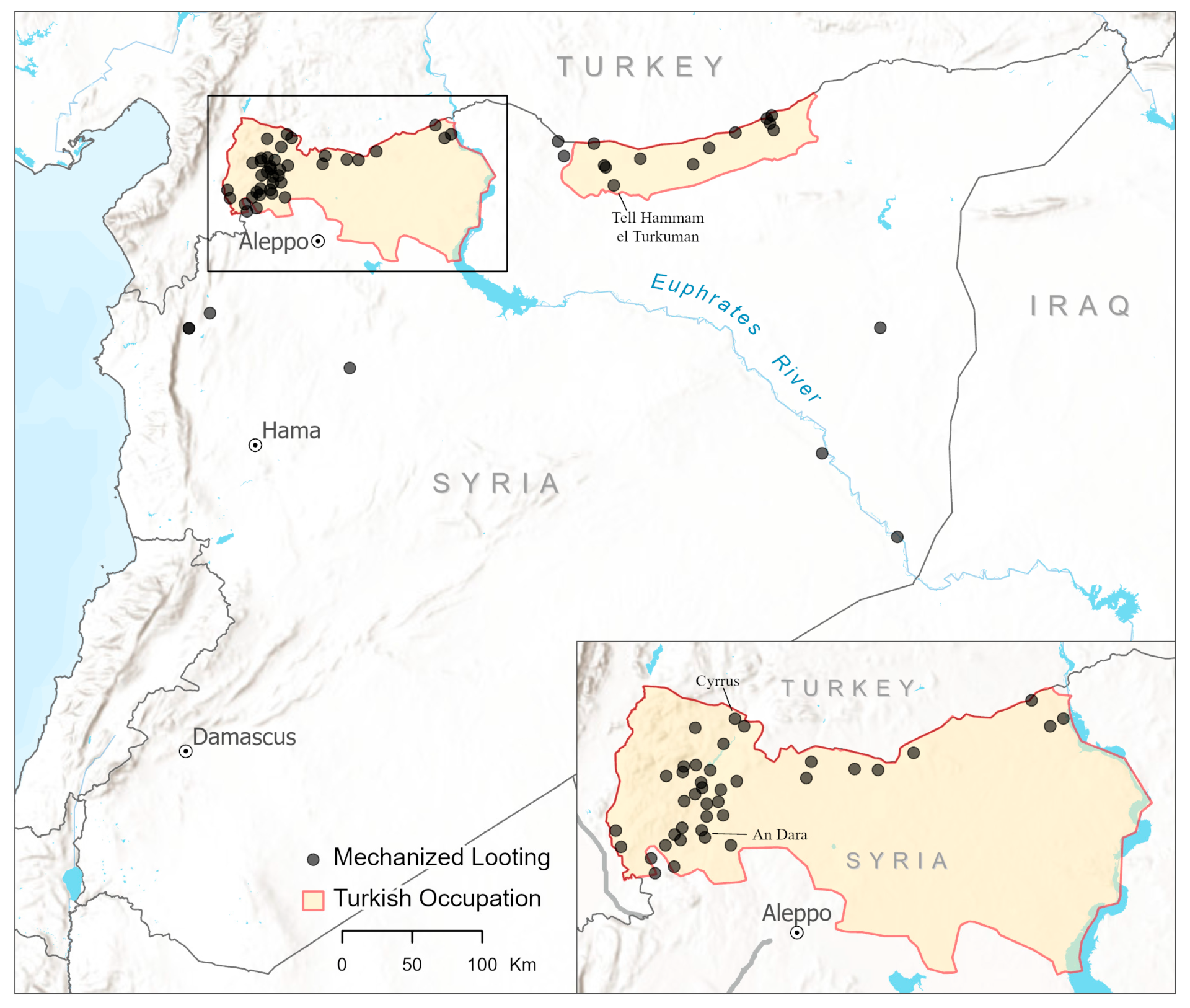
Figure 4. Mechanized looting characterized by systematic bulldozing, documented between 2019 and 2025.
Source: Casana et al 2026: 209.
The site of Ain Dara, famous for its Iron Age temple and monumental lion sculptures, illustrates the severity of the problem: satellite imagery documented extensive bulldozing between 2019 and 2022, leaving much of the site devastated. The study's authors argue that documenting such damage is essential for guiding future conservation strategies and prioritizing recovery efforts. As lead researcher Jesse Casana notes, many damaged sites now require systematic assessment before any further excavation or restoration can take place (Casana et al. 2026).
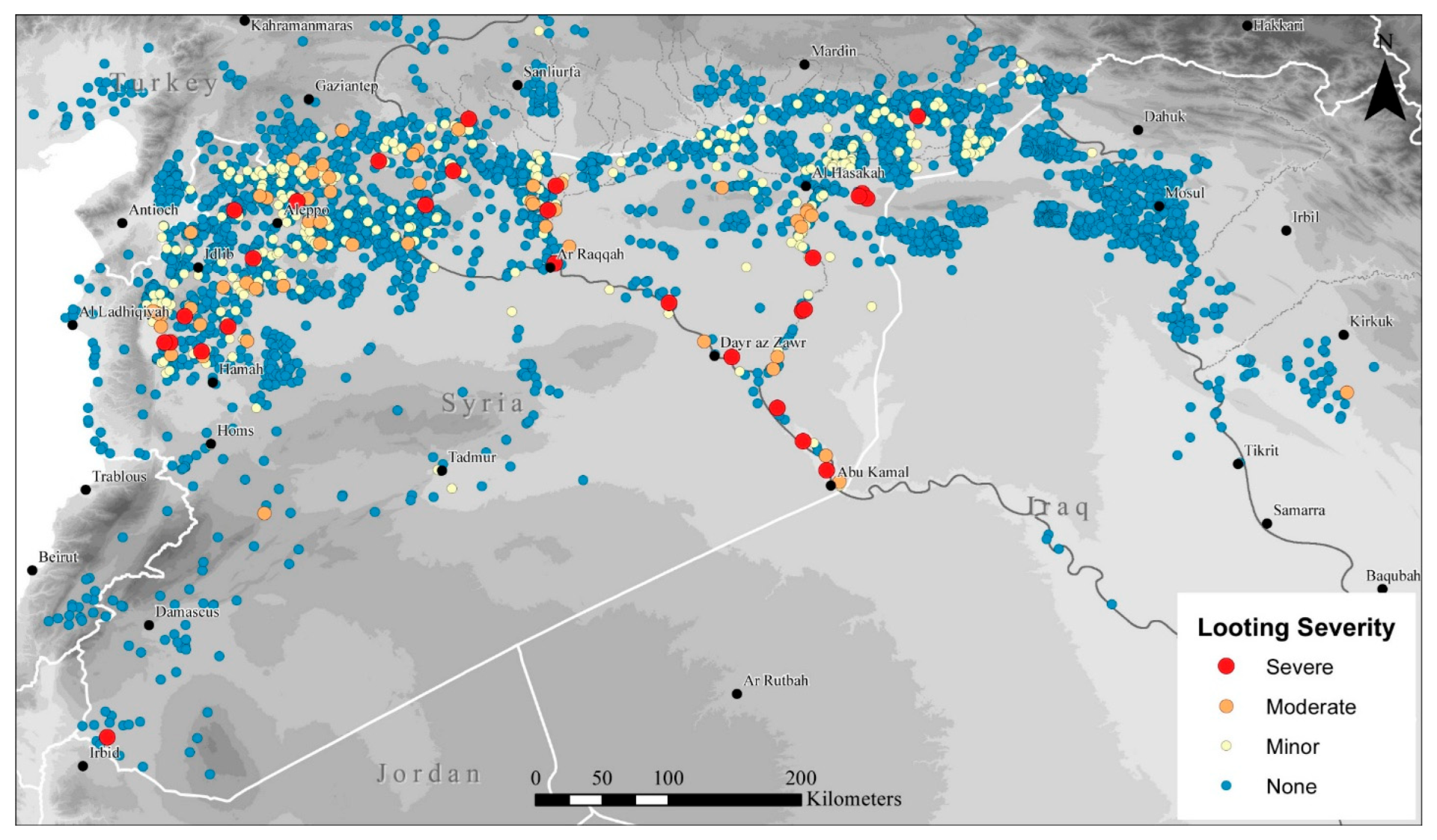
Figure 3. Looting incidents documented at approximately 5,000 archaeological sites in Syria and neighbouring regions between 2011 and 2016. Source: Casana et al 2026: 209.
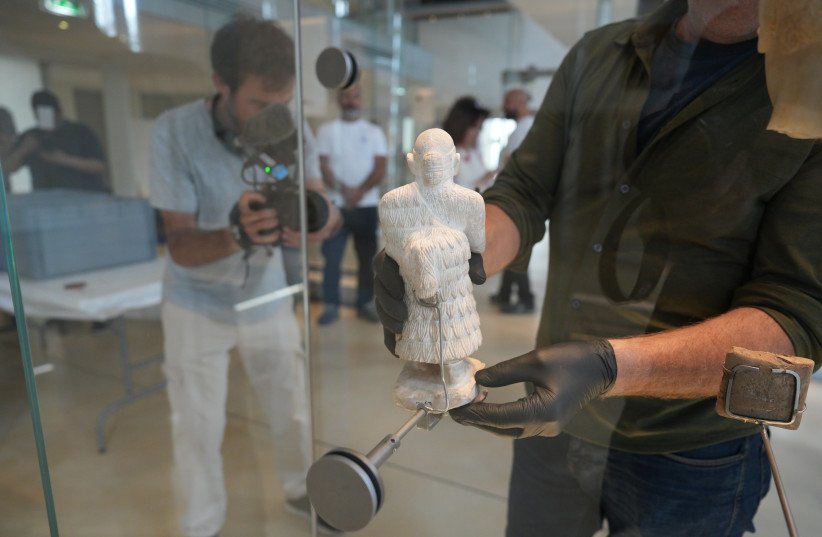
Figure 2. Statue of Ishqi-Mari, a King of the second Mariote kingdom, from behind, being returned to Syria by France. Source: Sela-Eita Miriam, “France returns 23 artifacts to Syria after 15 year-long loan amid Macron’s historic Damascus visit”, The Jerusalem Post, July 26 2026. https://www.jpost.com/international/article-903326.
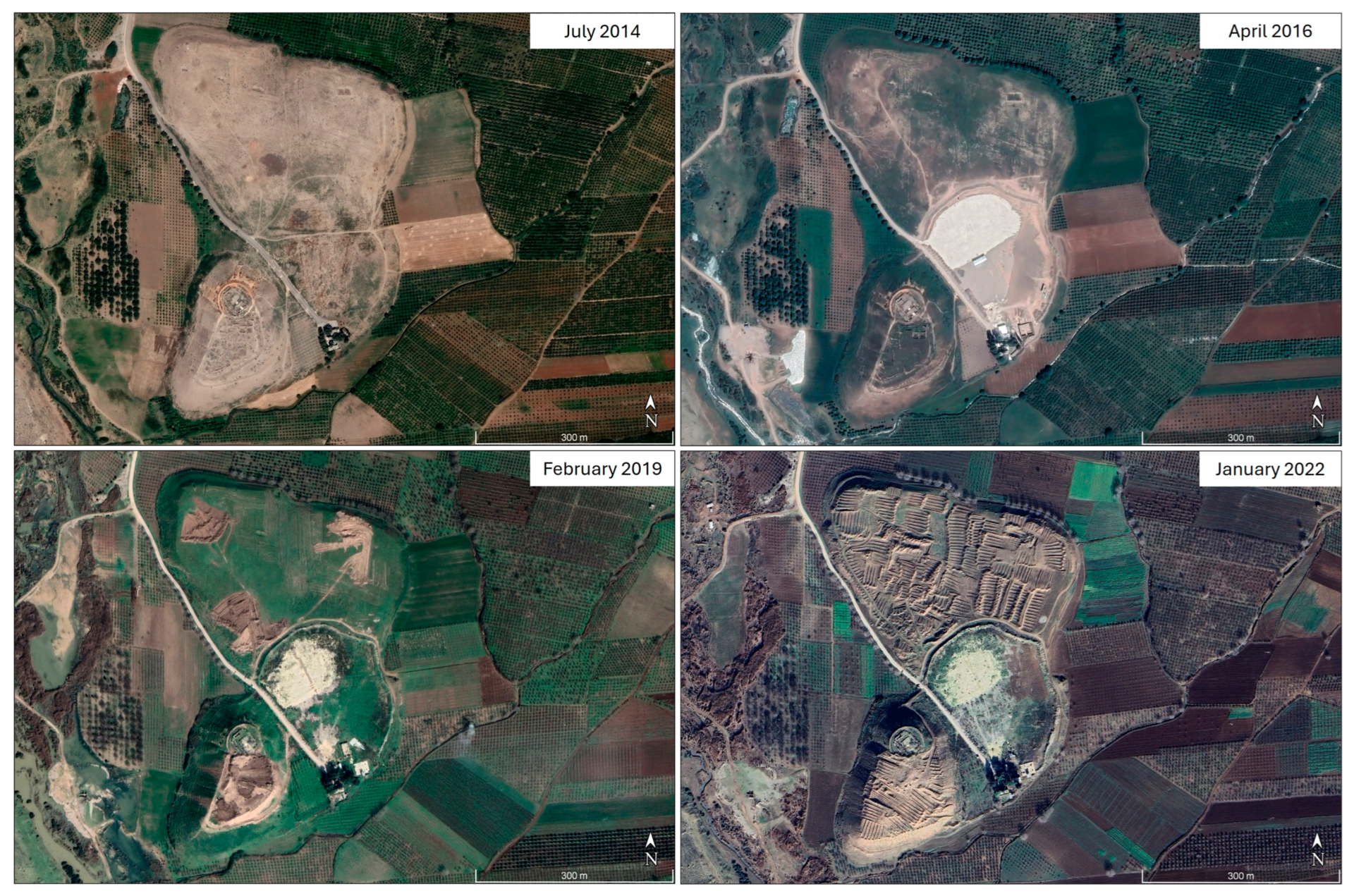
Figure 5. Chronology of damage at the Iron Age site of Ain Dara, northwestern Syria, as revealed by satellite imagery. July 2014 shows the site in a largely undisturbed condition; by April 2016, a military compound had been constructed in the southeastern portion of the site; and by February 2019, substantial evidence of looting and site degradation had become apparent. Source: Casana et al 2026: 209.
Particularly interesting is the article Beyond the Battlefield: Assessing Cultural Heritage Damage in Tartus, Syria (Montesanto et al. 2026), which highlights how research on Syrian cultural heritage has traditionally focused on areas directly affected by the war, paying less attention to the rest of the country. The study shows that in Tartus, a coastal region largely spared from direct armed conflict, heritage degradation is instead driven primarily by long-term socio-economic pressures. Unlike areas such as Daraa and Al-Hasakah, where looting, military activity and land conversion closely followed the intensity of conflict, Tartus experienced significant damage from agricultural expansion, urbanisation and displacement. Between 2010 and 2019, cultivated land expanded through ploughing, deforestation and the construction of greenhouses, reflecting growing pressure to increase food production and weakening local regulatory frameworks. Internal displacement further accelerated urbanisation and intensified pressure on available land.
This has also affected archaeological tells, artificial mounds formed over centuries through successive layers of human settlement. In an increasingly urbanised landscape, these sites can become some of the few remaining open areas available for cultivation, greenhouses and olive groves. Several tells have consequently been severely altered or even almost completely erased by earthmoving and construction, particularly between 2020 and 2022. Pollution, earthquakes and looting have added further pressure, demonstrating that the degradation of Syria’s archaeological heritage cannot be understood solely through the lens of armed conflict.
Tourists Returning to Palmyra
Alongside efforts to document and address the widespread destruction of cultural heritage, there are also encouraging signs of revival. More than a decade after war and extremist violence devastated the ancient oasis city of Palmyra, visitors are gradually returning to the site. New cultural initiatives reflect a cautious reopening of one of Syria's most renowned archaeological landscapes. Although many monuments still bear the scars of conflict and significant restoration work remains to be completed, the return of visitors carries considerable symbolic significance. It represents not only a step toward revitalizing local tourism and economic activity but also part of a broader process of reconnecting Syrians with a heritage that came to symbolize the profound cultural losses inflicted by war (France24 2026, Muslim Network 2026).
New Plans for Aleppo
Aleppo has likewise emerged as a central focus of Syria's post-war cultural recovery: recent reconstruction initiatives seek to rebuild not only the city's physical infrastructure but also its historic identity and social fabric. In 2026, authorities presented the first phase of the Greater Aleppo Vision (رؤية حلب الكبرى), a long-term planning framework extending toward 2040 and 2060 designed to support housing, economic development, and urban regeneration while facilitating the return of displaced residents. Parallel efforts are underway in the UNESCO-listed Old City, where restoration projects target historic souks, public spaces, and heritage buildings that sustained extensive damage during the conflict. Supported by local institutions and international partners, these initiatives aim to safeguard Aleppo's distinctive architectural heritage while revitalizing the commercial and social life that once made the city one of the Middle East's foremost urban centres. Increasingly, Aleppo is being regarded as a test case for post-conflict reconstruction, illustrating both the opportunities and challenges of balancing heritage conservation, urban development, and community recovery (Aqar Alab 2026, SANA 2026).
A particularly important perspective in this process is that of Aleppo’s residents themselves. Isakhan and Meskell (2022), based on a survey of around 1,600 residents, highlight a strong sense of pride in Syria’s cultural heritage, with 98% of respondents expressing this sentiment. At the same time, the findings show that heritage reconstruction is not necessarily perceived as the most urgent priority, with security, essential services, employment, and poverty taking precedence. When considering reconstruction, residents tend to favour approaches that restore buildings to active community use rather than simply reproducing their historical appearance. The study also underscores the importance of local participation in decisions about the city’s future, challenging exclusively top-down approaches and suggesting that Aleppo’s recovery will depend not only on rebuilding its physical and architectural fabric, but also on giving its communities a meaningful role in shaping it.
Looking Forward
The new research emerging from Syria therefore offers a paradoxical picture. On the one hand, it marks a new beginning: archaeological sites are being mapped again, previously inaccessible evidence is being studied, objects are being recovered, and international cooperation is gradually resuming. On the other, this renewed attention is revealing losses that cannot simply be repaired. Some monuments can be reconstructed, artefacts can be returned, and archaeological landscapes can be documented. But an erased tell, a looted site or a historical landscape transformed beyond recognition cannot be brought back to the condition in which it was found.
Perhaps this is what makes the current moment particularly important. The question is no longer only how to rebuild Syria’s heritage, but how to understand what has happened to it. The damage did not begin and end with the battlefield, and its consequences are not always visible in ruined buildings. Sometimes heritage disappears beneath a greenhouse, an olive grove or a new construction site; sometimes it survives only in a photograph, a database or the memory of the people who once lived alongside it. As Syria enters a new phase of research and reconstruction, documenting these absences may therefore be just as important as restoring what remains. The future of Syrian heritage will not simply be a return to the past, but an attempt to build a relationship with a past that has itself been permanently changed.
References
Aqar Halab. “Aleppo Master Plan and the Greater Aleppo Vision 2026: What Is Confirmed and What Is Not”, 2026. https://www.aqarhalab.com/en/aleppo-master-plan-2026.
Casana, Jesse; Jasper A. Clayton, Mary Lamberth and Carolin Ferwerda. “Remote Sensing-Based Analysis of Archaeological Site Damage in Syria: Revisiting a Post-War Landscape”. Heritage 2026, 9(6), 209. https://doi.org/10.3390/heritage9060209.
France 24. “Visitors Return to Syria’s Palmyra after Years of War and Destructions.” August 19, 2026. https://www.france24.com/en/video/20260819-visitors-return-to-syria-s-palmyra-after-years-of-war-and-destructions.
Isakhan, Benjamin and Lynn Meskell. “Local perspectives on heritage reconstruction after conflict: a public opinion survey of Aleppo”. International Journal of Heritage Studies 2024, 30(7), 821–839. https://doi.org/10.1080/13527258.2024.2342288.
Montesanto, Mariacarmela; Nicodemo Abate, and Maria Pucci. “Beyond the battlefield: assessing cultural heritage damage in Tartus”, Syria. Levant 2026, 58(1), 90–110. https://doi.org/10.1080/00758914.2026.2615592.
Muslim Network TV. “Visitors Return to Syria’s Ancient City of Palmyra after Years of War.” August 20, 2026. https://www.muslimnetwork.tv/visitors-return-to-syrias-ancient-city-of-palmyra-after-years-of-war/.
NDTV. “France Returns 23 Syrian Treasures after 15 Years as Macron Visits Damascus.” July 10, 2026. https://www.ndtv.com/world-news/france-returns-23-syrian-treasures-after-15-years-as-macron-visits-damascus-11752610.
SANA, “Aleppo advances restoration of Old City to preserve Syria’s heritage, revive economy”, July 24, 2026. https://sana.sy/en/culture-and-arts/2331618/.
Sela-Eitam, Miriam. “France returns 23 artifacts to Syria after 15 year-long loan amid Macron’s historic Damascus visit”. The Jerusalem Post. July 26, 2026. https://www.jpost.com/international/article-903326.
Türkiye Today. “Two Presidents, a Mosque, a Diplomatic Reset: Macron’s Syria Visit in Photos.” July 07, 2026. https://www.turkiyetoday.com/region/two-president-a-mosque-a-diplomatic-reset-macrons-syria-visit-in-photos-3223407?s=1.