
The Portal of Amateur Collaborators:
A New Cooperative Model for Amateur Metal Detecting and
Professional Archaeology in South Moravia
23 September 2026
Introduction
Since the development of affordable, commercially available metal detectors in the 1970s, metal detecting has become a popular pastime in many countries in the Global North. While the activity draws practitioners with varied personal motivations, for many it provides an opportunity to engage directly with historical material culture and “act creatively as producers of their own local and personal histories” (Dobat et al. 2020). Commercial metal detectors have also been increasingly used in archaeology, where they can efficiently locate ferrous and nonferrous artefacts in both survey and excavation (Hammett 2025). However, the methodology and motivations of amateur detectorists and professional archaeologists have often seemingly been at odds. In many national and regional contexts this has led to polemical relationships between the two groups, although programs aimed at reconciling these differences and systematizing amateur detecting within traditional archaeological fieldwork are being increasingly pursued on the national level (Dobat 2013; Dobat et al. 2022; Pajdla et al. 2023; Wessman et al. 2022, 2023).
This research draws upon secondary scholarship, primary insights, and interview testimony to evaluate the strengths and limitations of one such program, the Portal of Amateur Collaborators, or Portál Amatérských Spolupracovníků (PAS) in the Czech Republic. It will be demonstrated that, based on evidence from the South Moravia region, the PAS is heavily reliant upon interpersonal relationships between professional archaeologists and citizen collaborators, supported by digital infrastructure. Resultant partnerships reflect a significant and productive progression from previous noncollaboration, which may lay the groundwork for ongoing collaboration aimed at protecting the cultural heritage of the Czech Republic. This research evaluates the program only five years after its official launch but has identified several major limitations to its future development. The underlying capacity issues endemic to the Czech archaeological system present a major challenge to the program’s long-term expansion and effectiveness. Furthermore, the system’s current low use rate among metal detectorists calls into question whether it can effectively appeal to the 50,000 amateurs operating in the Czech Republic while maintaining the rigorous methodological requirements of archaeological research, although this is undoubtedly in part a result of its recent introduction.
Discussion of Evidence
This essay draws upon existing secondary scholarship discussing the PAS (Komoróczy 2022; Komoróczy et al. 2024; Pajdla et al. 2023), as well as an in-person interview with Alina Szabová, an archaeologist employed by the Centre for Protohistoric Archaeology at the Institute of Archaeology of the Czech Academy of Sciences in Brno, or Archaeologický ústav AV ČR, Brno (ARUB).
Szabová is currently based in Dolní Dunajovice, South Moravia, and acts as the primary liaison between ARUB and ‘citizen collaborators’ in the region. As Szabová and ARUB are among the most active institutional partners in the PAS program, she is uniquely positioned to offer insight into the benefits and challenges of the program’s large-scale implementation (Pajdla et al. 2023). Her account provided valuable elaboration to published scholarship, but it must be acknowledged that Szabová holds a positive bias towards the program and collaboration with amateur metal detectorists in general. Furthermore, her experience is based on a regional perspective and collaboration with ARUB, only one of many archaeologically licensed organizations that collaborate with amateur detectorists. Published scholarship dedicated to the PAS or comparable national collaborative programs is generally written by those involved in their development, and as such tends to hold a positive view and advocate for the continued use of such systems. The evidence is also biased towards the perspective of archaeologists, as the author was unable to secure an interview with a citizen collaborator. However, a questionnaire created and circulated by Dr. Balázs Komoróczy (2022), ARUB’s director, received responses from approximately 75-150 detectorists active in the Czech Republic, which offer insight into the detectorist perspective.
The Czech Legal Landscape
In the Czech Republic, archaeological artefacts are defined under Act No. 20/1987 on State Monument Care (CZ) as “a thing or set of things that provide evidence or relics of human life and activities from the early stages of human evolution to the modern era and was usually preserved underground”. “The modern era” is not officially defined, but the Ministry of Culture has declared finds from the First and Second World Wars to be archaeological artefacts, so 1945 is the practical limit of archaeological value (Pajdla et al. 2023).
The same law stipulates that archaeological artefacts are the exclusive property of the Czech state, although in practice many are owned by regional and local governments and public institutions, such as museums (Pajdla et al. 2023). Archaeological research can only be performed by organizations licensed by the Ministry of Culture and approved by the two state-affiliated Archaeological Institutes of the Academy of Sciences of the Czech Republic in Prague (ARUP) and Brno (Komoróczy 2022). As of September 2026, 103 such organizations are listed on the online Archaeological Map of the Czech Republic (AMCR), administered by the two aforementioned institutes (Archaeologický informačni system České republiky, Archaeologický Ústav AV ČR, Praha, and Archaeologický Ústav AV ČR, Brno n.d.). Unlicensed individuals are legally prohibited from owning archaeological finds or removing them from the ground, but in practice this is not strictly enforced (Pajdla et al. 2023). However, private individuals – including metal detectorists – can participate in archaeological fieldwork through partnerships with licensed organizations, which provides the legal basis for collaboration between amateur detectorists and professional archaeologists explored in this paper (Pajdla et al. 2023).
Background on Metal Detecting in the Czech Republic
As in many countries today, the restrictive legal framework in the Czech Republic is undermined by a lack of effort and resources necessary to enforce it (Dobat et al. 2020). Certainly, the prevalence of metal detecting in the Czech Republic today attests to the failure of enforcement efforts. The activity has rapidly gained popularity in both the Czech and Slovak Republics since the Velvet Revolution in 1989, despite its illegality under Act No. 20/1987 (Mařik 2016; Pajdla et al. 2023). While the number of amateur detectorists active in the Czech Republic is difficult to quantify, estimates range from 30,000-50,000 (Alina Szabová, personal communication, August 21, 2026; Pajdla et al. 2023).
In the Czech Republic, many professional archaeologists have historically found themselves at odds with amateur metal detectorists. Opinions vary greatly within the archaeological community, but archaeologists have commonly felt that detectorists: threaten archaeological finds, are uninterested in context, do not have the knowledge to determine the importance of finds, and are motivated by personal enrichment (Mařik 2013). Conversely, many detectorists feel that archaeologists: are not able to present finds to the public, are overconfident in their approaches, sell things on the black market, and allow artefacts to be destroyed by poor storage conditions (Mařik 2013). These perspectives are not universal within either group, but they provide critical context for understanding current collaborative efforts.
These perspectives are undoubtedly generalized but are not completely baseless. Archaeological literature justifiably stresses the wide scale disappearance of material culture onto the black and gray markets due to illicit excavation by metal detectorists (Mařik 2013; Pajdla et al. 2023). It is difficult to quantify the scale of such removals, but some attempts to model the phenomenon in the Czech Republic estimate upwards of 100,000 cultural objects leave the ground illegally each year (Komoróczy 2022). It should not be assumed, however, that the primary motivation for most detectorists is personal profit. According to the questionnaire circulated by Komoróczy: "A substantial number of detectorists declared as their primary motivation a neutral interest in outdoor recreation or a positive goal of contributing to the knowledge of the past and the rescue of endangered movable monuments" (Komoróczy 2022). While it is likely that detectorists with malintent are underrepresented in a survey circulated by an organization responsible for protecting the cultural heritage they seek to steal, the predominance of ‘neutral’ or ‘positive’ motivations provide the fundamental basis for official collaboration.
From the perspective of amateur detectorists, the reasoning behind institutional procedures and limitations of licensed archaeological institutions are often unclear. The failure of communication and resultant enmity between detectorists and archaeologists, as well as the ongoing and irreplaceable loss of contextualized material culture and as such information about the past, are among the primary motivations for the creation of the Portal of Amateur Collaborators (PAS) in the Czech Republic.
Early Collaborative Efforts in South Moravia
The Portal of Amateur Collaborators was created in 2021 to facilitate official collaboration between metal detectorists and archaeologists in the Czech Republic. However, the program had its origins in unofficial collaboration between the two groups.
One common method of early collaboration has been termed “hunter-gatherers”, where archaeologists borrow finds from private (technically illegal) collections for the purposes of study or display (Mařik 2013). This informal system was problematic. The provenance of these artefacts was unreliable, and inconsistently shared finds did not offer a representative sample of historical material culture. Furthermore, the very nature of such collaboration ran the risk of legitimizing illegal collections and normalizing the illicit removal of material culture from the ground.
According to Szabová (personal communication, August 21, 2026), efforts to systematize collaboration in South Moravia were originally driven by Komoróczy, who was first approached by detectorists around 2009. These early connections were important as they established that at least some detectorists were interested in working with professional archaeologists. Capitalizing upon this and driven by “the enormous information potential of well-localized and professionally documented artifacts for the development of historical knowledge”, Komoróczy sought to institutionalize collaboration by encouraging local archaeological museums to act as partners for detectorists operating in their vicinity (Alina Szabová, personal communication, August 21, 2026; Komoróczy 2022).
This led to the launch of the “Joint Forces in Order to Discover the Common Archaeological Heritage of the South Moravian Region” program between ARUB and the South Moravia Region in 2018, which sought to bring together the Institute, detectorists, and local museums in order to establish good practice and ongoing collaborations with detectorists in the region (Komoróczy 2022). Outreach to detectorists in the form of “meetings, educational workshops and field activities, public lectures, production and distribution of printed and digital information materials” emphasized the importance of documenting finds and “archaeology’s gratitude and respect” for citizen collaborators (Komoróczy, 2022, 331). In South Moravia, this program was an important precursor for the establishment of the nationwide PAS.
The Portal of Amateur Collaborators in South Moravia
The Portal of Amateur Collaborators was launched in 2021 as part of the digital Archaeological Map of the Czech Republic, known as AMCR-PAS, operated jointly by ARUB and ARUP (Pajdla et al. 2023). Its stated goal “is the systematic collection of information on finds originating from the activities of amateur collaborators of archaeological sites.” (Archaeologický informačni system České republiky, Archaeologický Ústav AV ČR, Praha, and Archaeologický Ústav AV ČR, Brno 2021). The Portal currently has over 7,000 users, approximately 6,500 being citizen collaborators, although only about 3,000-4,000 have uploaded at least a single find (Alina Szabová, personal communication, September 2, 2026). It is used by the vast majority – if not all – of the roughly 500 professional archaeologists in the Czech Republic in some capacity, although all must use it to register fieldwork and do not necessarily accept collaboration with amateur metal detectorists (Alina Szabová, personal communication, September 2, 2026; Pajdla et al. 2023). However, the Portal comprises only the digital infrastructure of collaboration, which “occurs both within and outside AMCR-PAS” (Pajdla et al. 2023).
Collaboration is based around direct relationships between amateur detectorists and archaeologists employed by organizations licensed to perform archaeological fieldwork, usually local museums, universities, or scientific institutions (such as ARUB and ARUP) and codified by written contracts. Citizen collaborators are legally considered participants in archaeological fieldwork, although they generally operate independent of direct oversight. Collaborators receive training in basic methodology and recording finds, and additional specialized training on archaeological methods is available (Pajdla et al. 2023). Before going into the field, they must alert the archaeologist with whom they are working as to where they intend to detect (Alina Szabová, personal communication, August 21, 2026). If they do not do so and are stopped by authorities while in the field, they are subject to the same penalties as unaffiliated (i.e., illegal) detectorists: a verbal warning on the first offence, and a fine and potential confiscation of equipment on the second (Alina Szabová, personal communication, August 21, 2026).
For all finds of potential archaeological value, citizen collaborators are required to upload a photo and GPS coordinate at a minimum to the AMCR-PAS platform, and the finds themselves are handed over to the archaeologist during an annual meeting (Alina Szabová, personal communication, August 21, 2026; Pajdla et al. 2023). The collaborators are digitally linked to their partnered archaeologists, and their finds to specific survey projects (Pajdla et al. 2023). The data is structured with multilayered access, allowing ‘researchers’ (including citizen collaborators) to see most uploaded documents, while spatial data is limited to licensed archaeologists or AMCR archivists (Pajdla et al. 2023).
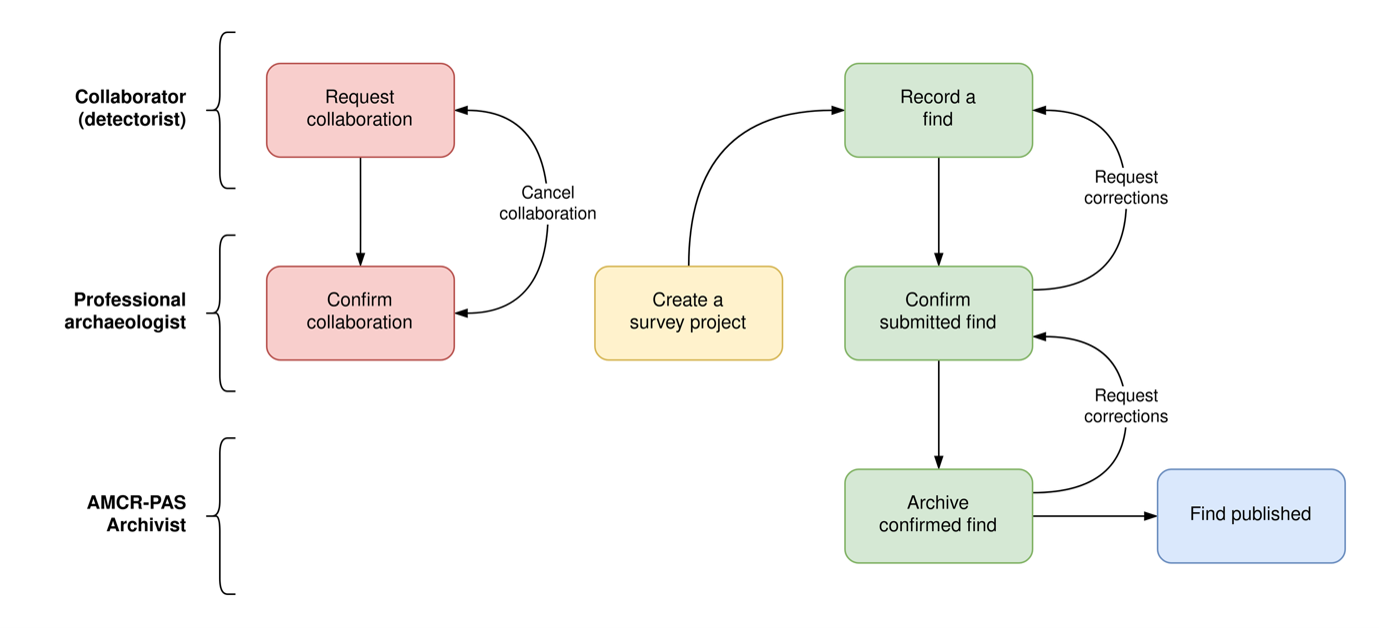
Figure 1: AMCR-PAS Digital Workflow (Pajdla et al. 2023).
Discussion
The Portal of Amateur Collaborators is one of several national programs which seeks to integrate amateur metal detectorists into archaeological investigations, capitalizing on a shared interest in the past to limit the loss of historical material culture while involving the public in the process of historical research. However, these programs require time and resource investment and methodological adjustment by both detectorists and archaeologists, which have not been universally supported by either group. This can partially be attributed to the fact that neither is homogenous in intent or methodology.
Despite the legal requirement, only a fraction of metal detectorists active in the Czech Republic use the PAS. Using the high estimate of 50,000 amateur detectorists, only about 6,500 (13%) use the Portal, and 2,500-3,500 (5-7%) have uploaded at least one find (Alina Szabová, personal communication, September 2, 2026). There are several reasons for this. Some are profit oriented and have only a minimal or superficial interest in detecting as historical research and are unlikely to ever use the system (Alina Szabová, personal communication, August 21, 2026). There are also many who hold reservations about the methodology of the PAS and archaeological collaboration but are not diametrically opposed to it. In particular, the “loss of contact with discoveries” related to surrendering artefacts to at times opaque archaeological institutions presents a major point of conflict (Komoróczy 2022). Critically, only 28% of detectorist respondents to Komoróczy’s (2022) questionnaire were willing to ‘unconditionally’ let ‘their’ archaeological finds become part of public collections. While 71.3% were amenable to schemes that allow finds to be documented, this still reflects a major impasse, as all archaeological finds by citizen collaborators must be handed over to their partnered institution or archaeologist (Alina Szabová, personal communication, August 21, 2026; Komoróczy 2022). Outreach programs conveying the importance of all – even seemingly insignificant – archaeological finds attempt to ameliorate this problem, although there are likely many amateur detectorists who remain unconvinced and as such resistant to using the PAS (Alina Szabová, personal communication, August 21, 2026).
The partial solution employed by ARUB is to publish finds in a ‘virtual museum’ and credit the finder when collaborator-submitted artefacts are used in museum exhibits (Alina Szabová, personal communication, August 21, 2026). This ameliorates the “loss of contact” and supports detectorists taking pride in their publicized finds. The strategy appears to be particularly valuable as it capitalizes upon an aspect of competitiveness present in some detectorist communities. It has proven to be a powerful incentive in driving institutional collaboration in the similar Danish DIME program, and comparing and sharing notable finds is evidentially the primary purpose of the Facebook group Detektor kovu - hledači pokladů! (Metal detector – for treasure hunters!) which has nearly 45,000 members and claims to be the largest detectorist ‘community’ in the Czech Republic (Detektor kovu - hledači pokladů! n.d; Dobat 2013).
Publication is valuable for driving collaboration and data accessibility, but practically it is constrained by the capacity issues of the Czech archaeological system. There are approximately 500 archaeologists for a country of almost 11 million, and many are engaged with detectorists only in a limited capacity, if at all (Alina Szabová, personal communication, August 21, 2026; Pajdla et al 2023; Komoróczy 2022). The lack of professional archaeologists dedicated solely to liaising with collaborators, like Finds Liaison Officers in England’s PAS program, means archaeologists must commit time and effort to establishing and maintaining collaborations alongside numerous other responsibilities (Alina Szabová, personal communication; Wessman et al. 2023). For archaeologists based in regional museums who often operate alone, this workload is “just not humanly possible” (Alina Szabová, personal communication, August 21, 2026). Conversely, the time and effort required to upload and geolocate finds may be a deterrent to using the PAS for some amateur detectorists, particularly more casual practitioners.
Again taking the high estimate of 50,000 total detectorists in the Czech Republic, full implementation of the PAS would require every archaeologist in the country to have approximately 1,000 collaborators. In March of 2023, two years after the launch of AMCR-PAS, over 40% of submitted finds were waiting for confirmation by archaeologists, and according to Szabová: “I think if … right now, no one would bring me something for the next ten years, I still have stuff to do” (Alina Szabová, personal communication, August 21, 2026; Pajdla et al. 2023). To citizen collaborators this delay can be perceived as inefficiency, reaffirming their previous negative opinions of professional archaeology (Alina Szabová, personal communication, August 21, 2026). To archaeologists, the value of collaboration and resultant data must be carefully considered before committing their valuable time.
The value of archaeological evidence from citizen science is a point of contention beyond the Czech Republic. To minimize potential damage to the archaeological record, ARUB only permits its citizen collaborators to detect on plowed fields, where the average plowed depth is generally equal to or greater than the effective depth of most commercial metal detectors (30cm), and as such any finds are likely decontextualized (Alina Szabová, personal communication, August 21, 2026; Dobat 2013; Komoróczy 2022). However, if they do discover a contextualized deposit, such as a burial or hoard, they are instructed to alert their collaborating archaeologist. ARUB may also invite trusted collaborators to participate in supervised surveys of archaeological sites (in which they would otherwise be banned from detecting) (Alina Szabová, personal communication, August 21, 2026). While this offers the benefit of increased opportunity to discover archaeological artefacts for collaborators, it also ensures that any contextualized finds can be immediately excavated by archaeologists on site.
The focus placed on decontextualized finds in cultivated fields attempts to ameliorate one of the central threats posed by metal detectorists to the archaeological record - the removal of artefacts from secure contexts. However, with the development of increasingly powerful commercial metal detectors, even well-meaning collaborators could soon reach secure archaeological contexts within plowed fields. Furthermore, there is the constant threat that citizen collaborators may simply operate in violation of their agreements, detecting outside of their declared areas or knowingly removing contextualized finds from the ground. If contractual agreements are honored, the focus on plowed fields offers citizen collaborators significant choice in detecting areas while limiting potential damage to the material record, although this may require reappraisal in the near future.
Minimized damage to the material record does not, however, inherently translate to thorough data collection consistent with the needs of archaeological research. Dobat et al. (2020, 280) reasonably assert that "it is surely better to have reports on a representative fraction of metal-detected finds than to have none at all", yet it is difficult to determine the actual representativeness of finds. Archaeologists are aware of which regions have been searched by collaborating detectorists, but not necessarily by illicit ones. Furthermore, the method of searching, skill and meticulousness of the detectorist, and quality of equipment all cause variations in data that may not be declared to the archaeologist. Szabová (personal communication, August 21, 2026) acknowledged these limitations alongside those of decontextualized archaeological evidence in general, interestingly emphasizing the data’s value for university students. She noted that the large quantity of data and the importance of establishing interpretative possibilities and contextualization with relevant collections and previous excavations required methodological rigor, and was well suited for Bachelor’s or Master’s theses (Alina Szabová, personal communication, August 21, 2026). It is evident, however, that PAS data has numerous limitations compared to data from traditional archaeological fieldwork. To some – particularly archaeologists – this may call into question the value of investing in the long-term development of the PAS. However, the greater potential appears to lie in the creation of collaborative networks with amateur detectorists which may drive greater public involvement in the heritage sector and protect archaeological sites and artefacts.
Much like the wider Czech legal framework, the existence of the PAS does not guarantee use, as only about half of registered citizen collaborators have uploaded even a single find. Nor does use necessarily guarantee adherence to contractual obligations. Szabová (personal communication, August 21, 2026) made it clear that her trust in the good faith of her citizen collaborators is based upon the strength of her personal relationship with them: “some of them are actually, I can say, right now, my friends, and some of them, I just know the face. I know the name, and I see them once a year, when they bring me the artifacts”. Among her approximately 250 collaborators, she considers only about 40-50 to be highly trustworthy (Alina Szabová, personal communication, August 21, 2026). While she generally does not receive evidence of wrongdoing by collaborators, it is possible that some withhold finds or otherwise violate their contractual obligation. Despite this, Szabová (personal communication, August 21, 2026) echoes the opinion held by Dobat et al. (2020): “it's better than not communicating with them at all”. Szabová’s testimony here underscores the centrality of personal relationships maintained by the archaeologist in the basic functioning of the PAS system in practice. While the AMCR-PAS provides standardized digital infrastructure critical to the whole system’s function, the advantages – and limitations - of the program largely revolve around its dependence on these interpersonal relationships.
This direct contact allows archaeologists to convey the potential for detectorists to positively or negatively affect our understanding of the past through material culture in a way which the nationwide restrictive legal framework and its enforcement have failed to do effectively. However, it requires that archaeologists are able to establish and maintain interpersonal relationships with individuals with diverse backgrounds and personal motivations for the program to be effective (Alina Szabová, personal communication, August 21, 2026). Putting aside the capacity issues of the Czech archaeological establishment, the time required to develop personal relationships limits the speed at which the PAS program can effectively expand – simply put, cultivating trust-based relationships with amateur detectorists across the Czech Republic “will take a long time” (Alina Szabová, personal communication, August 21, 2026).
To most effectively implement the PAS across the Czech Republic, Szabová and ARUB pursue a collaborative strategy based on regionality: “we…prefer the philosophy that all of the artifacts should stay in the region because it's the history of the local people, they are actually…the most interested in it.” (Alina Szabová, personal communication, August 21, 2026). Not only can “local patriotism [be] an important motivating factor", but this approach allows for strong, personal relationships with the Czech Republic’s 74 archaeologically licensed museums (as of September 2026) and locally operating amateur detectorists (Archaeologický informačni system České republiky, Archaeologický Ústav AV ČR, Praha, and Archaeologický Ústav AV ČR, Brno n.d.; Komoróczy 2022). Such a locally oriented collaborative structure has been attributed to the widespread adoption of Denmark’s DIME system among amateur detectorists, which relies heavily upon the country’s more than 30 regional archaeological museums (Dobat 2013; Wessman et al 2023). Use of DIME, however, further benefits from high trust in public institutions and, critically, payments to detectorists for artefacts, which are not paralleled in the Czech Republic (Dobat 2013). Localized collaboration which draws upon interest in local history has the further benefit of involving amateur detectorists in the greater process of heritage making and advocacy.
Amateur detectorists who use the PAS system in the Czech Republic are the exception rather than the rule. However, those affiliated with archaeological institutions are able to convey the importance of good practice and collaboration to their unaffiliated peers who may hold enmity towards said institutions (Alina Szabová, personal communication, August 21, 2026). Szabová (personal communication, August 21, 2026) noted that when detectorists partnered with her encounter unaffiliated amateur detectorists in the field: they first explain the importance of collaboration and provide contact information for the relevant archaeologist(s), and if the unaffiliated individual is still resistant, they alert the authorities. While still limited in scale, this represents a considerable achievement of the PAS. Whether amateur detectorists were initially unwilling to collaborate with archaeologists or simply did not have any way to do so, empowering them to act as heritage guardians and advocates is a significant step towards protecting cultural heritage in the Czech Republic in lieu of the effective enforcement of the nation’s legal framework.
Conclusion
The Portal of Amateur Collaborators reflects a departure from the previous restrictive official approach to amateur metal detectorists in the Czech Republic, governed largely by Act No. 20/1987 on State Monument Care. Working in accordance with the Act, although perhaps counter to its original intention, the PAS emerged as a result of the widescale loss of contextualized historical material culture due to the largely unenforced legislation. The AMCR-PAS platform has provided national digital infrastructure for the program since 2021, although in practice it is evident that the active and reliable collaboration necessary for the PAS to function depends upon the establishment and cultivation of interpersonal relationships between amateur detectorists and archaeologists.
The considerable time and effort required by this approach represents one of its clearest limitations and can perhaps partially explain why only an estimated 5-7% of amateur metal detectorists have used the AMCR-PAS platform. Furthermore, usable archaeological data depends on citizen collaborators who adhere to established methodology and consistently submit all of their finds. Given the pre-existing capacity issues in the Czech archaeological system, it appears unlikely that the PAS can be effectively implemented on a national scale without considerable investment into the heritage sector. However, the only alternative to facilitating cooperation appears to be strict enforcement of a prohibitive legal regime that would also require considerable resource investment, which has not been effectively pursued by the national government since the enactment of Act No. 20/1987 39 years ago.
This is not to say the system is only a stopgap measure. The cultivation of trusted, regionally focused networks of citizen collaborators represents a significant step in overcoming contentious and counterproductive relationships between professional archaeologists and amateur metal detectorists. Trust-based relationships are undoubtedly valuable in establishing a mutual understanding of the good intentions of the other party, which are a prerequisite to citizen collaborators acting as advocates for legal metal detecting and heritage protection. However, there remain many amateur detectorists who are unlikely to use the PAS system, at least until (or if) adoption becomes the norm. These include those who pursue self-enrichment through the sale of archaeological artefacts, are unwilling to hand over any or all artefacts they find or are simply unconvinced that it is worth the extra time and effort required. While ARUB attempts to capitalize upon local pride and competitiveness amongst detectorists through the publication of finds to overcome these reservations, efforts are limited by endemic capacity issues.
Considering the inconsistent enforcement of Act No. 20/1987, there is validity to the perspective that even limited collaboration with amateur metal detectorists is “better than not communicating with them at all”. The development of interpersonal relationships has undoubtedly overcome some previous enmity between archaeologists and amateur metal detectorists and contributed to the protection and documentation of cultural heritage in the Czech Republic. While this research analyzes the program only five years after its launch, the severe capacity issues and continued resistance to collaboration among many amateur detectorists will have to be addressed if the PAS is to be successful as a national program.
References
Archaeologický informačni system České republiky, Archaeologický Ústav AV ČR, Praha, and Archaeologický Ústav AV ČR, Brno (2021). AMČR-PAS: Portál amatérských spolupracovníků a evidence samostatných nálezů. Available at: https://amcr-info.aiscr.cz/amcr-pas/#o-amcr-pas (Accessed: 11 September 2026).
Archaeologický informačni system České republiky, Archaeologický Ústav AV ČR, Praha, and Archaeologický Ústav AV ČR, Brno (n.d.). Mapa oprávněných archeologických organizací. Available at: https://oao.aiscr.cz/#!/ (Accessed: 11 September 2026).
Dobat, Andres S. 2013. "Between Rescue and Research: An Evaluation after Thirty Years of Liberal Metal Detecting in Archaeological Research and Heritage Practice in Denmark." European Journal of Archaeology 16 (4): 704–725. https://doi.org/10.1179/1461957113Y.0000000041.
Dobat, Andres S., Pieterjan Deckers, Stijn Heeren, Michael Lewis, Suzie Thomas, and Anna Wessman. 2020. "Towards a Cooperative Approach to Hobby Metal Detecting: The European Public Finds Recording Network (EPFRN) Vision Statement." European Journal of Archaeology 23 (2): 272–292. https://doi.org/10.1017/eaa.2020.1.
Hammett, Clive. 2025. Metal Detecting in Archaeology: Techniques and Strategies. 2nd ed. BAJR Practical Guide Series 63. Online: British Archaeology Jobs and Resources. https://www.bajr.org/wp-content/uploads/2025/09/Guide-63_Metal_Detecting_in_Archaeology.pdf.
Komoróczy, Balázs. 2022. "Archaeology, Metal Detecting, and Citizen Science in the Czech Republic." Advances in Archaeological Practice 10 (3): 322–335. https://doi.org/10.1017/aap.2022.15.
Komoróczy, Balázs, Marek Vlach, and Michaela Kmošková. 2024. "Dealing with Changes in Qualitative and Quantitative Aspects of the Imported Roman Metal Objects within the Marcomannic Settlement Zone in the Era of Metal Detecting." In Current Approaches to Roman Frontiers: Proceedings of the 25th International Congress of Roman Frontier Studies 1, edited by H. van Enckevort, M. Driessen, E. Graafstal, T. Hazenberg, T. Ivleva, and C. van Driel-Murray, 147-155. Archeologische Berichten Nijmegen 9. Leiden: Sidestone Press.
Mařík, Jan. 2013. "Amateurs and Professional Archaeologists: Legal Models for Their Cooperation in the Czech Republic." In Who Cares? Perspectives on Public Awareness, Participation and Protection in Archaeological Heritage Management, edited by Agneta Lagerlöf, 105–108. EAC Occasional Paper 8. Jambes: Archaeolingua.
Mařík, Jan. 2016. "The System of Organisation of Czech Archaeology and the Protection of Archaeological Heritage." In Recent Developments in Preventive Archaeology in Europe: Proceedings of the 22nd EAA Meeting in Vilnius, 2016, edited by Predrag Novaković, Milan Horňák, Maria Pia Guermandi, Harald Stäuble, Pascal Depaepe, and Jean-Paul Demoule, 235–252. Ljubljana: Ljubljana University Press.
Pajdla, Petr, Olga Lečbychová, David Novák, Róbert Antal, Balázs Komoróczy, Tomáš Chlup, and Jan Mařík. 2023. "Recording Data from Metal-Detecting Activities in the Czech Republic: The Portal of Amateur Collaborators and Register of Individual Finds (AMCR-PAS)." Internet Archaeology 64. https://doi.org/10.11141/ia.64.13.
Wessman, Anna, Pieterjan Deckers, Michael Lewis, Suzie Thomas, and Katelijne Nolet. 2022. "Metal-Detecting Rallies: Characterizing the Phenomenon, Understanding the Challenges, and Identifying Strategies for Heritage Protection." Advances in Archaeological Practice 10 (3): 311–321. https://doi.org/10.1017/aap.2022.12.
Wessman, Anna, Suzie Thomas, Pieterjan Deckers, Andres S. Dobat, Stijn Heeren, and Michael Lewis. 2023. "Hobby Metal-Detecting as Citizen Science: Background, Challenges and Opportunities of Collaborative Archaeological Finds Recording Schemes." Heritage & Society 16 (2): 89–108. https://doi.org/10.1080/2159032X.2022.2098654.
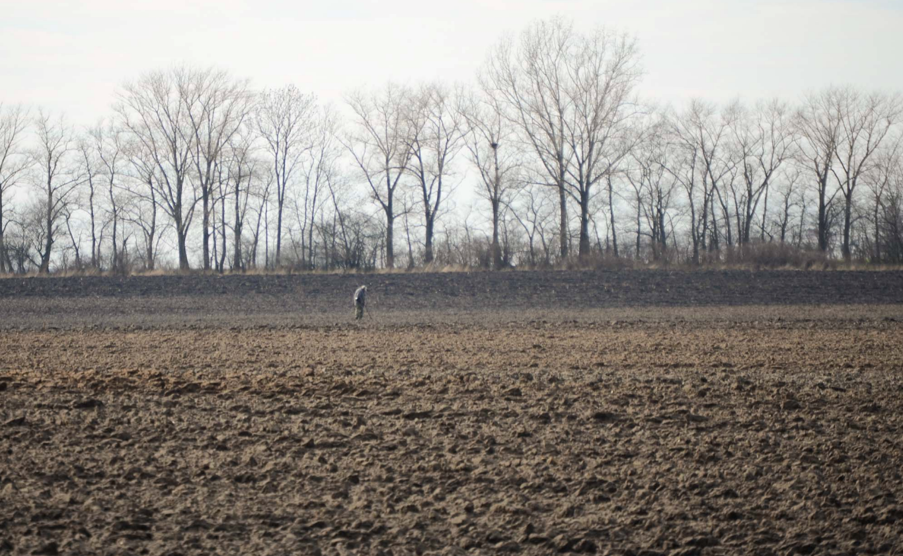
Figure 2: A metal detectorist operating in a South Moravian agricultural context. (Komoróczy 2022).