
Fragile Legacy, Living Knowledge:
The Mediterranean's Cultural Heritage in the Age of Climate Change
12 September 2026
“Climate change has become one of the most significant threats to World Heritage.” This is the opening line of the Policy Document on Climate Action for World Heritage, adopted by the UNESCO General Assembly in 2023, and it captures a growing consensus among researchers, conservation experts and international institutions: the climate crisis is no longer only an environmental or scientific challenge, but a profound and accelerating threat to humanity's cultural memory. Across the world, rising sea levels, extreme weather events, increasing temperatures, wildfires and shifting ecosystems are placing at risk monuments, archaeological sites, historic cities and cultural landscapes that have endured for centuries, if not millennia.
Few regions illustrate this vulnerability as clearly as the Mediterranean. For millennia, the region has been a crossroads of civilizations, a space of exchange, conflict and coexistence where human communities have continuously shaped, and been shaped by, their natural surroundings. Ancient cities, coastal settlements, archaeological remains, traditional agricultural landscapes and vernacular architectures all reflect centuries of finely tuned adaptation to a specific climate, geography and set of environmental constraints. This is, in many respects, a region greatly defined by its relationship to water, heat and coastline. Today, however, the same forces that shaped Mediterranean societies over time are being profoundly and rapidly altered by climate change, threatening not only individual monuments or sites in isolation but entire cultural landscapes, historic urban fabrics and the ways of life connected to them. The Mediterranean is therefore not simply one region among many affected by climate change; it is a place where the depth of historical settlement and the intensity of climate change impacts with unusual force, making it a critical case study for understanding what is at stake globally.
Yet the relationship between climate change and cultural heritage is not only one of loss and vulnerability. Increasingly, scholars and international organizations argue that heritage should not be understood merely as a fragile asset in need of protection, but also as a source of knowledge, memory and resilience. Traditional building techniques, historical land and water management practices, and locally developed strategies for coping with heat, drought and environmental pressure were, after all, solutions devised by past societies facing comparable challenges, refined and tested over generations. Rediscovered and reinterpreted today, they may offer valuable, transferable lessons for contemporary climate adaptation, from passive cooling strategies in vernacular architecture to traditional approaches to water scarcity. In this sense, the heritage of the Mediterranean occupies a dual position: it is at once a fragile legacy constantly under pressure, but also a potential resource for navigating an uncertain climate future.
Cultural Heritage in International Climate Policy: A Three-Decade Trajectory
Recognition of climate change as a threat to cultural heritage did not happen suddenly but emerged gradually over the past three decades, alongside the broader development of international climate policy. From the 1994 United Nations Framework Convention on Climate Change (UNFCCC), aimed at preventing “dangerous anthropogenic interference” with the climate system, to the UN Paris Agreement and the 2030 Agenda for Sustainable Development in 2015, one can observe a meaningful shift from ‘understanding the problem’ to ‘developing solutions’, from ‘planning’ to ‘implementation.’
The starting point was the global climate framework itself: the previously mentioned 1994 UNFCCC and the 1997 Kyoto Protocol (in force from 2005) established the first international mechanisms for addressing climate change, though their early focus was on socio-economic impacts and disaster reduction in developing countries, not on heritage, which however entered the conversation soon after. In 2005, indeed, a group of concerned experts and organizations first raised the issue of climate change's impact on natural and cultural World Heritage properties with a direct petition to UNESCO. The World Heritage Committee responded the following year: in 2006, the UNESCO World Heritage Centre prepared a report on predicting and managing climate change's effects on World Heritage, together with a strategy for helping States Parties respond. Both were endorsed at the Committee's 30th session in Vilnius, calling on States Parties to protect the outstanding value, integrity, and authenticity of World Heritage sites from climate impacts (Rajabi 2025).
This groundwork led to two milestones in 2007, the first of which was the ICOMOS Scientific Symposium on Cultural Heritage and Global Climate Change, which raised awareness that climate change causes not only damage but outright loss and destruction of heritage and stressed the need to involve local communities in decisions about it. The second was the formal adoption by the General Assembly of States Parties to the 1972 World Heritage Convention of the first Policy Document on the Impacts of Climate Change on World Heritage Properties.
The following year, the 2008 ICOMOS Quebec Symposium extended this thinking to heritage conservation more broadly, identifying climate change as one of the central challenges in 21st-century conservation practice. A further shift came in 2012, with the Rio+20 outcome document The Future We Want. It was the first UN document to treat adaptation to climate change as a global priority requiring international cooperation, and it linked this agenda explicitly to culture: through the Green Climate Fund and green economy policies, it called for improving the conditions of local and indigenous communities by “recognizing and supporting their identity, culture” (Lafrenz Samuels and Platts 2022).
The core idea of the UN Paris Agreement and the 2030 Agenda was to redirect States Parties’ attention toward taking affective and progressive actions to address climate change threats. In line with these concepts, UNESCO adopted the Policy for the Integration of a Sustainable Development Perspective into the Processes of the World Heritage Convention in order to demonstrate climate action work related to World Heritage Sites. Like UNESCO, in recent years ICOMOS has embraced a two-pronged approach to tackling climate change threats: one, in line with “responding to the risks that climate change poses to cultural heritage,” and the other by promoting heritage “as a source of resilience and an asset to climate action”. The 2017 Declaration on Heritage and Democracy issued by ICOMOS in New Delhi identified “heritage” and “democracy” as crucial ingredients in a people-based approach to sustainable development while also setting an ambitious direction for cultural‑heritage institutions, calling on them to play a leading role in advancing climate action through inclusive, democratic, and community‑driven approaches. Finally, Resolution 19GA 2017/30 of the declaration, Mobilizing ICOMOS and the cultural heritage community to help meet the challenge of climate change, emphasizes the importance of “cultural heritage and landscape-based solutions” for reducing emissions and adapting to climate change by taking into consideration vulnerable communities and ecosystems.
The policy framework has kept evolving since then. In 2021, the World Heritage Committee endorsed an updated Policy Document on Climate Action for World Heritage, replacing the 2007 version after a multi-year technical review. The General Assembly of the Convention's 196 States Parties formally adopted this revised document in 2023, establishing it as the current global standard on the issue. Alongside this, the 2022 UNESCO World Conference on Cultural Policies and Sustainable Development (MONDIACULT) broadened the conversation beyond World Heritage specifically. Its declaration recognized culture as a global public good and framed its relationship to climate change as twofold: a sector under growing threat, but also a source of knowledge, resilience, and adaptation strategies. On this basis, it called for culture to be integrated into climate policy more broadly, and for both tangible and intangible heritage to be protected as the climate changes. UNESCO built on this in 2024 with a Guidance Note on Climate Action for Living Heritage, extending the framework to intangible heritage specifically. That same year, the UN General Assembly adopted the Pact for the Future, which reaffirmed and strengthened culture's role in sustainable development and climate action within the UN's wider vision for global governance (Daly 2022; Mehrnaz 2025).
A Region of Concentrated Heritage, A Region of Concentrated Risk:
The Mediterrenean
The Mediterranean faces a striking paradox: it is one of the regions with the highest concentration of cultural heritage sites in the world, while simultaneously being one of the areas most vulnerable to the impacts of climate change. Around 300 cultural sites in the region are inscribed on the UNESCO World Heritage List, representing an extraordinary density of protected human history condensed within a relatively small and climatically fragile geography. This concentration is precisely what makes the region's exposure to climate change so consequential, since the same coastal, low-lying and semi-arid conditions that historically attracted settlement, trade and civilization to the Mediterranean are now the conditions driving its vulnerability (UNESCO 2025).
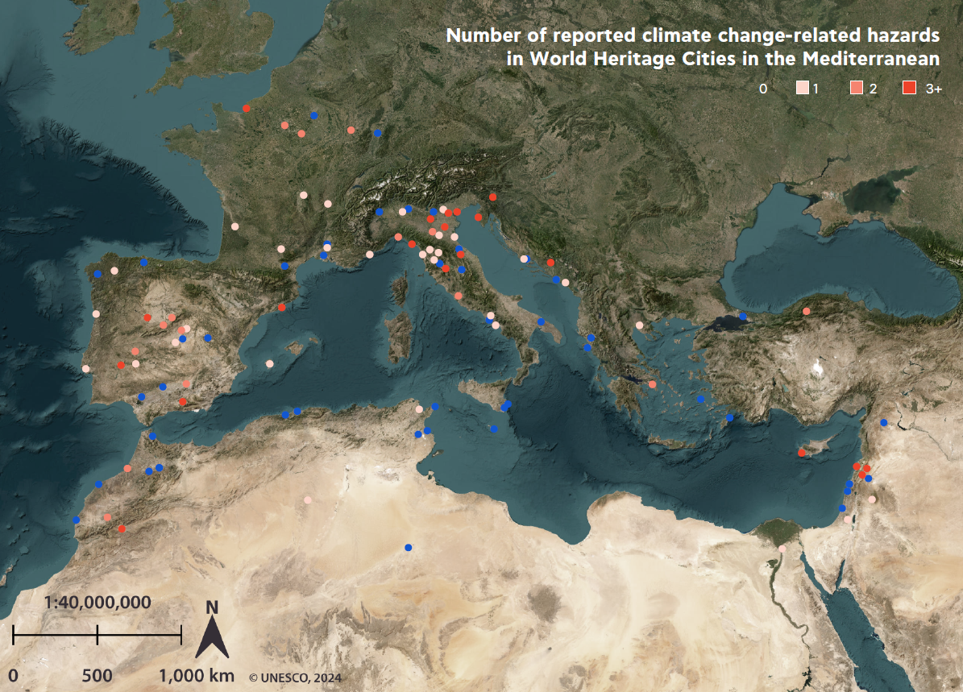
Almost half of the World Heritage Sites in the Mediterranean area consists of cities and settlements. The map shows the number of reported climate change-related hazards in World Heritage Cities in the Mediterranean region. Source: UNESCO 2025: 23.
This vulnerability is well documented at the scientific level: for example, the Intergovernmental Panel on Climate Change's Sixth Assessment Report (IPCC 2023) identifies the Mediterranean as predominantly vulnerable to climate-related impacts of warming, notably prolonged and intensifying heat waves, worsening drought in an already dry climate, and increasing risk of coastal flooding, with southern and eastern countries generally more exposed than those in the north. This is not a distant or hypothetical risk, since the Mediterranean is already considered a prominent “climate change hotspot”, characterized by both high regional vulnerability and high exposure, with impacts extending across natural systems and socio-economic sectors alike. Indeed, the region's annual mean temperatures on land and sea are already 1.5°C higher than pre-industrial levels - a threshold often treated internationally as a critical limit, already being surpassed (Ali et al. 2022; Zittis et al. 2022).
Nowhere is this vulnerability more visible than along the coastline. Over a third of the World Heritage Cities in the Mediterranean are located in coastal areas, mirroring a broader demographic pattern: roughly a third of the entire Mediterranean population, around 150 million people, currently lives close to the sea (MedECC 2020). Both populations and heritage sites are therefore exposed to the same cluster of climate-related pressures, including sea-level rise, coastal flooding, erosion, altered patterns of extreme waves and storm surges, and the slower, less visible threat of saltwater intrusion into coastal aquifers (Toimil et al. 2023; Cazenave and Cozannet 2014).
The scale of this exposure is already measurable. A 2018 study found that of 49 cultural World Heritage properties located in low-lying coastal areas of the Mediterranean, 37 were already at risk from a 100-year flood event, underlining the urgency of devising site-specific adaptation strategies (Reimann et al. 2018). Looking ahead, the IPCC projects continued sea-level rise across the region over the coming decades and centuries, and under this trajectory, 47 of the same 49 UNESCO sites are projected to be at risk of coastal flooding or erosion by 2100 (Reimann et al. 2018; Ali et al. 2022). Beyond direct damage to heritage structures, the long-term consequences of sea-level rise are expected to include permanent flooding, shoreline retreat and the erosion of sandy beaches, with knock-on effects for the recreation and tourism sectors that many coastal heritage sites depend on economically (Ali et al., 2022). The Mediterranean's characteristically small tidal range and steep coastal topography historically encouraged ancient and modern settlements alike to be built directly at the waterfront, often barely above sea level, embedding vulnerability into the very location of these sites. Venice and its Lagoon, a World Heritage City, offers a particularly illustrative case of the kind of future many other low-lying Mediterranean heritage sites may face (Reimann et al. 2018).
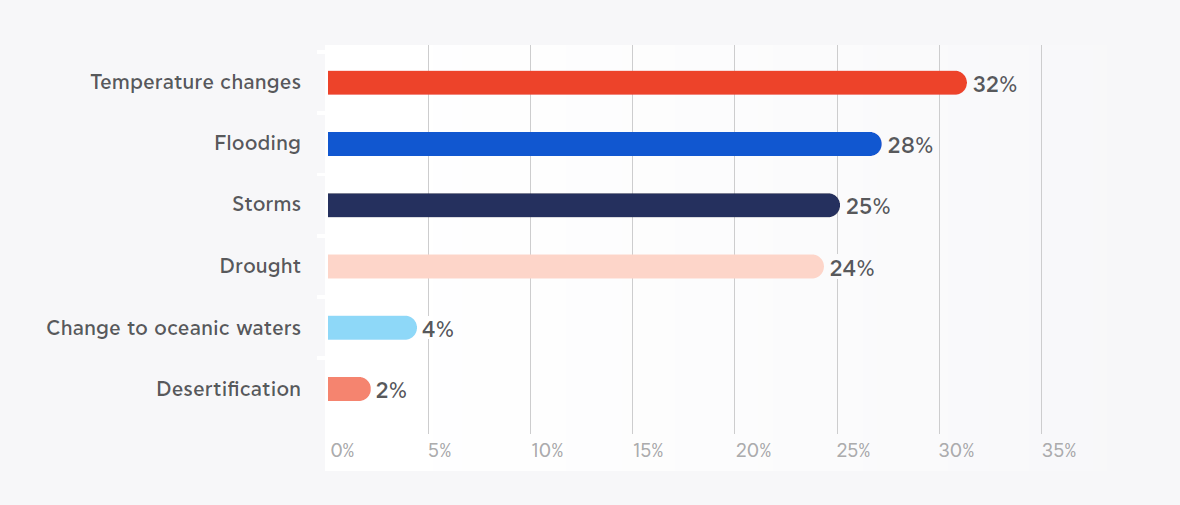
Most reported types of climate hazard affecting cultural heritage sites in the Mediterranean region.
Source: UNESCO 2025: 24.
Alongside water, fire represents a second, increasingly severe threat, as demonstrated by the disastrous wildfires that have affected several countries in the region in recent years, including Albania, Croatia, Greece, Italy, Portugal, Spain and Türkiye. The risk to cultural heritage from this threat is particularly pronounced in southern Europe, where a large share of heritage and archaeological sites are either covered by vegetation or situated close to forests and other flammable landscapes, leaving them highly exposed to wildfire hazards (Mallinis et al. 2016). The situation is made worse by rising financial burden associated with exposure: in Córdoba, Spain, fire suppression costs alone have increased by 66 to 87 percent over the past decade (Molina et al. 2019). Critically, the danger does not end once a fire is extinguished: post-fire effects, such as heavy rains triggering increased sedimentation and debris flows, pose further and often underappreciated risks to cultural heritage. This was demonstrated in the aftermath of the 2021 Navalacruz wildfire in central Spain, which affected up to 60 cultural heritage sites and, in some cases, resulted in the burial of entire archaeological sites beneath sediment (Ortega-Becerril et al. 2024).
Case Studies
Venice, Italy
”My own solution for the problem of Venice is to let her sink,” wrote British author and one-time Venice resident Jan Morris for an article for The Architectural Review (1971), imagining the city eventually "obeying her obvious destiny," slowly swallowed by the very waters that brought her glory, with only the angel atop the Campanile visible above the mud at the lowest tides. It sounds like an apocalyptic scenario, not new to the Welsh author.
In his Ode to Saint Mark’s city, the renowned English poet Lord Byron starts with these words:
“Oh Venice, Venice, when thy marble walls
Are level with the waters, there shall be
A cry of nations over thy sunken halls,
A loud lament upon the sweeping sea!“
The idea of Venice sinking into the sea has fascinated and unsettled people for centuries. But this isn't just a metaphor: today the risk is more real than ever. The floating city is one of the clearest and most studied examples of how climate change affects cultural heritage. Venice has been sinking naturally by about 10 cm every hundred years. This happens slowly, as sediment builds up in the delta and settles beneath the lagoon over time. But human activity sped up this natural process significantly. In the twentieth century, nearby industrial plants pumped groundwater from deep underground, which made Venice sink by another 10 cm. This practice stopped in the 1970s, but by then the damage was irremediable. Together, these human caused problems, changes in the lagoon's shape and history, and rising sea levels around the world have all pushed up the relative sea level in Venice (Carbognin et al. 2009). Because of this, the city now faces two threats at the same time: the sea rising, and the ground beneath it still sinking (Camuffo 2021; Lionello et al. 2021).

Nearly two-thirds (59%) of World Heritage Cities in the Mediterranean region are already experiencing at least one form of climate hazard.
Source: UNESCO 2025: 24.
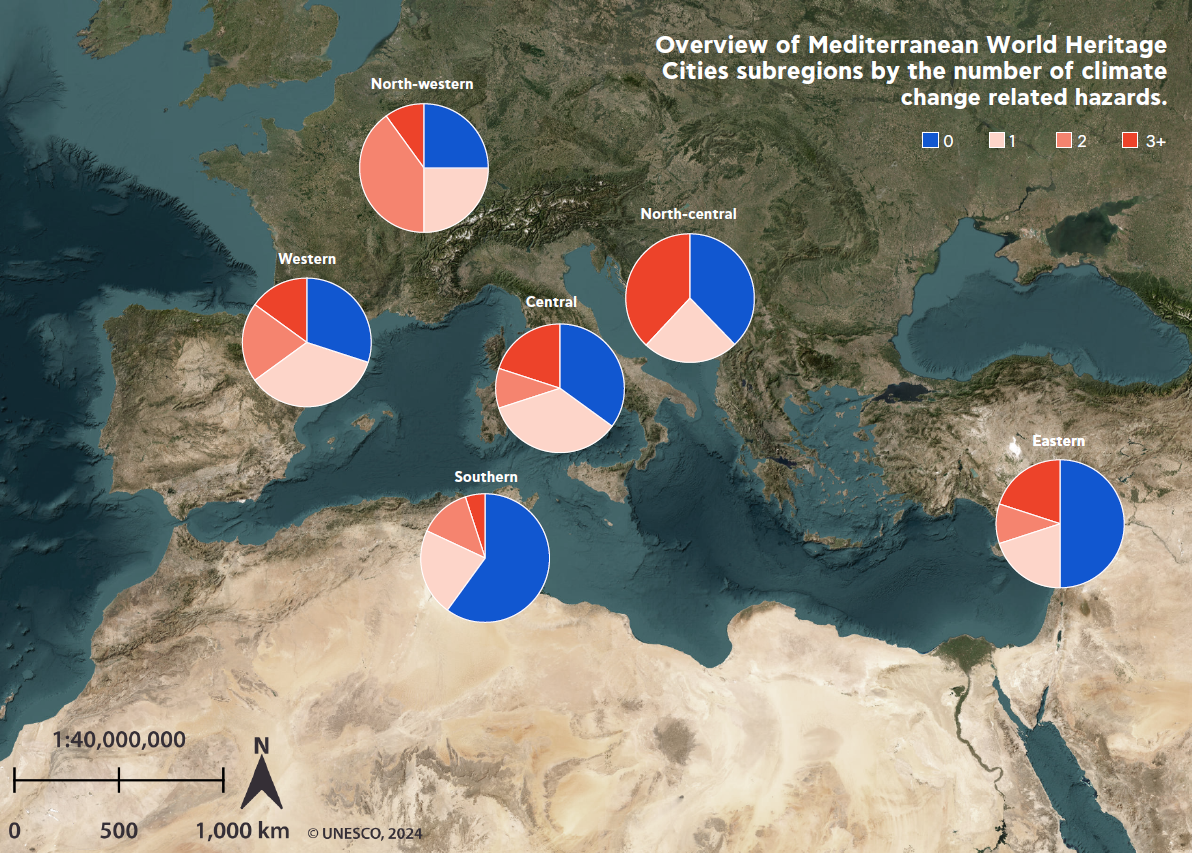
Distribution of the reported hazards across the regions.
Source: UNESCO 2025: 26.
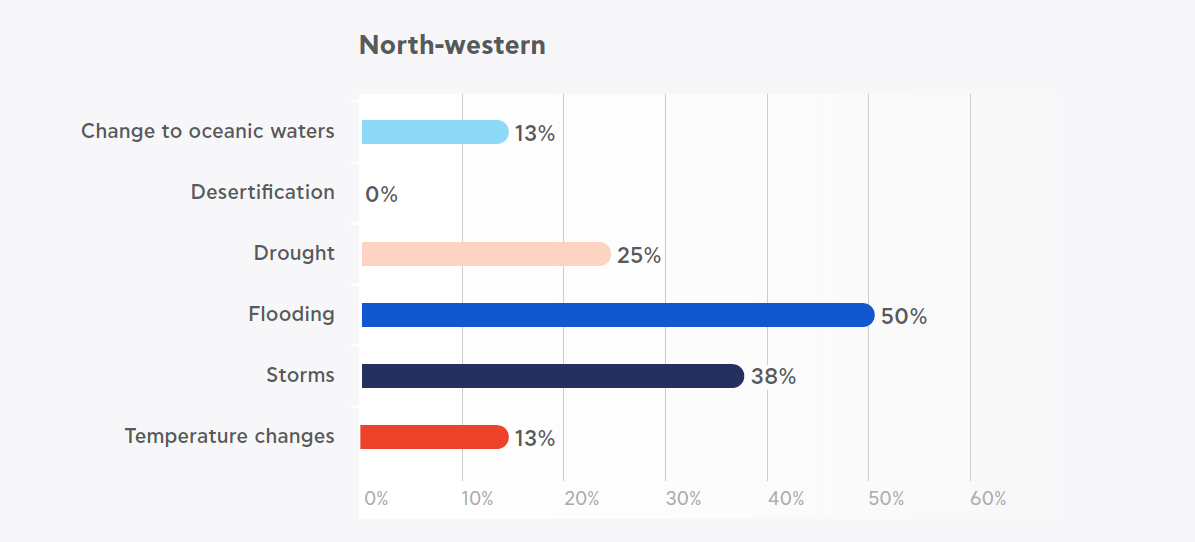
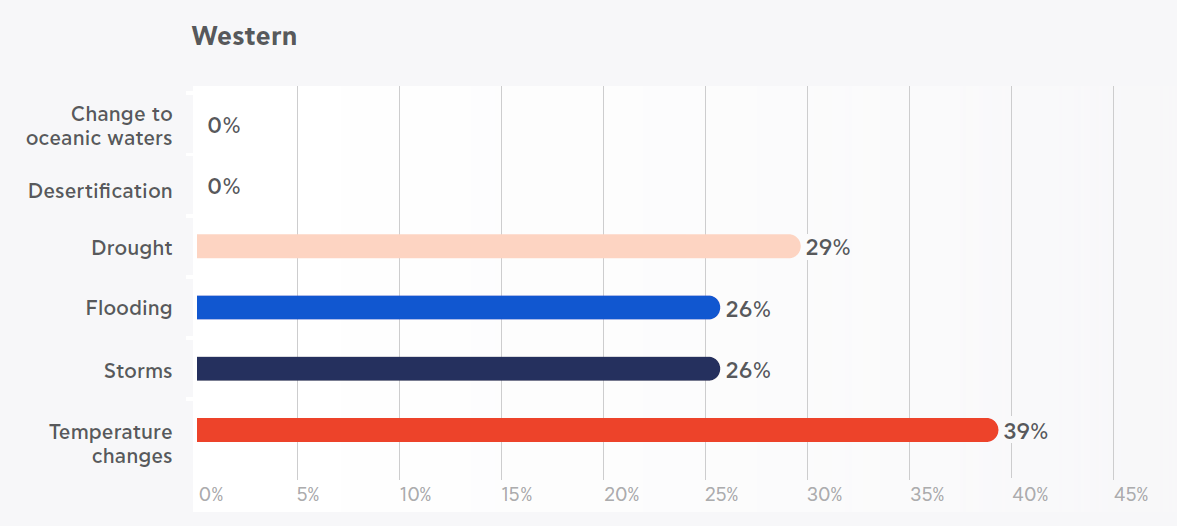
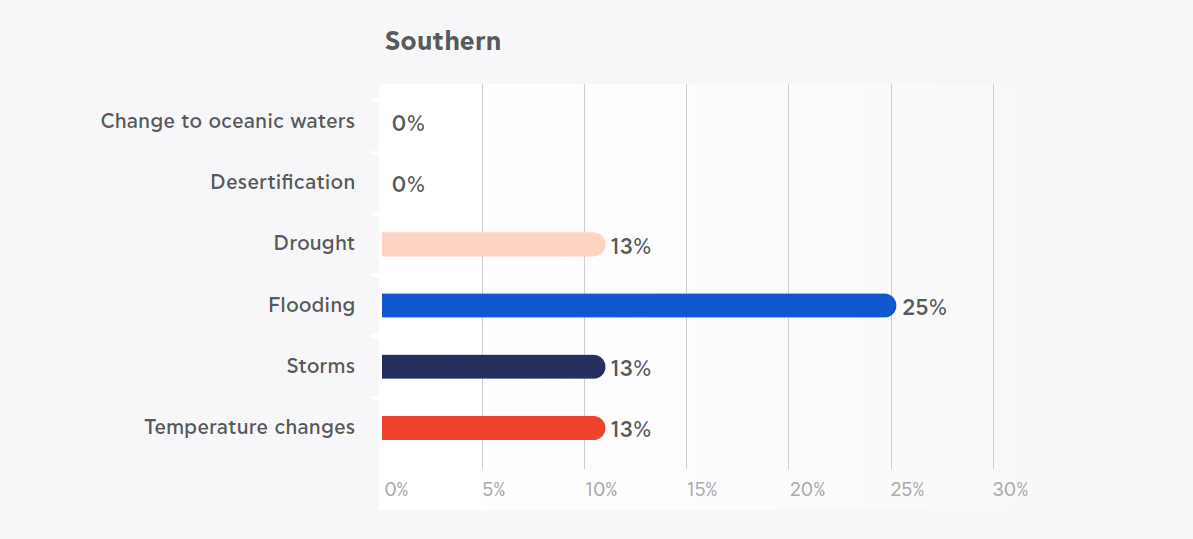
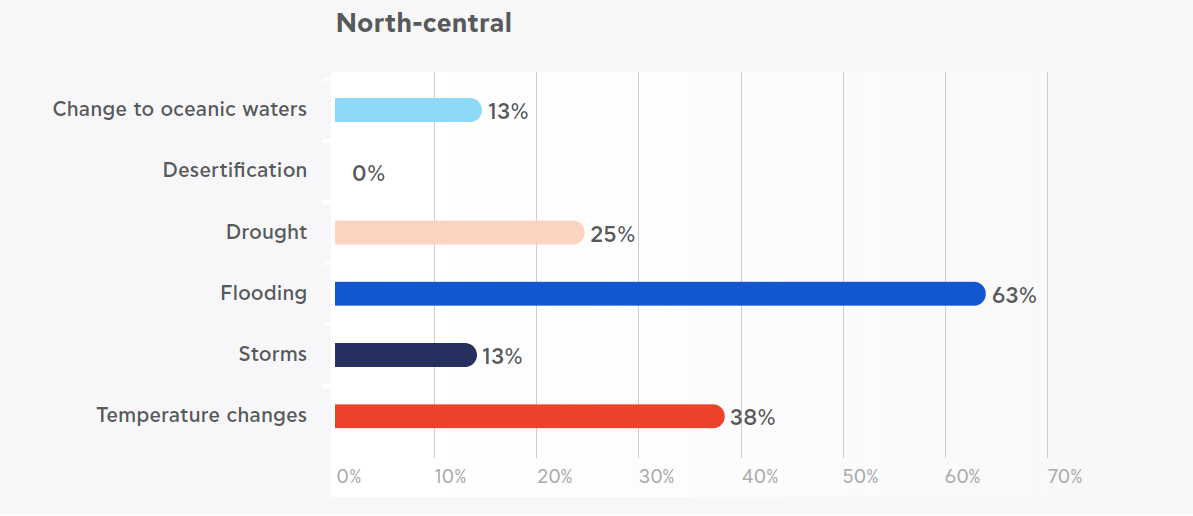
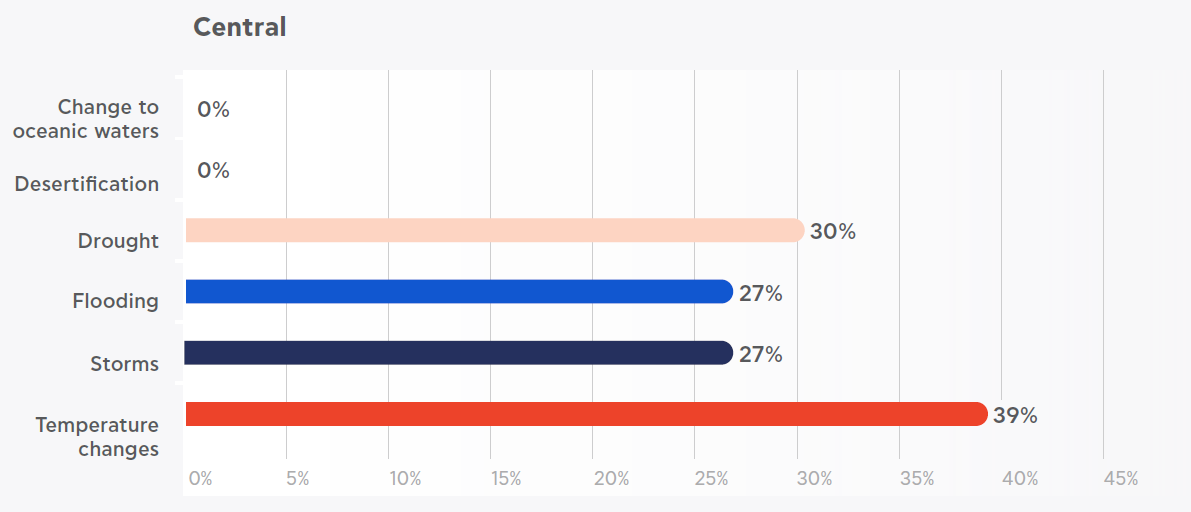
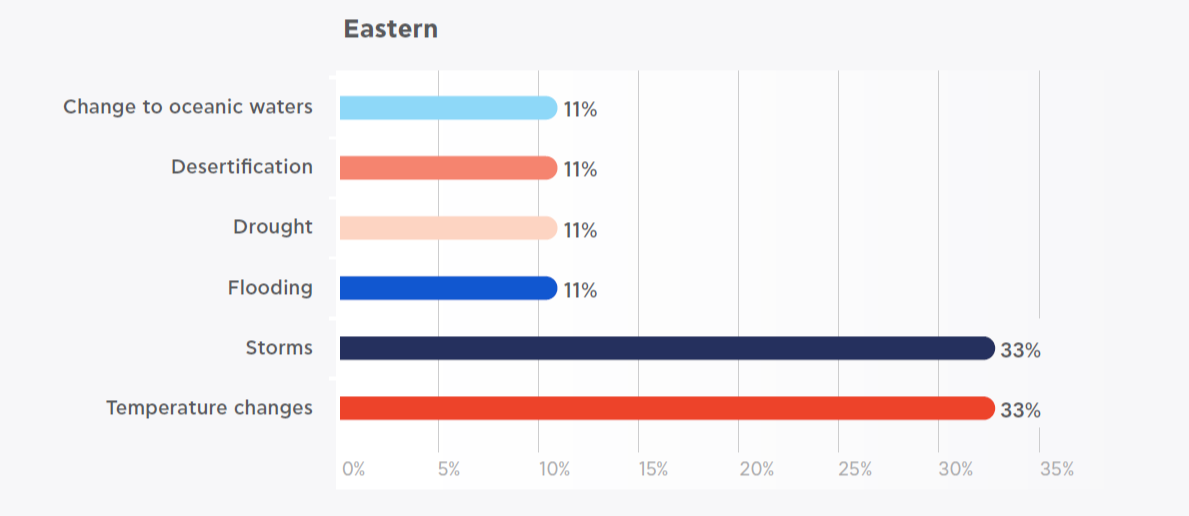
Types of climate hazards across Mediterranean sub‑regions
(refer to the overall map for geographic localization of each sub‑region).
Source: UNESCO 2025: 68-70.
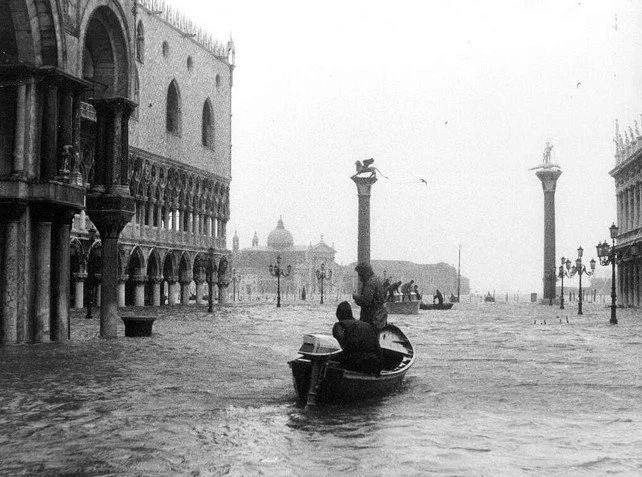
A flooded Piazza San Marco during Acqua Alta (high water) in 1966.
Source: Necchio 2026.
The consequences of this combined pressure are increasingly visible in the frequency and severity of flooding events. While the catastrophic 1966 tide, which reached a height of 1.94 m, remains a historic benchmark, two of the highest tides recorded in the past century have occurred within just the last six years, a clear indication that extreme flooding is no longer a rare, generational event but an increasingly recurrent threat (UNESCO, 2022). In November 2019, Venice was struck by an exceptionally high tide reaching 1.87 m, the second highest ever recorded after 1966. The damage was extensive: the city itself, its smaller islands, surrounding coastal areas and several municipalities were all affected, with serious consequences for residents and local economic activity. Public buildings, the Basilica of San Marco, and a wide range of historical and artistic heritage, along with museums, schools, homes, shops and artisan workshops, were devastated by the combined force of high water and strong winds. Just three years later, in November 2022, an even higher tide reached 2.09 m, the highest level ever recorded in the city's history. On that occasion, the MOSE mobile tide barrier system was closed in time to prevent what could otherwise have been catastrophic flooding, demonstrating the value of large-scale engineered defences. Yet the growing frequency and magnitude of these extreme tides make clear that MOSE alone will not be sufficient in the long term, and that further adaptation measures will be necessary (UNESCO, 2022).
In response to these mounting risks, the city of Venice has developed a broader adaptation strategy that extends well beyond the MOSE barriers alone. This includes raising embankments in vulnerable areas, implementing targeted protective measures for particularly at-risk sites such as the Basilica of San Marco, and developing complementary planning tools such as a Civil Protection Plan for extreme heat events, a Tide Forecasting Centre designed to alert the population ahead of dangerous water levels, and a dedicated Water Plan addressing risks on the mainland. Taken together, these measures reflect a shift in Venice's approach, from relying on a single large-scale infrastructure solution toward a more integrated and multi-layered strategy for long-term resilience.
Ksar of Ait-Ben-Haddou, Morocco
A ksar is a cluster of earthen buildings enclosed by high defensive walls and reinforced by corner towers, traditionally built to protect both inhabitants and stored goods along historic caravan routes. The Ksar of Ait-Ben-Haddou is a striking example of this architectural style, which is prevalent across southern Morocco. What makes these earthen constructions particularly notable is how precisely they are adapted to local climatic conditions, using thick walls and compact forms to manage heat and aridity long before modern building technology existed. Examples of this style can be found dating back to the seventeenth century across the valleys of Dra, Todgha, Dadès and Souss, testifying to a long tradition of climate-responsive building in the region.
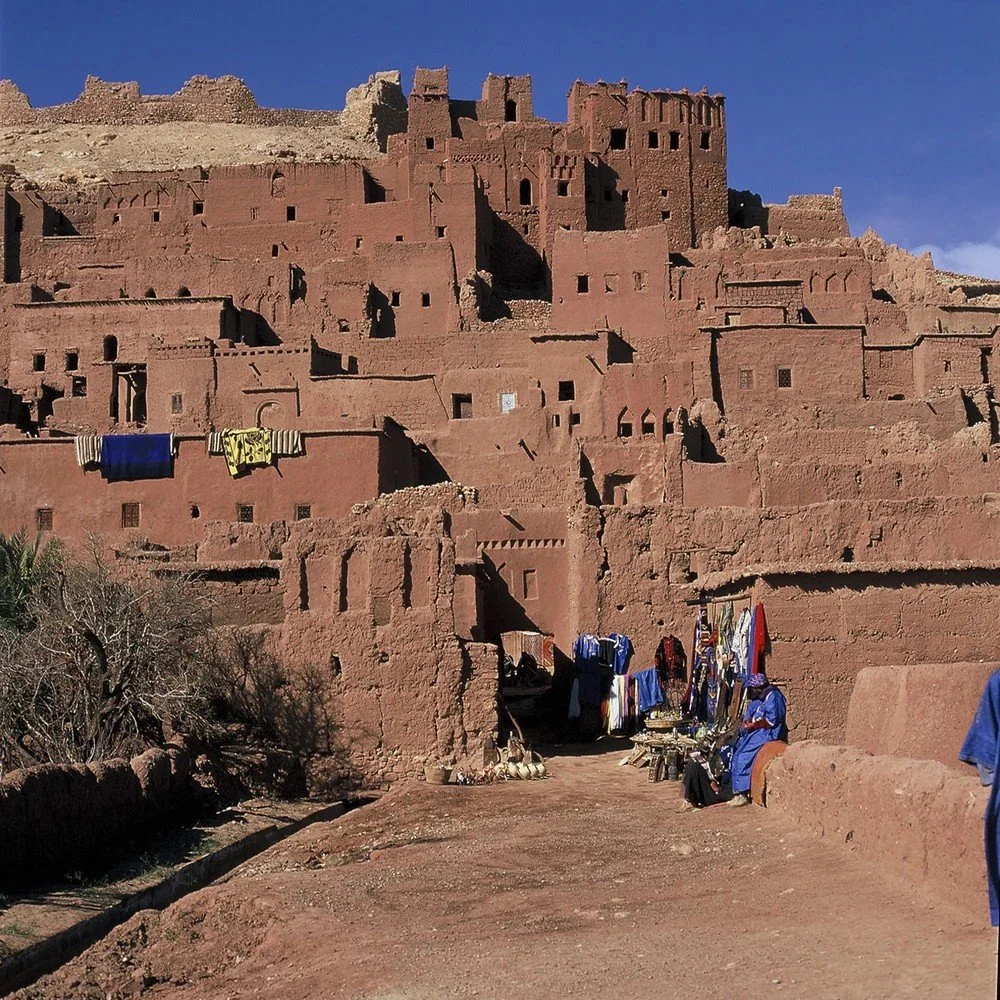
Built during the eleventh century, the Ksar is considered an excellent example of Moroccan earthen architecture and has been protected by UNESCO as a World Heritage Site since 1987. Source: UNESCO World Heritage Committee 2021.
Today, however, the very conditions this architecture was designed for are shifting in ways that threaten its survival. The Ksar of Ait-Ben-Haddou is affected by the combined impacts of storms, drought and flood events, and the property has already suffered direct damage as a result. Flooding in 2014, for instance, led to the partial disintegration of the site, a stark demonstration that even architecture historically well-suited to the local climate is not immune to increasingly erratic weather patterns (UNESCO 2021). Over the past several decades, observed trends have shown both more erratic rainfall and an overall decline in precipitation, and this decline is projected to worsen further, with rainfall likely to decrease by an additional 10 to 20 percent by 2050 (Schilling et al. 2012). Compounding this, Morocco has been experiencing a broader shift in seasonal rainfall patterns, with rain increasingly concentrated into longer and more intense seasonal events that often trigger flooding, even as rainfall during the rest of the year drops substantially (World Bank 2021). This pattern - intense flooding alternating with prolonged dryness - is particularly damaging for earthen architecture, which is vulnerable to both extremes. Drought frequency, meanwhile, has also risen sharply, increasing from roughly one event every ten years at the start of the twentieth century to five or six events every ten years at the start of the twenty-first (El Khatri and El Hairech 2014).
Beyond these direct physical impacts, the vulnerability of Ait-Ben-Haddou is also being shaped by social and demographic change. Among the factors increasingly affecting the property is a broader shift in how heritage is valued by local communities, which has contributed to partial abandonment of the site as residents migrate toward regions less exposed to climate change impacts (UNESCO 2021). This creates a compounding cycle of vulnerability: the earthen buildings require regular, ongoing maintenance and repair to withstand environmental stress, but as inhabitants leave the ksar, that maintenance is increasingly neglected, leaving the structures more exposed to precisely the storms, floods and droughts that are becoming more frequent and severe. In this sense, Ait-Ben-Haddou illustrates how climate vulnerability and social vulnerability reinforce one another, with environmental pressure driving abandonment, and abandonment in turn accelerating physical decay.
The Untapped Climate Wisdom of Historic Heritage
The dominant narrative frames cultural heritage as a fragile victim of climate change, but this tells only part of the story. A growing body of evidence suggests heritage can be an active agent in response rather than merely something to be defended against it. Heritage practitioners increasingly argue that cultural heritage holds largely untapped potential to drive climate action and support equitable transitions toward low carbon, climate resilient development, provided the field better recognizes the cultural dimensions of climate change and adapts its own methods accordingly.
This potential isn't hypothetical: historic cities, many of them World Heritage sites, have embodied climate smart design for centuries. Urban climate strategies are increasingly building on this legacy, pairing traditional construction techniques with nature-based planning solutions, and treating efficient retrofitting and material reuse as climate actions in their own right (Labadi et al. 2021).
These cities also function as repositories of accumulated knowledge: how to build with low carbon, local, repairable materials; how to maximize passive comfort; and how to use existing buildings efficiently rather than defaulting to new construction. Conserving and adapting what's already standing, rather than treating historic buildings as static relics, avoids maladaptation while preserving the sense of place and local values that connect people to their environment. Historic settlement patterns carry similar lessons in water and land management, offering guidance for resilience that many contemporary approaches still overlook.
The Mediterranean is full of these stories. Thick stone walls, whitewashed surfaces, deep eaves, and shaded courtyards were the region's traditional answers to hot, dry summers - passive cooling strategies now informing contemporary resilient design rather than being dismissed as historical curiosities. For example, Aleppo's old city has been studied for the bioclimatic logic of its courtyard housing; historic dwellings in Cádiz remain genuinely climate adapted today (Salkini et al. 2017); a bioclimatic analysis of Sardinia's vernacular architecture revealed working strategies for managing both heat and cold (Desogus et al. 2016); and the EU-funded ClimAid project “Building resilience to climate change through Cultural Heritage and Urban Arts“ is studying Zaragoza's Aljafería Palace for transferable lessons on passive cooling and water management (Sanagustín-Fons et al. 2025).
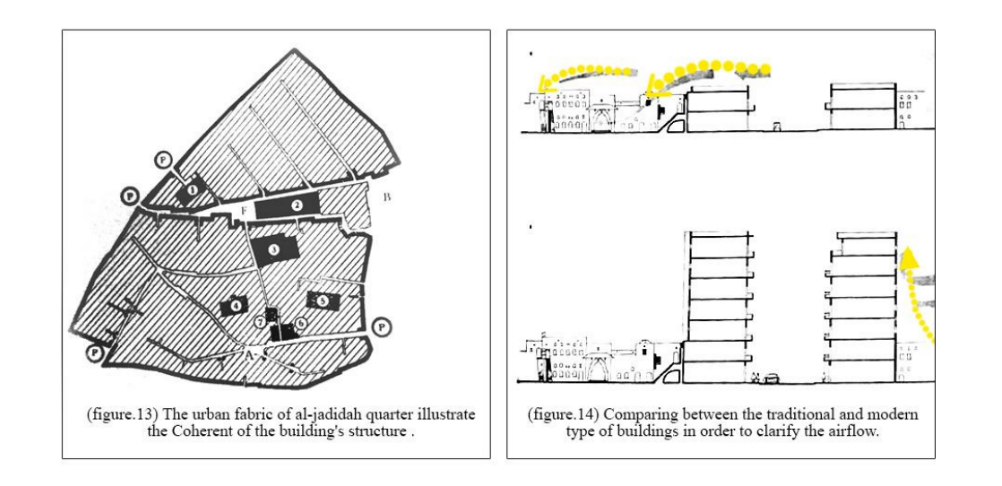
Studies regarding the historical city centre of Aleppo, especially how traditional building allows better airflow.
Source: Aboudan and Hacihasanoglu 2018.
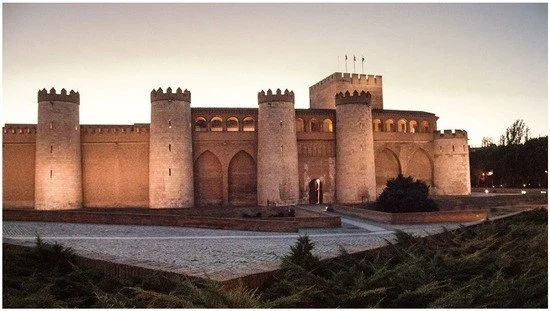
La Aljafería Palace in Zaragoza, Spain, built in the second half of the eleventh century, is a remarkable example of Islamic architecture that has withstood the test of time while providing effective solutions to extreme heat through passive cooling strategies and ingenious water management systems. Source: Aragón Digital 2024.
UNESCO's own work on Mediterranean World Heritage cities (2025) makes the underlying argument explicit: these places are simultaneously vulnerable to climate impacts and a source of adaptation solutions rooted in local knowledge. Heritage conservation and climate action should be integrated, not treated as separate agendas. Lessons can be learnt also from other regions in the world, where Indigenous, local, and traditional knowledge systems have long shown real capacity to manage climatic hazards, from Inca crop diversification and water harvesting techniques still used in agriculture today, to coastal Indian communities blending new technology with inherited practice.
Nonetheless, research consistently identifies these knowledge systems as valuable resources for managing climate and non-climate risks alike. But that recognition rarely translates into policy (Dorji et al. 2024). Adaptation and mitigation frameworks continue to under integrate traditional knowledge, hampered by genuine difficulties in incorporating systems that don't map neatly onto conventional planning processes. The throughline is the same in both cases. Protecting heritage - architectural or intangible - is about recognizing that resilience already exists in inherited knowledge and building the future on it rather than around it.
References
Aboudan, Fateh, and Orhan Hacihasanoglu (2018). "The Traditional Courtyard House in Aleppo and Its Correlation with the Sustainable Conceptions." ResearchGate. https://www.researchgate.net/publication/327142647_The_Traditional_Courtyard_House_in_Aleppo_and_Its_Correlation_with_the_Sustainable_Conceptions.
Aragón Digital (2024, March 1). “La Efeméride Aragonesa del día Recuerda que hoy, 1 de Marzo de 1836, “El Trovador” dio Nombre a una Torre de la Aljafería.” Available online: https://www.aragondigital.es/articulo/cultura/descubre-que-drama-romantico-dio-nombre-torre-aljaferia-efemeride-1-marzo/20240301091000864707.html.
Camuffo, Dario (2021). "Four Centuries of Documentary Sources Concerning the Sea Level Rise in Venice." Climatic Change 167, no. 54. https://doi.org/10.1007/s10584-021-03196-9.
Carbognin, Laura, Pietro Teatini, Alberto Tomasin, and Luigi Tosi (2009). "Global Change and Relative Sea Level Rise at Venice: What Impact in Term of Flooding." Climate Dynamics 35: 1039–47. https://doi.org/10.1007/s00382-009-0617-5.
Cazenave, Anny, and Gonéri Le Cozannet (2014). "Sea Level Rise and Its Coastal Impacts." Earth's Future 2, no. 2: 15–34. https://doi.org/10.1002/2013EF000188.
Daly, Cathy (2022). "Climate Action and World Heritage: Conflict or Confluence?" In 50 Years World Heritage Convention: Shared Responsibility – Conflict & Reconciliation, edited by Marie-Theres Albert, Roland Bernecker, Claire Cave, Anca Claudia Prodan, and Matthias Ripp, 239–51. Heritage Studies. Cham: Springer. https://doi.org/10.1007/978-3-031-05660-4_19.
Desogus, Giuseppe, Lucia Giulia Felice Cannas, and Andrea Sanna (2016). "Bioclimatic Lessons from Mediterranean Vernacular Architecture: The Sardinian Case Study." Energy and Buildings 129: 574–88. https://doi.org/10.1016/j.enbuild.2016.07.051.
Dorji, Tashi, Kinley Rinchen, Angus Morrison-Saunders, David Blake, Vicki Banham, and Sonam Pelden (2024). "Understanding How Indigenous Knowledge Contributes to Climate Change Adaptation and Resilience: A Systematic Literature Review." Environmental Management 74 (6): 1101–1123. https://doi.org/10.1007/s00267-024-02032-x.
El Khatri, S., and T. El Hairech (2014). Drought Conditions and Management Strategies in Morocco. Geneva: World Meteorological Organization, Integrated Drought Management Programme. https://www.droughtmanagement.info/literature/UNW-DPC_NDMP_Country_Report_Morocco_2014.pdf.
IPCC (2023). "Climate Resilient Development Pathways." In Climate Change 2022 – Impacts, Adaptation and Vulnerability: Working Group II Contribution to the Sixth Assessment Report of the Intergovernmental Panel on Climate Change (pp. 2655–2808). Cambridge: Cambridge University Press. https://doi.org/10.1017/9781009325844.027.
Labadi, Sophia, Francesca Giliberto, Ilaria Rosetti, Linda Shetabi, and Ege Yildirim (2021). Heritage and the Sustainable Development Goals: Policy Guidance for Heritage and Development Actors. Charenton-le-Pont, France: ICOMOS.
Lafrenz Samuels, Kathryn, and Ellen J. Platts (2022). "Global Climate Change and UNESCO World Heritage." International Journal of Cultural Property 29, no. 4: 409–32. https://doi.org/10.1017/S0940739122000261.
Lionello, Piero, David Barriopedro, Christian Ferrarin, Robert J. Nicholls, Mirko Orlić, Fabio Raicich, Marco Reale, Georg Umgiesser, Michalis Vousdoukas, and Davide Zanchettin (2021). "Extreme Floods of Venice: Characteristics, Dynamics, Past and Future Evolution." Natural Hazards and Earth System Sciences 21: 2705–31. https://doi.org/10.5194/nhess-21-2705-2021.
Mallinis, Giorgos, Ioannis Mitsopoulos, Eduardo Beltran, and Johann Goldammer (2016). "Assessing Wildfire Risk in Cultural Heritage Properties Using High Spatial and Temporal Resolution Satellite Imagery and Spatially Explicit Fire Simulations: The Case of Holy Mount Athos, Greece." Forests 7, no. 2: 46. https://doi.org/10.3390/f7020046.
Molina, José Ramón, Armando González-Cabán, and Francisco Rodríguez y Silva (2019). "Potential Effects of Climate Change on Fire Behavior, Economic Susceptibility and Suppression Costs in Mediterranean Ecosystems: Córdoba Province, Spain." Forests 10, no. 8: 679. https://doi.org/10.3390/f10080679.
Morris, James (1971). "Venice: Problems and Possibilities." The Architectural Review 149, no. 891. https://www.architectural-review.com/archive/venice-problems-and-possibilities.
Necchio, Valeria (2026, May 25). ““Shall We Let Venice Sink?” How the city is confronting climate change—a look at grassroots solutions.” Italy Segreta. https://italysegreta.com/shall-we-let-venice-sink/.
Ortega-Becerril, José Antonio, Carolina Suarez, Daniel Vázquez-Tarrío, Julio Garrote, and Miguel Gomez-Heras (2024). "Sediment Response after Wildfires in Mountain Streams and Their Effects on Cultural Heritage: The Case of the 2021 Navalacruz Wildfire (Ávila, Spain)." Fire 7, no. 2: 52. https://doi.org/10.3390/fire7020052.
Rajabi, Mehrnaz (2025). Climate Change, Resilience and Cultural Heritage: In-Between International Debates and Practical Encounters. Cham: Springer. https://link.springer.com/book/10.1007/978-3-031-61242-8.
Reimann, Lena, Athanasios T. Vafeidis, Sally Brown, Jochen Hinkel, and Richard S. J. Tol (2018). "Mediterranean UNESCO World Heritage at Risk from Coastal Flooding and Erosion Due to Sea-Level Rise." Nature Communications 9, no. 1: 4161. https://doi.org/10.1038/s41467-018-06645-9.
Salkini, Hamza, Luigi Greco, and Roberta Lucente (2017). "Towards Adaptive Residential Buildings: Traditional and Contemporary Scenarios in Bioclimatic Design (The Case of Aleppo)." Procedia Engineering 180: 1083–92. https://doi.org/10.1016/j.proeng.2017.04.268.
Sanagustín-Fons, Victoria, Polina Stavrou, José Antonio Moseñe-Fierro, Francisco Escario Sierra, Guido Castrolla, Cândida Rocha, and Ester Bazco Nogueras (2025). "Cultural Heritage Architecture and Climate Adaptation: A Socio-Environmental Analysis of Sustainable Building Techniques." Land 14, no. 5: 1022. https://doi.org/10.3390/land14051022.
Schilling, Janpeter, Korinna P. Freier, Elke Hertig, and Jürgen Scheffran (2012). "Climate Change, Vulnerability and Adaptation in North Africa with Focus on Morocco." Agriculture, Ecosystems and Environment 156: 12–26. https://doi.org/10.1016/j.agee.2012.04.021.
Toimil, Alexandra, Manuel Álvarez-Cuesta, and Iñigo J. Losada (2023). "Neglecting the Effect of Long- and Short-Term Erosion Can Lead to Spurious Coastal Flood Risk Projections and Maladaptation." Coastal Engineering 179: 104248. https://doi.org/10.1016/j.coastaleng.2022.104248.
UNESCO (2025). Climate Change in Mediterranean World Heritage Cities. Paris: UNESCO. https://doi.org/10.58337/SADI5451.
UNESCO World Heritage Committee (2021). State of Conservation Report: Ksar of Ait-Ben-Haddou. https://whc.unesco.org/en/soc/4238.
UNESCO World Heritage Committee (2022). Venice and Its Lagoon (Italy) (394): State of Conservation Report in Compliance with Decision 44 COM 7B.50 of the World Heritage Committee.https://whc.unesco.org/en/list/394/documents/.
Union for the Mediterranean, Plan Bleu, and UNEP/MAP (2020). Risks Associated to Climate and Environmental Changes in the Mediterranean Region. Marseille: Union for the Mediterranean, Plan Bleu, UNEP/MAP. https://ufmsecretariat.org/wp-content/uploads/2019/10/MedECC-Booklet_EN_WEB.pdf.
United Nations (2012). The Future We Want: Final Document of the Rio+20 Conference. New York: United Nations. https://digitallibrary.un.org/record/3826773?ln=en&v=pdf.
World Bank (2021). Climate Risk Country Profile: Morocco. Washington, DC: World Bank Group. https://climateknowledgeportal.worldbank.org/sites/default/files/2021-09/15725-WB_Morocco%20Country%20Profile-WEB.pdf.
Zittis, G., M. Almazroui, P. Alpert, P. Ciais, W. Cramer, Y. Dahdal, D. Fnais, F. P. Hadjinicolaou, F. Howari, A. Jrrar, D. G. Kaskaoutis, M. Kulmala, G. Lazoglou, N. Mihalopoulos, and X. Lin (2022). "Climate Change and Weather Extremes in the Eastern Mediterranean and Middle East." Reviews of Geophysics 60: e2021RG000762. https://doi.org/10.1029/2021RG000762.