
The City of Many Names and a Shared Soul:
Reading the Islamic Heritage of Faro (Santa Maria al-Gharb)
6 July 2026
Located on the southern edge of the Iberian Peninsula, overlooking the calm lagoon system of the Ria Formosa and opening onto the Atlantic Ocean, the city today known as Faro carries within its very name the remains of centuries of Islamic history, visible in its walls and horseshoe arches as a record of Andalusian urban life.
Al-Idrisi described the city as “… built near the ocean, and its walls are washed by the sea at high tide. It is a city of moderate size and pleasing aspect” (Al-Idrīsī, 2008, translation by the author).
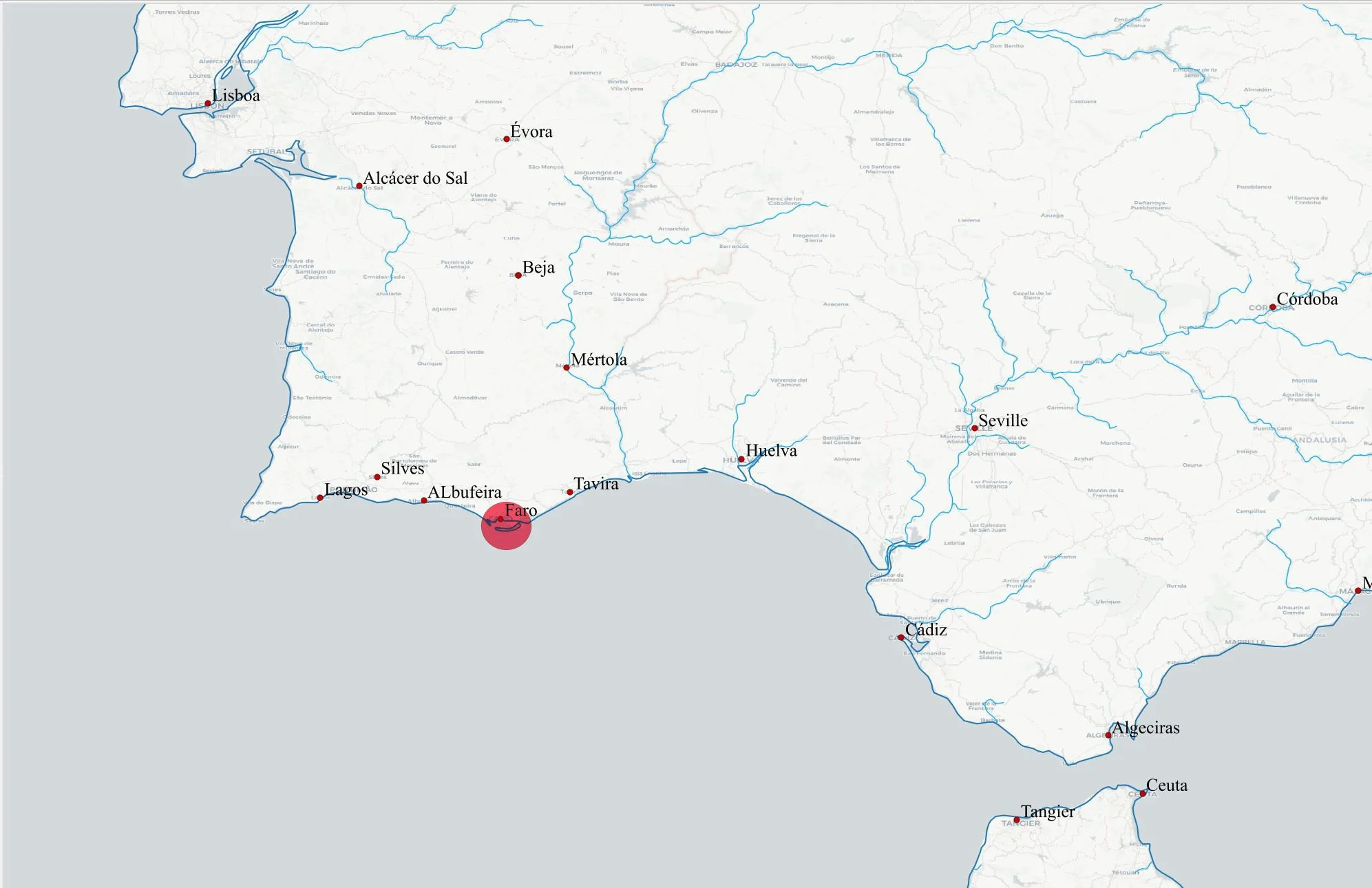
Location of Faro, QGIS, A. Nusair.
The city's oldest recorded name is the Latin Ossonoba (Faro), derived from the Phoenician Osson Eba, meaning “warehouse on the saltmarsh” (Algarve Tips, 2025) - a name applied when Phoenician traders established a commercial storehouse on the hill later occupied by the cathedral. The Romans inherited and developed the name during their rule. The settlement grew into the most important urban center in the southwest corner of the peninsula, trading in fish, salt, minerals, and agricultural produce (Algarve Tips, 2025). With the arrival of Islam in the early eighth century, the Arabs transcribed the Roman name phonetically as Ukshunuba (Faro) (Ibn Idhārī, 2013).
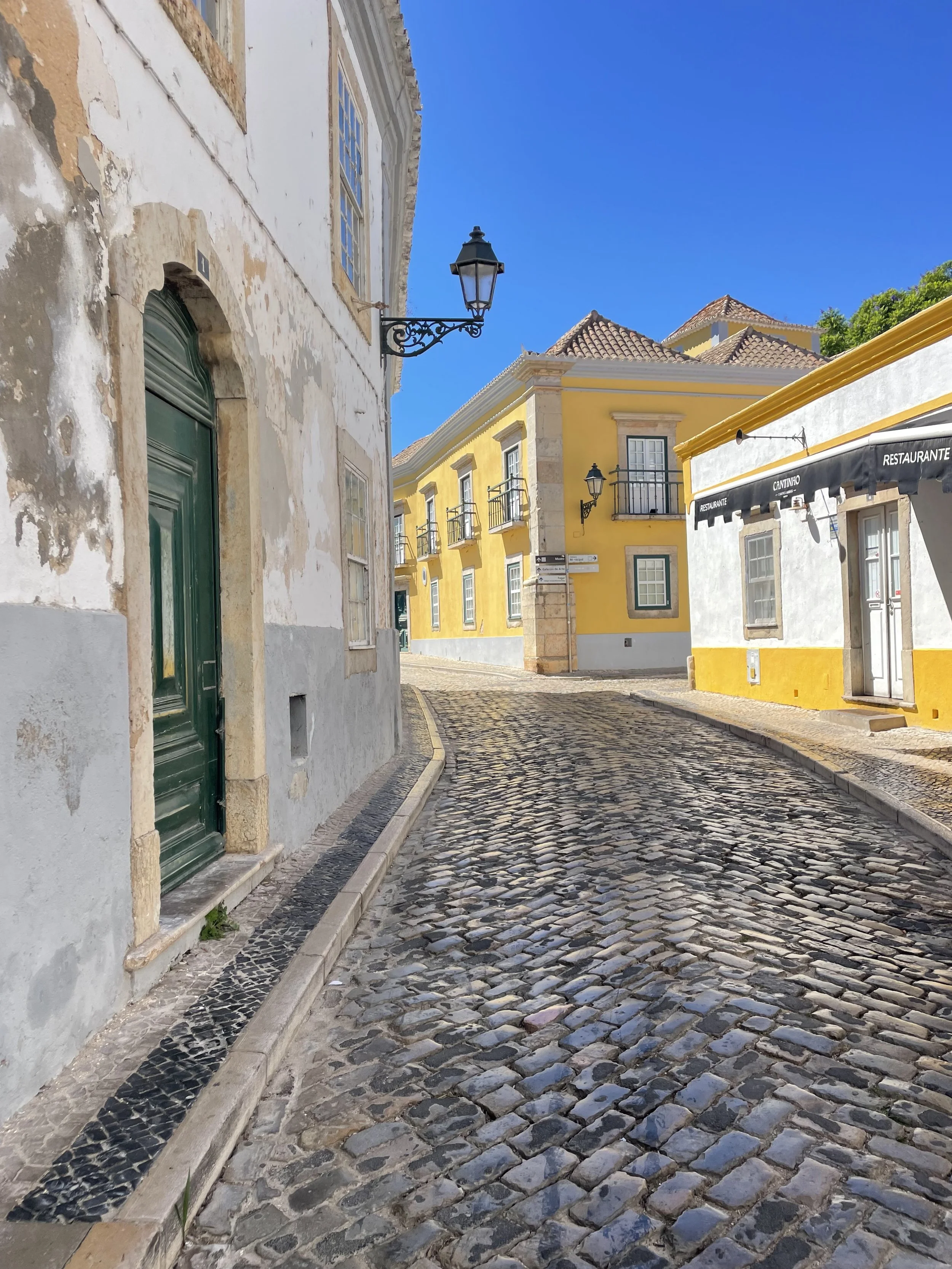
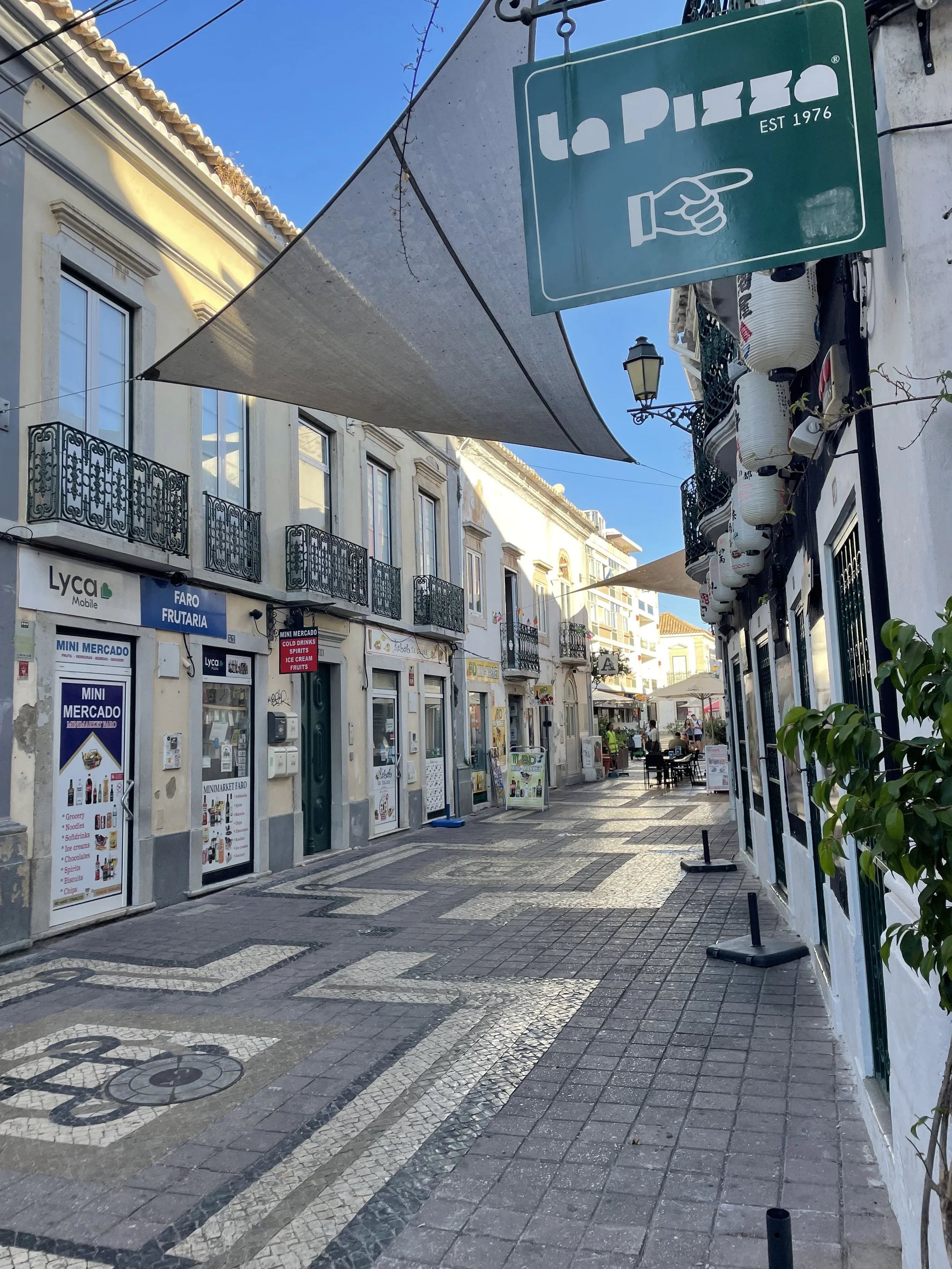
The city of Faro, QGIS, A. Nusair.
Through the 9th century, as the city’s importance grew and its Mozarab (Arabised Christian) population asserted its identity, it came to be known as Santa Maria al-Gharb (Faro) (Shantamariyya al-Gharb), “Saint Mary of the West”, distinguishing it from Santa Maria al-Sharq, a city near Valencia (al-Ḥimyarī, 1938).
By the 11th century, during the Taifa period, the city’s name gained yet another layer, becoming Santa Maria Ibn Harun (Faro) in honor of the Banu Harun dynasty of local emirs. Harun was later rendered in Portuguese documents as Fharão, then Faraon, and finally Faro, from which the modern name descends (Machado, 2003).
Each shift in the city’s name marks a political transition, a new dominant culture, a renegotiation of urban identity. The Andalusian chapter of Faro's history spans from the Muslim conquest of 713 CE to the Portuguese conquest in 1249 CE.
Ibn Idhārī (2013), in his Al-Bayan al-Mughrib, records that the southern territories of what would become Gharb al-Andalus fell in rapid succession during 712–713 CE. He records the governance of the conquered western territories as follows:
Musa ibn Nusair placed his son Abd al-Aziz over the western part of al-Andalus, who marched through it and conquered its cities and localities, among them Ukshunuba (Faro) and the surrounding territories. (Ibn Idhārī , 2013, translation by the author).
With the establishment of the independent Umayyad Emirate of Córdoba by Abdulrahman I in 756 CE, Gharb al-Andalus became a strategically important region of the new state. Ossonoba (Faro) continued under its Arabic name through the 8th century, functioning as a port and agricultural center. The region was mainly Amazigh in its conquering population, with significant Mozarab and Jewish communities (Ibn al-Qūṭiyya, 1989).
The 9th century brought profound instability to the entire southwest. A series of Mozarab revolts uprisings led by local leaders of mixed Christian, Amazigh, and Arabised origin. In the region of Ossonoba (Faro), a local strongman named Yahia ibn Bakr rose against Córdoban authority and carved out a short-lived territory with the city as its capital (Ibn Idhārī, 2013).
It was in the late 9th to early 10th century that Ossonoba (Faro) was fortified with a ring of defensive walls and its name shifted from the Roman Ukshunuba to Santa Maria al-Gharb, as the local Mozarab community came to dominate the city’s public identity (Ibn Idhārī, 2013).
When the Caliphate of Córdoba shattered in 11th century, the resulting civil war destabilized Umayyad central power. Out of the chaos emerged the Taifa period, an era where dozens of independent small states constantly competed for dominance (Anan, 1969).
During this fragmentation, Shantamariyya al-Gharb (Faro) seized its moment. Around 1018 CE, it became the capital of its own independent Taifa kingdom under the Banu Harun dynasty. This family of local administrators ruled the city, and their name gave Faro its most enduring Islamic-era identity as the city came to be known as Santa Maria de Ibn Harun, a name that gradually evolved into Faro today. (Anan, 1969).
This intensely independent streak, however, was short-lived. The ambitious Abbasid ruler of Seville swallowed Shantamariyya al-Gharb (Faro) into his rapidly expanding territory. The city remained under Seville's control until the Almoravid conquest in 1050 CE (Anan, 1969).
After the collapse of Almoravid power, Gharb al-Andalus entered a period of renewed fragmentation under another Taifa period. Shantamariyya al-Gharb (Faro) passed through the hands of the Taifa of Badajoz before the successful campaign of the Almohads brought the city under their governance by the 12th century (Anan, 1969).
The Almohad period was marked by continued urban upkeep and relative prosperity in the western provinces of al‑Andalus. Cities such as Silves and Faro retained active ports, fortified walls, and functioning civic infrastructure under Almohad administration. Meanwhile, Portuguese Christian forces were steadily advancing south from the Tagus valley and launching repeated campaigns into the Alentejo. Yet the Algarve remained under Muslim control until the 13th century (Anan, 1969).
The structural footprint of the religious space in Faro underwent a typical peninsular trajectory of Christian appropriation and remodeling following the territorial transition. The Faro Cathedral (Sé de Faro), located in the heart of the Vila-Adentro, sits directly atop the ruins of the principal Islamic Mosque (Granja-Martins & Fernandez, 2024).
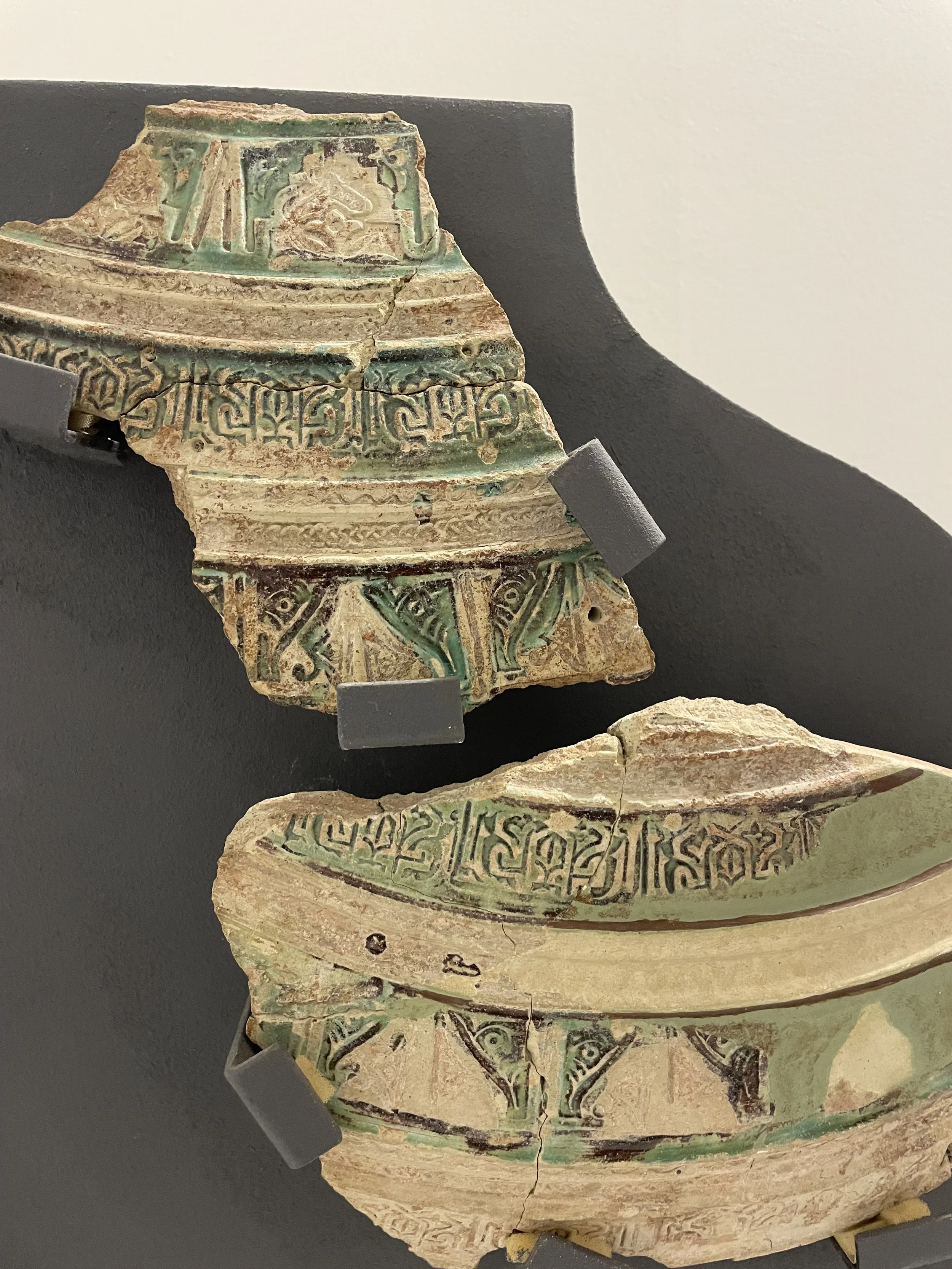
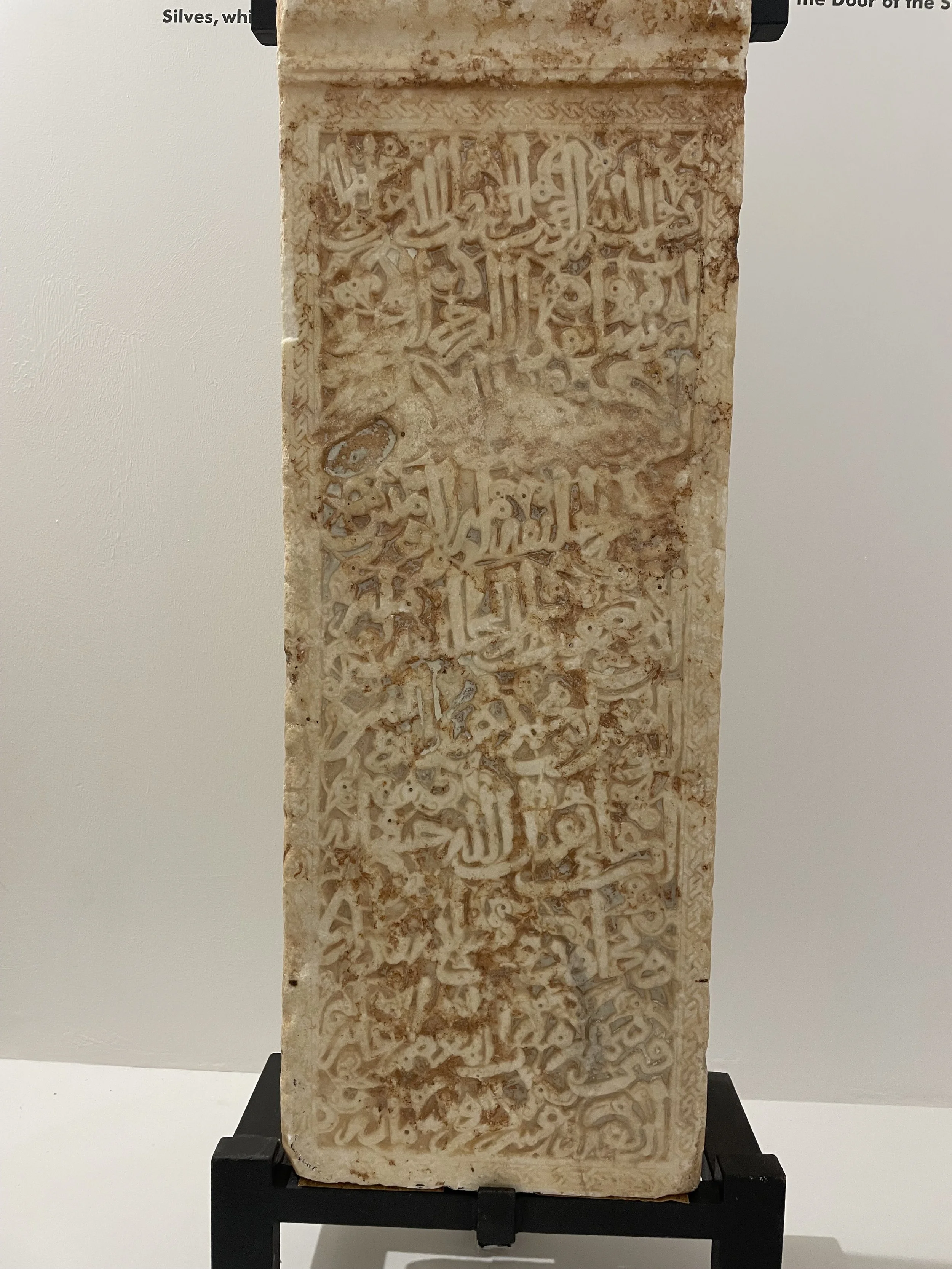
Beyond monumental architecture, the domestic and material realities of Andalusian Faro are preserved within the archaeological record. Excavations inside the Vila-Adentro and areas surrounding the Convento de Nossa Senhora da Assunção (now the Municipal Museum of Faro) have yielded a wealth of domestic material culture dating from the 9th through the 13th centuries, like the manufactured pottery items used for cooking, food storage, and water transportation, reflecting shared domestic traditions across the western Mediterranean. Inscriptions detailing funerary stones were also found, documenting the administrative language of the inhabitants of Faro during these times (Anan, 1969).
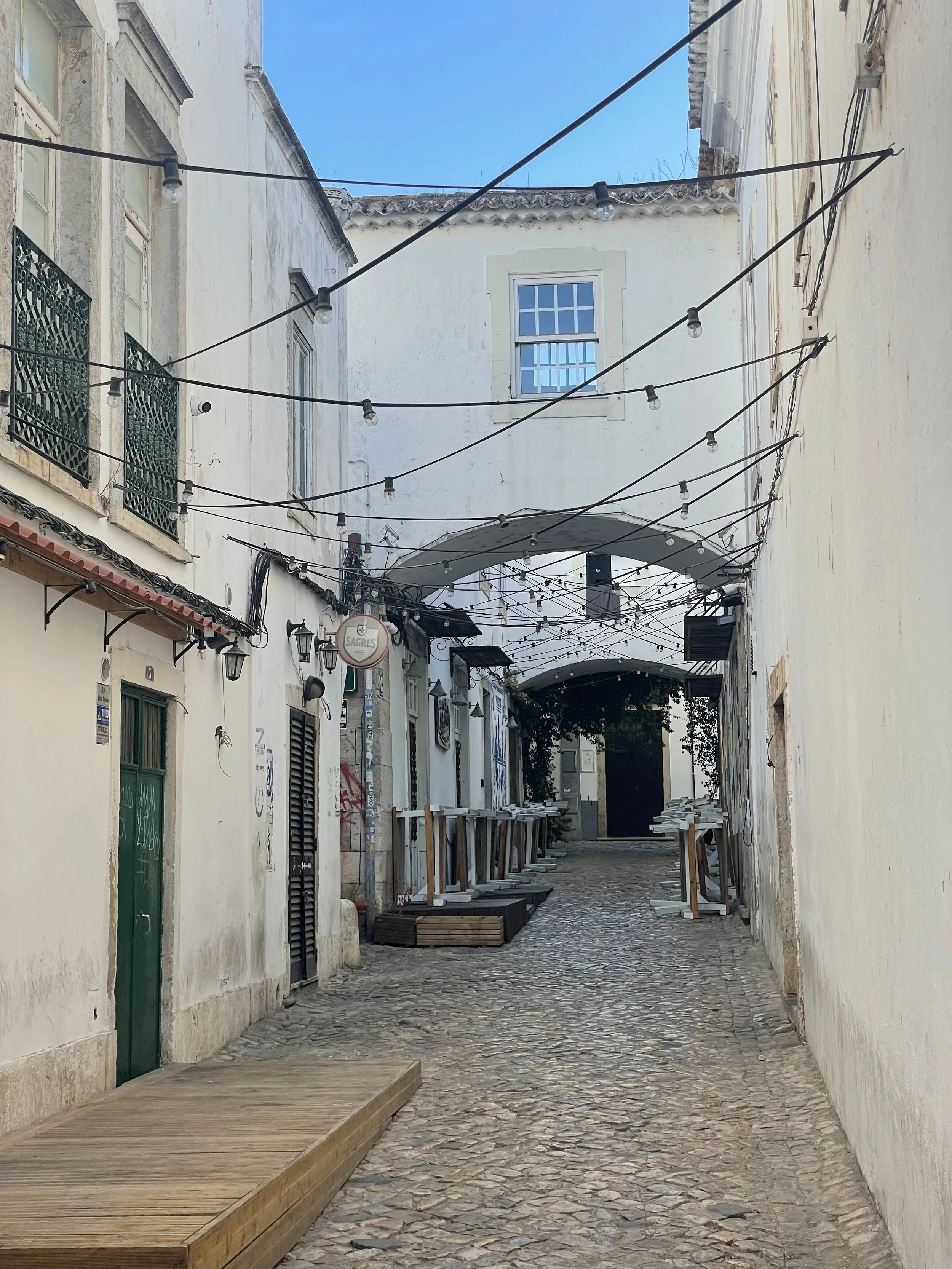
Today, Faro is known as a gateway to the beaches of the Algarve. But if you look closely at its old quarters, you quickly see that the modern city is built on its Muslim past. When you walk the winding, narrow streets of the old city, you are following the exact footprint of the medieval Islamic medina.
From pottery fragments buried in the mud to the foundations of the grand cathedral, Faro holds an Islamic heritage of many names and many rulers. yet its unique, shared soul still lives on in the stone. To walk the streets of Faro today is to move through five hundred years of al-Andalus all at once, where the echo of that lively Andalusian heritage still hangs in the air above the lagoon.
References
Anān, M. ʿA. A. (1969). Dawlat al-Islām fī al-Andalus: Al-ʻaṣr al-awwal [The Islamic state in al-Andalus]. Muʾassasat al-Khanjī.
Al-Ḥimyarī, M. (1938). Kitāb al-Rawḍ al-miʿṭār fī khabar al-aqṭār [The fragrant garden: News of the regions] (É. Lévi-Provençal, Ed. & Trans.). E. J. Brill.
Al-Idrīsī, M. ibn M. ibn ʿAbd Allāh. (2008). Nuzhat al-Mushtāq fī Ikhtirāq al-Āfāq [The Delight of Him Who Longs to Travel the Horizons] (Vol. 1). Cairo: Maktabat al-Thaqāfa al-Dīniyya. (Original work published c. 1154).
Algarve Tips. (2025, May 6). History of Faro: From Roman Ossonoba to the Algarve's capital. https://www.algarvetips.com/cities/faro/history-of-faro/.
David, H., & Pizarro, J. A. P. de S. M. (1987). A conquista de Faro: O reavivar de uma questão. Actas das III Jornadas de História Medieval do Algarve e Andaluzia, 63–76.
Granja-Martins, F. M., & Fernandez, H. M. (2024). Geographic Information System in the Optimization of Tourist Routes in the City of Faro (Algarve, Portugal). Urban Science, 8(3), 123. https://doi.org/10.3390/urbansci8030123.
Ibn al-Qūṭiyya. (1989). Taʾrīkh Iftitāḥ al-Andalus (I. al-Abbās, Ed.). Dār al-Kutub al-ʿIlmiyya.
Ibn al-Qūṭiyya, M. ibn ʿU. (2009). Early Islamic Spain: The history of Ibn al-Qūṭiya (D. James, Trans.). Routledge. (Original work composed c. 960).
Ibn 'Idhari al-Marrakushi. (2013). Al-Bayan al-mughrib fi akhbar wa-al-Maghrib [The amazing story of the history of the kings of al-Andalus and the Maghreb] (B. A. Maruf & M. B. 'Awwad, Eds.). Dar al-Gharb al-Islami. (Original work published c. 1312).
Machado, J. P. (2003). Dicionário onomástico etimológico da língua portuguesa (3rd ed.). Livros Horizonte.
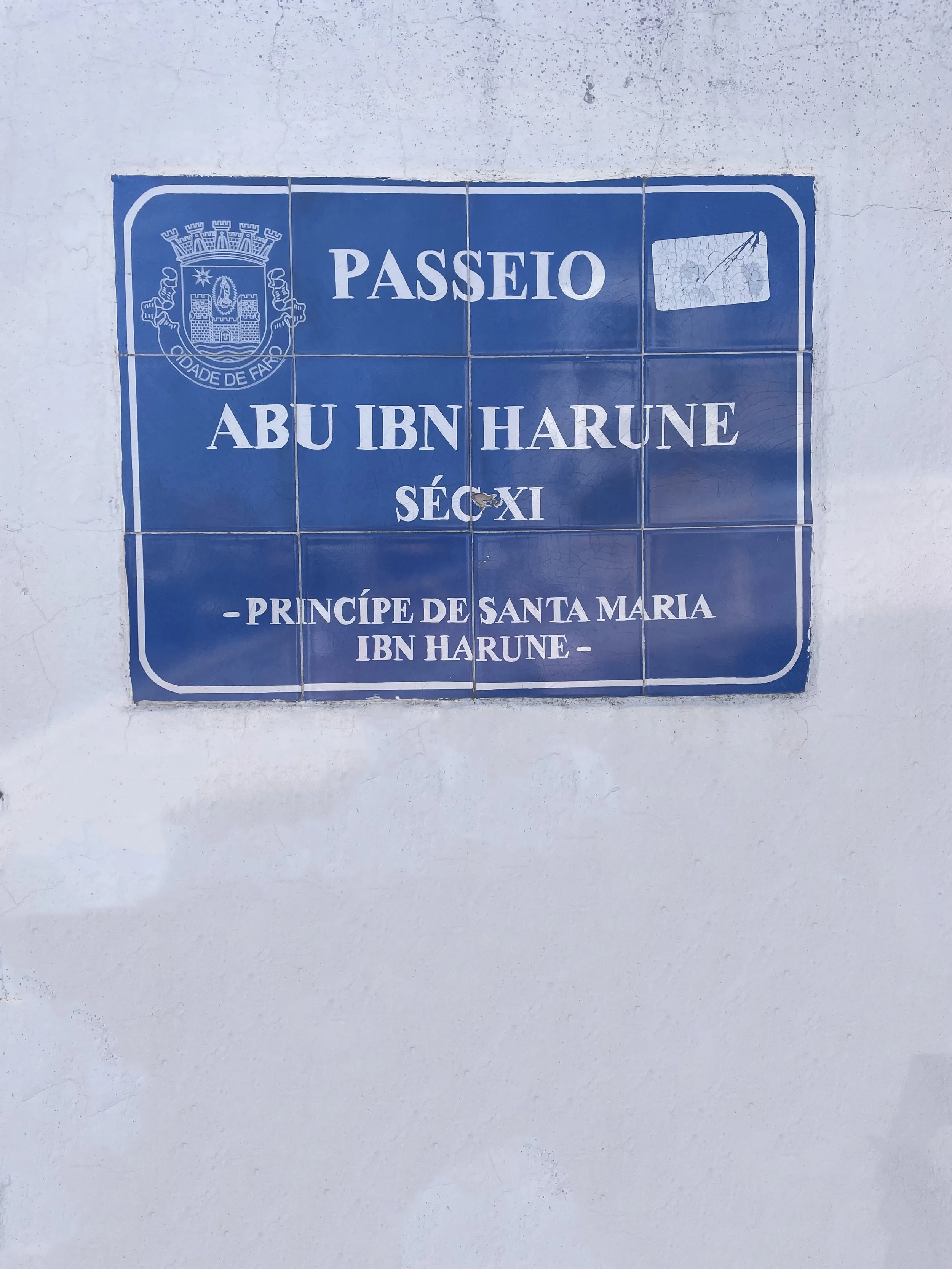
Left: A road in Faro named after its famous governor Abu Ibn Harun, A. Nusair.
Right: A narrow street in the old city, A. Nusair
The Portuguese conquest of the Algarve was a methodical campaign spanning roughly a decade from 1238 to 1249 CE. Much of the advance was carried out under the command of Paio Peres Correia, master of the Order of Santiago, whose forces gradually secured towns across the region. The Algarve at this time was part of the Taifa of Niebla, ruled by Musa ibn Muhammad ibn Nassir ibn Mahfuz, who styled himself Amir al‑Gharb (Emir of the West) and requested Castilian protection to resist Portuguese expansion (Anan, 1969).
In 1249 CE, King Afonso III of Portugal personally led the campaign that concluded by the capture of Faro, the last major Muslim stronghold in the Algarve. Contemporary sources suggest the city was delivered rather than violently stormed, as Muslim defenders were isolated after the fall of Seville in 1248 CE and other nearby towns. Following the conquest, many Muslims either fled to Muslim‑controlled territories, remained as mudéjares (Muslims allowed to live under Christian rule while retaining their religion and customs) in isolated quarters, or converted to Christianity. The walls of Faro, fortified under the Almohads, were incorporated into Portuguese defenses, and the last qadi (A judge responsible for administering justice) of the Banu Harun line surrendered the city (David & Pizarro, 1987).
This act marked the end of Islamic political rule in the Algarve, closing nearly five centuries of Muslim governance in the region. Yet Islamic cultural presence did not vanish immediately. Mudéjar communities persisted until the end of the 15th century.
The urban fabric of Faro still bears Andalusian traces, like the narrow streets of the old city and the most prominent physical structures of the defensive fortifications, known locally as the Muralhas de Faro (Faro city walls). While the city walls follow the spatial grid established during the Roman administration of the ancient city Ossonoba (Faro), they underwent extensive restructuring, heightening, and reinforcement under successive Islamic periods. The structural core of the Arco da Vila, which is the primary ceremonial gateway today, rests on an ancient Moorish gateway framework, which originally allowed access directly from the sea into the medieval medina (Granja-Martins & Fernandez, 2024).
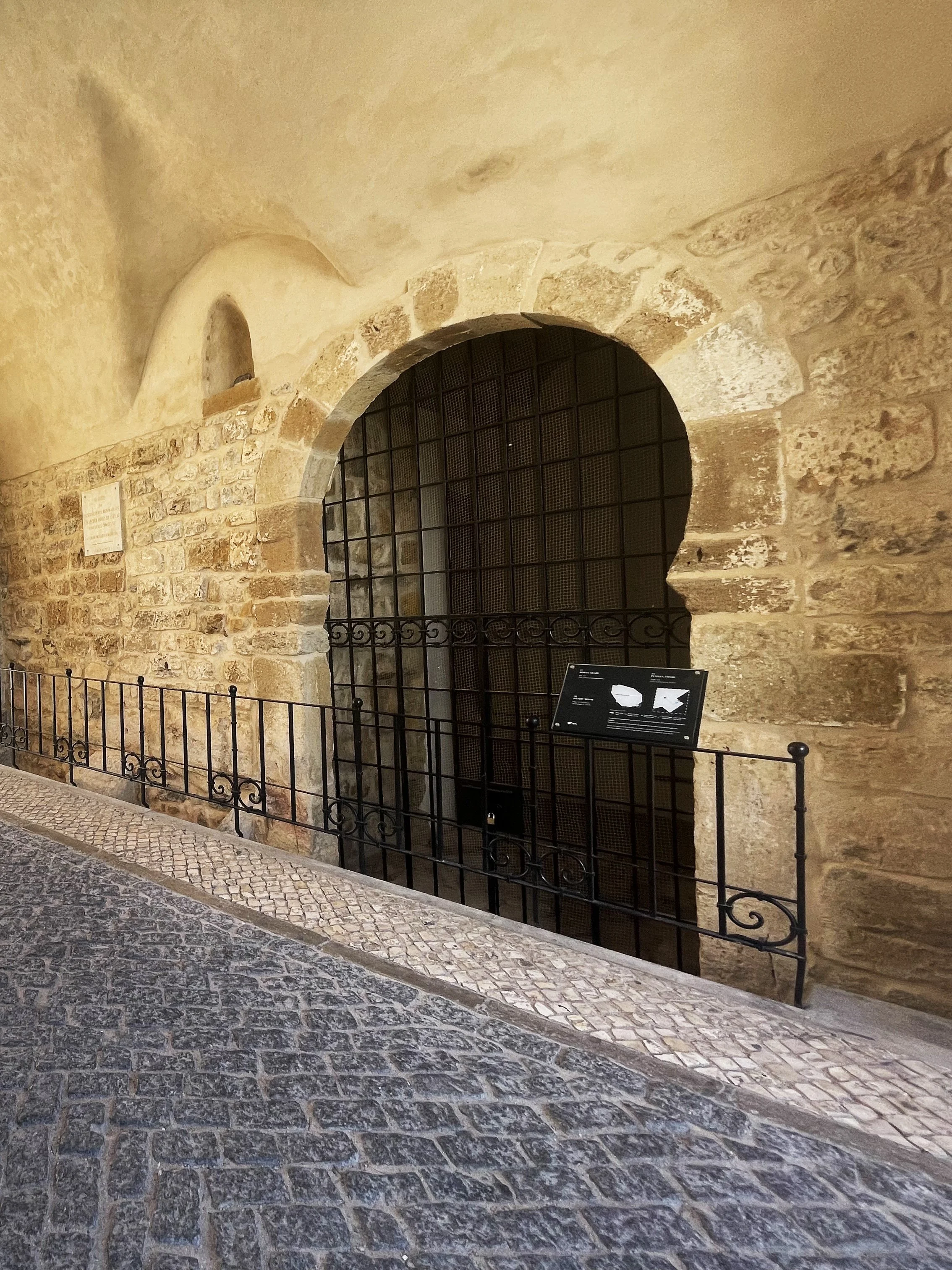
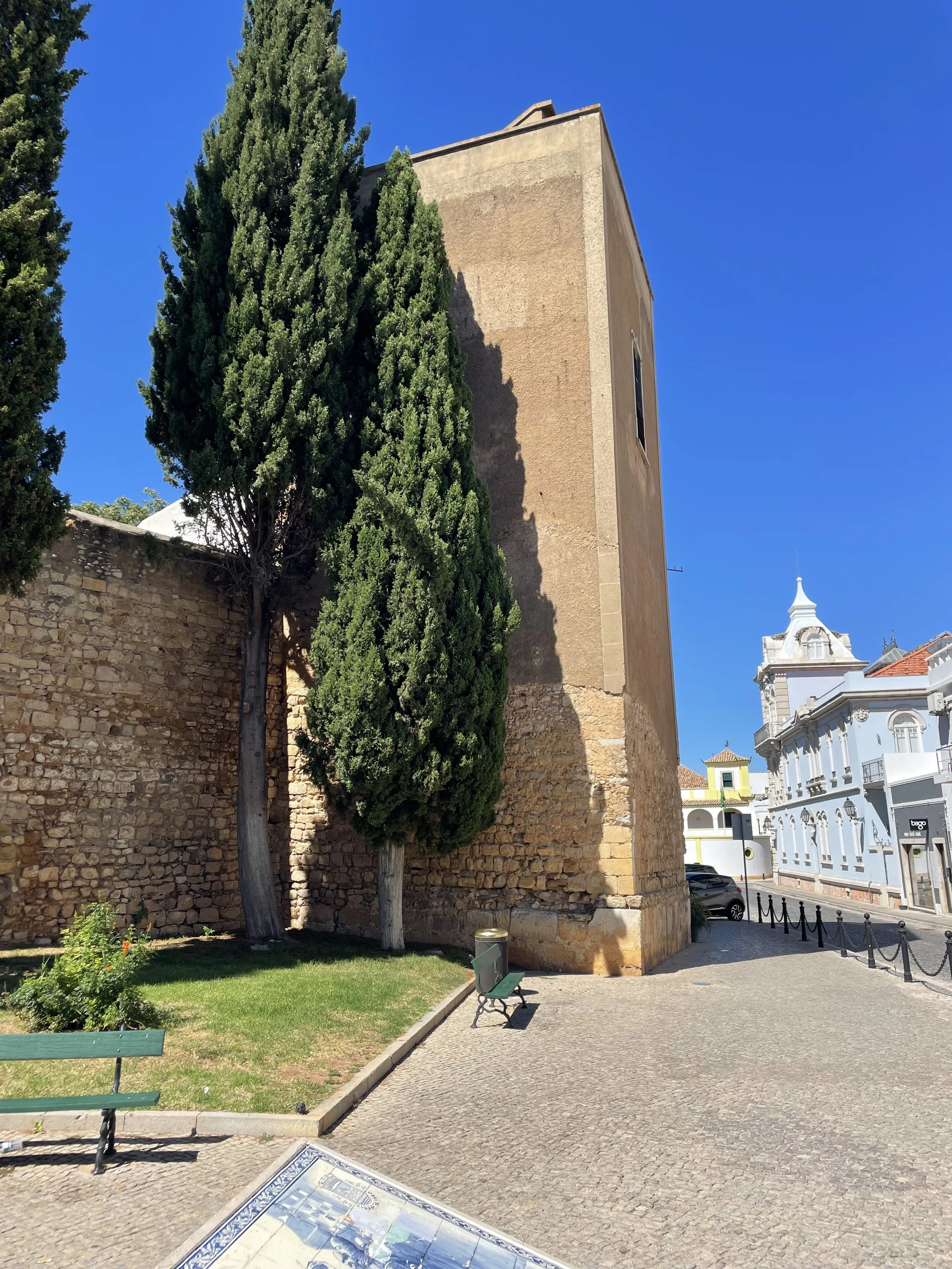
Islamic traces of old gate and defensive walls and tower, A. Nusair.
Findings of Islamic ceramics and inscriptions funerary stone, A. Nusair.