Umm Al-Quttain: When Historic Stones Become Part of a Struggle for Survival
This article is based on field observations made during a visit to Umm Al-Quttain in Jordan, as part of a field-course assignment at the Hashemite University, as well as oral accounts shared by members of the local community. It distinguishes between documented observations and oral narratives that require further research and verification.
Umm Al-Quttain is a significant archaeological site located in Mafraq Governorate, within the northeastern Badia region of Jordan, roughly 52 km east of Mafraq city. The site preserves architectural remains from the Roman and Byzantine periods, including churches, residential units, and other structures, many enclosed within a circular wall over half a mile long (Butler, 1913, as cited in Twalbeh, 2003). Settlement here dates back to the Neolithic and Chalcolithic periods, with a Nabataean caravan station established in the early 1st century BCE, followed by a Roman fort and a flourishing Byzantine Christian community. Occupation continued through the Umayyad, Abbasid, and Ayyubid-Mamluk periods, and the site remained inhabited into the late Ottoman period (Twalbeh, 2003). Much of this history was built using locally sourced basalt stone, which forms an essential part of the region’s architectural identity.
On the morning of Wednesday April 15, 2026, students enrolled in a field-course at the Hashemite University, accompanied by the course instructor, visited Umm Al-Quttain to document the site and observe its current condition. From the moment we arrived, our attention was drawn not only to the historical importance of the architectural remains, but also to the challenges currently affecting the preservation of the site.
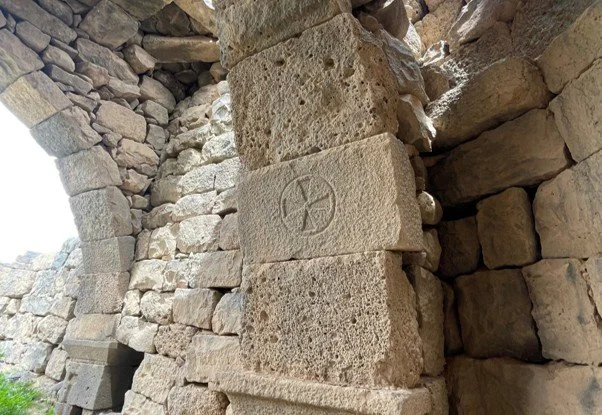
During the visit, we observed local residents removing basalt stones that belonged to the site’s historic structures and transporting them for reuse elsewhere. These stones were not naturally occurring materials, but original architectural elements from the archaeological remains. What we witnessed is, in fact, a continuation of a practice already documented at the site: earlier archaeological surveys recorded large basalt stones carved with plant or cross motifs being removed from their original context and reused in the construction of modern houses in the town (Twalbeh, 2003). Seeing this happen again during our visit shows that the removal of the site’s stones is not an isolated incident, but an ongoing process that has continued for years — one that keeps eroding the site’s historical context and authenticity, and underscores the need for stronger heritage awareness and management strategies.
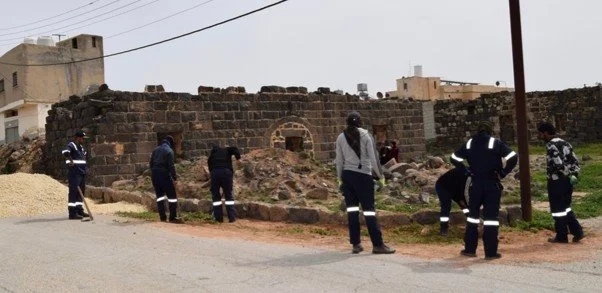
Figure 1. Local residents transporting basalt stones removed from the archaeological site.
We also observed extensive vegetation covering parts of the site, with some areas used for livestock grazing, resulting in animal waste accumulating across the archaeological remains. Beyond hindering fieldwork, such environmental factors may contribute to the long-term deterioration of the basalt stones and the site as a whole.
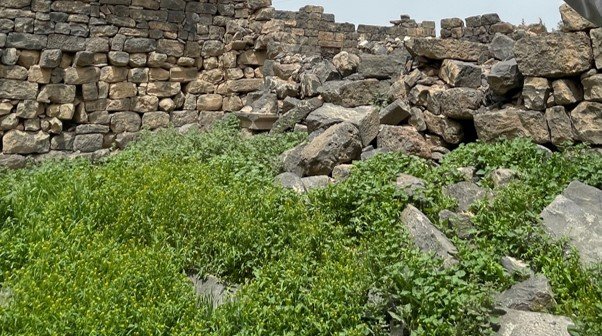
Figure 2. Vegetation covering the site.
Approximately half, or more, of the surviving buildings — whose exact construction period could not be confirmed during our visit — have experienced some form of modern reuse. Some structures have been adapted for residential use, while others were reconstructed using original basalt stones combined with modern materials such as cement and straw (tibn), affecting their authenticity. Visible cracks were observed in the cement layers, likely due to differing chemical properties between cement and basalt
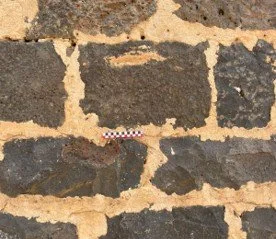
Figure 3. Cement cracks on basalt walls.
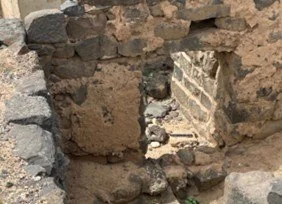
Figure 4. Cement mixed with straw (tibn).
Several architectural elements also showed evidence of relocation and reuse. One example was a carved stone lintel above a doorway, where the inscription appeared to have originally been designed vertically but was installed horizontally — suggesting the stone had been moved from its original context and reused in a later construction phase, a practice known as spolia. No epigraphy specialist or translator was present, so the inscription’s content could not be identified. This pattern is well documented at the site more broadly, where inscribed stones have similarly been repurposed as door lintels and arches in modern buildings (Twalbeh, 2003).
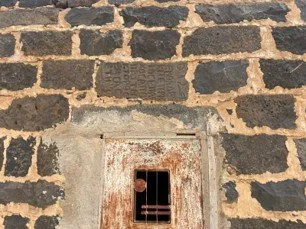
Figure 5. Reused stone lintel with inscription.
A Church in Ruins
The group later visited a church a short distance from the main site, found in a severely deteriorated state with only walls and scattered elements remaining. The altar’s location could still be identified through surrounding columns and column bases, indicating the building’s former religious function.
One local resident shared an oral account about the church: that it once had a roof later destroyed by treasure hunters, and that it had contained a saint’s sarcophagus removed during illegal digging. This account has not been independently verified, but it reflects local memory and shows how looting can affect the preservation of archaeological remains — once separated from their original context, such features lose much of the information needed to understand the site’s history.
The Site’s Core Challenge
These observations reveal a central challenge facing Umm Al-Quttain: balancing the protection of its archaeological value with its continued, centuries-old role in the lives of the surrounding community.
The main threats affecting the site include:
1. Removal and reuse of original architectural materials
2. Limited formal protection and heritage management
3. Illegal excavation and looting
4. Environmental degradation
5. Continued modern use of historic structures
Protecting Umm Al-Quttain Through Community Engagement
Preserving Umm Al-Quttain does not require separating the local community from the site. Instead, sustainable protection should involve local residents as active partners in heritage preservation through awareness, cooperation, and community-based management.
The basalt stones of Umm Al-Quttain are not simply construction materials; they represent the history, identity, and experiences of the communities that built and continue to live around the site. Protecting these remains means recognizing the connection between people and heritage, so the community becomes a partner in preservation rather than being seen only as a challenge to it.
References
Twalbeh, Diya’ al-Din. “Umm al-Quttain Site in the Northeastern Badia: First Season 2002.” Annual of the Department of Antiquities of Jordan, vol. 47 (2003). https://publication.doa.gov.jo/Publications/ViewChapterPublic/2412.