Buying Back the Past, One Masterpiece at a Time: Inside Italy’s Costly Quest for Cultural Heritage
The Etruscans have always occupied a unique place between history and mystery. This ancient civilization flourished across central Italy, particularly in present-day Tuscany, centuries before the rise of Rome. Although scholars can read the Etruscan alphabet, much of their language remains unknown, and many aspects of their society and culture continue to remain unknown. Their relative obscurity, however, is not only due to these unanswered questions: for centuries, the Etruscans have also been overshadowed by their more famous neighbours, the Romans, despite their profound influence on early Roman religion, politics, and culture. It is perhaps no coincidence, then, that the National Etruscan Museum of Villa Giulia in Rome, widely regarded as the world's leading museum dedicated to Etruscan civilization, has often remained in the shadow of the city's better-known cultural institutions.
However, the museum has recently been under the spotlight thanks to a remarkable new addition to its collection, which I had the chance to admire during a visit this July. From the very entrance, it is clear where the museum wants visitors to begin their journey: at the celebrated François Tomb, an extraordinary cycle of 4th century BCE frescoes discovered in an elite tomb at Vulci, in present-day northern Lazio. Earlier this year, the Italian state acquired the frescoes for €15 million, making the purchase one of the country's most significant cultural acquisitions in recent decades.
The François Tomb, however, is only the latest chapter in a broader phenomenon. Throughout 2026, indeed, the Italian state has undertaken an ambitious campaign of acquisitions that has also brought into public ownership Antonello da Messina's Ecce Homo and Caravaggio's Portrait of Monsignor Maffeo Barberini. Different in period, style, and destination, these works nonetheless point to the same trend: the continued excellence of the Italian public authorities as proactive actors in the art market, committed not only to protecting cultural heritage but also to actively shaping the nation's public collections.
Reclaiming Heritage: Latest Italy’s Acquisitions
The first major indication of this exceptional season came in February, when the Italian state acquired Antonello da Messina's Ecce Homo for $14.9 million, just before the painting was due to be auctioned at Sotheby's in New York. This masterpiece is one of the few surviving paintings by the Sicilian master, whose known oeuvre comprises only around forty works. Remarkable for both its rarity and artistic quality, the work is a small panel painted on both sides. One side depicts an Ecce Homo, showing Christ crowned with thorns, while the reverse portrays a penitent Saint Jerome immersed in a rocky landscape. The Ministry of Culture described the acquisition as a strategic investment in Italy's national heritage, emphasizing both the painting's exceptional artistic importance and the need to keep it within the country's public collections (Ministero della Cultura 2026; Reuters 2026).
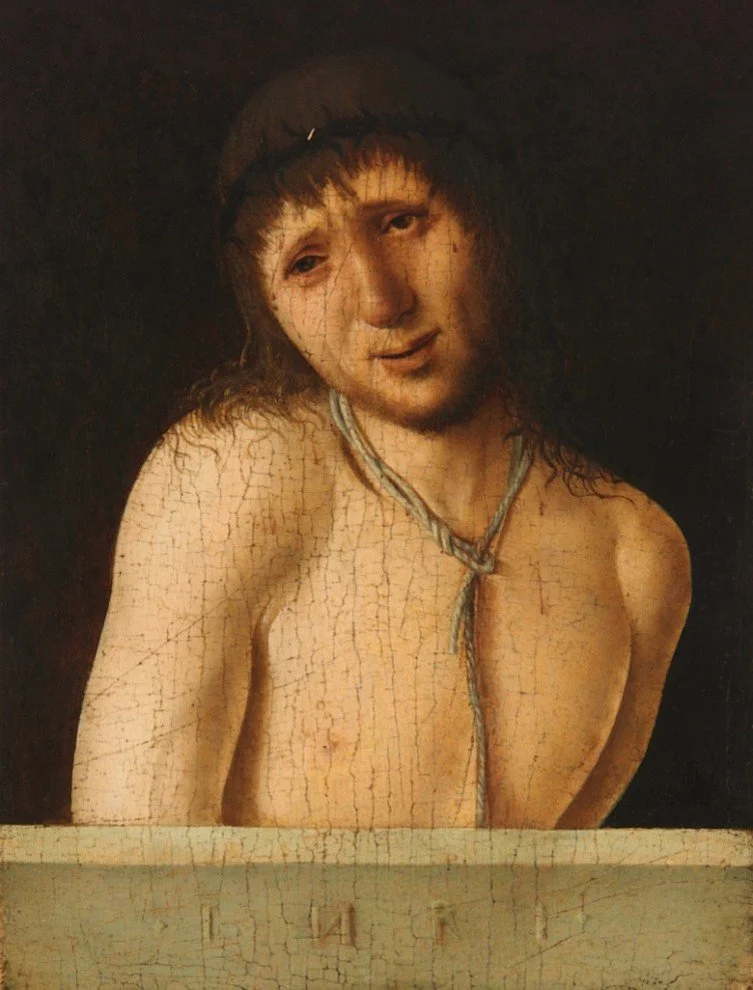
Antonello da Messina, Ecce Homo, c. 1460.
Source: https://www.artribune.com/arti-visive/arte-moderna/2026/03/ecce-homo-antonello-da-messina-mostra-roma-palazzo-minerva/.
Only a few weeks later came an even more ambitious acquisition: Caravaggio's Portrait of Monsignor Maffeo Barberini. To secure the painting, which will become part of the permanent collection of Palazzo Barberini in Rome, the Italian state invested €30 million, one of the highest sums it has ever spent by a state on a single piece of art. The portrait depicts the future Pope Urban VIII as a young man and is considered a key work for understanding both the evolution of Caravaggio's portraiture and his relationship with the influential Barberini family. Following more than a year of negotiations, the acquisition carries a strong symbolic value, bringing into public ownership a masterpiece that had remained in private hands for decades (Associated Press 2026; Ministero della Cultura 2026).
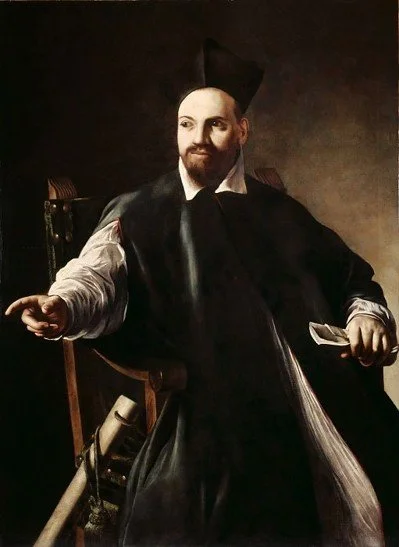
Michelangelo Merisi da Caravaggio, Portrait of Maffeo Barberini, c. 1598.
Source: https://gallerix.org/album/Caravaggio/pic/glrx-9662.
The third acquisition, already mentioned in the introduction, concerns the François Tomb, one of the greatest surviving masterpieces of Etruscan painting. Acquired for approximately €15 million and now permanently housed at the National Etruscan Museum of Villa Giulia, the purchase brings to an end a story that spans more than a century: as early as 1921, the Italian state had expressed its intention to acquire the funerary monument. Villa Giulia itself is a highly symbolic site for the protection and valorization of cultural heritage, as it houses thousands of looted antiquities that Italy has recovered over the years.
Discovered in 1857 by the archaeologist Alessandro François in the Ponte Rotto necropolis at Vulci, the tomb dates to between 340 and 320 BCE and is renowned for its extraordinary cycle of 37 frescoes, among the finest surviving examples of Etruscan painting. Blending Greek mythology, historical memory, and the celebration of Vulci's aristocratic elite, the frescoes offer an exceptional insight into Etruscan civilization.
This acquisition marks the recovery of a fundamental piece of Italy's cultural heritage and of Etruscan history, a civilization whose extraordinary legacy has too often been overshadowed by the overwhelming prominence of ancient Rome (ANSA 2026; Italian Minister of Culture 2026).
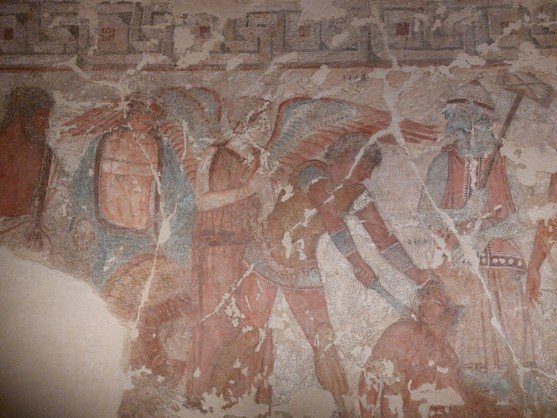
François Tomb, 4th century BCE. In this scene inspired by the Iliad, Achilles sacrifices a Trojan prisoner during the funeral rites for Patroclus, whose spirit appears behind him dressed in blue. The scene also includes two figures from Etruscan mythology: Vanth, the winged female deity associated with the underworld, and Charun, the blue-skinned demon who guides the dead. The fresco cycle is a remarkable example of the cultural syncretism between Greek mythology and Etruscan beliefs. Source: the author.
The Debate Over Italy's Acquisition Campaign
“It is true that there is a policy to step up these acquisitions. We want people to understand how important it is for us to bring works of great artistic and public significance back to Italy and make them available to the world as well as to Italians” declared the Culture Minister Alessandro Giuli (CityNews Halifax 2026). Italian authorities have a long tradition of being proactive on the art market, and these acquisitions seem to confirm this approach, with the Italian state appearing increasingly willing to play an active role in shaping the nation's public collections.
Undoubtedly, these exceptional acquisitions are also deeply intertwined with the current government's political agenda. The most recent acquisitions appear to have generated a level of public debate on the matter that has not been seen in years, both because of the substantial sums invested and the remarkable speed with which they were carried out. Cultural heritage has become an increasingly prominent component of the “Made in Italy“ agenda, presented as both a source of national pride and a key expression of Italy's identity. For this reasons too, this new wave of acquisitions has not been without criticism. Some observers have argued that the millions spent on a handful of masterpieces could instead be invested in addressing long-standing challenges facing Italy's cultural sector, from museum staffing and archaeological conservation to the maintenance of historic sites and support for smaller cultural institutions. The debate raises a legitimate question: is it worth using public resources to acquire new masterpieces, or would those funds be better invested in preserving the vast cultural heritage already held in public collections, especially in a country as rich in works of art as Italy? (The Times 2026).
References
Associated Press. “Italy Buys Rare Caravaggio Portrait for $35 Million, One of Its Largest Payouts for a Single Work.” March 11, 2026. https://apnews.com/article/italy-caravaggio-portrait-painting-maffeo-barberini-pope-culture-52d739100b450709b88c7e74f761de22.
ANSA. “Il Mic acquista la Tomba François, capolavoro etrusco da 15 milioni di euro.” May 29, 2026. https://www.ansa.it/sito/notizie/topnews/2026/05/29/il-mic-acquista-la-tomba-francois-capolavoro-etrusco-da-15-milioni-di-euro_201c8f37-db73-4fd1-92d1-15c938a9c84c.html.
CityNews Halifax. “Italy’s Culture Minister Pledges to Buy More Artworks as Latest Purchase Shown in Rome.” March 26, 2026. https://halifax.citynews.ca/2026/03/26/italys-culture-minister-pledges-to-buy-more-artworks-as-latest-purchase-shown-in-rome.
Ministero della Cultura. “Cultura, Giuli: ‘Lo Stato italiano ha acquistato l’Ecce Homo di Antonello da Messina.’” February 09, 2026. https://cultura.gov.it/comunicato/28670.
Ministero della Cultura. “Cultura, Giuli: Lo Stato italiano acquisisce il Ritratto di Monsignor Maffeo Barberini di Caravaggio.” March 10, 2026. https://cultura.gov.it/comunicato/28792.
Ministero della Cultura. “Cultura, acquisita la Tomba François, capolavoro dell’arte etrusca.” June 30, 2026. https://cultura.gov.it/comunicato/29158.
Reuters. “Italy Buys Messina’s ‘Ecce Homo’ Painting for $15 Million.” February 10, 2026. https://www.reuters.com/lifestyle/italy-buys-messinas-ecce-homo-painting-15-million-2026-02-10.
The Times. “Why Giorgia Meloni’s Italy Is on a Mission to Buy Back ‘Lost Art.’” March 25, 2026. https://www.thetimes.com/world/europe/article/giorgia-meloni-mission-buy-italian-masterpieces-ecce-homo-3glmplw2r.