How Did Bread Survive for More Than 14,000 Years?
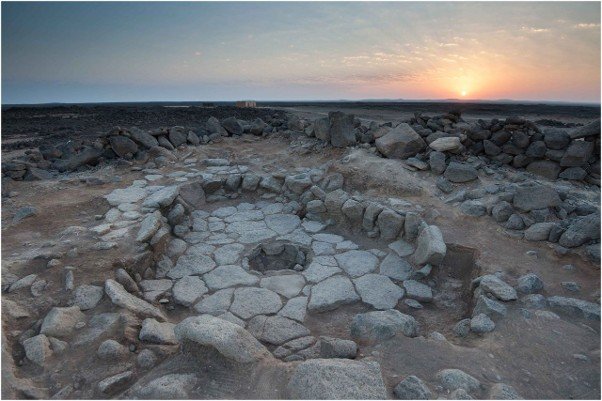
In northeastern Jordan, at the site of Shubayqa 1, archaeologists have found the oldest direct evidence of bread-like products. The site dates back to the Early and Late Natufian period, between about 14,600 and 11,600 years before the present. The remains show that hunter-gatherers were preparing food similar to bread at least 4,000 years before the beginning of agriculture. [1]
The researchers studied 24 charred food remains from two ancient fireplaces. Under the microscope, the fragments showed a starchy and porous structure, which suggests that they were flat, unleavened bread-like products.
What did they use to make it?
The people of Shubayqa used wild cereals, such as wild einkorn, wild barley, and possibly oats. These cereals were probably ground into flour or coarse meal before being mixed with water.
They also used the underground tubers of a wild plant called club-rush, scientifically known as Bolboschoenus glaucus.
The tubers could also be processed and mixed with the cereals to make a simple bread-like product. However, the exact recipe used by the people of Shubayqa is not known.
How were the remains preserved?
The bread did not remain fresh for 14,000 years. The small pieces were partially burned and became charred inside the fireplaces. They were then covered by layers of sediment, which helped protect them from decomposition. What survived was not complete bread, but small charred food fragments that could still be studied by archaeologists.
What does this discovery tell us?
This discovery shows how resourceful and adaptable people were in the past. They used the resources available in their environment, including wild cereals, roots, and tubers, and found ways to turn them into food.
It also reminds us that roots and tubers may have been more important in ancient diets than the archaeological record suggests. Unlike grains, they decompose easily and are less likely to survive at archaeological sites.
After more than 14,000 years, only a few charred fragments remain. However, they show that humans were already experimenting with different plants and adapting to their environment long before agriculture began.
References
Arranz-Otaegui, A., Gonzalez Carretero, L., Ramsey, M. N., Fuller, D. Q., and Richter, T. (2018). Archaeobotanical evidence reveals the origins of bread 14,400 years ago in northeastern Jordan. Proceedings of the National Academy of Sciences, 115(31), 7925–7930. https://doi.org/10.1073/pnas.1801071115.