Most Visited Museums: Europe Leads, Asia Rises
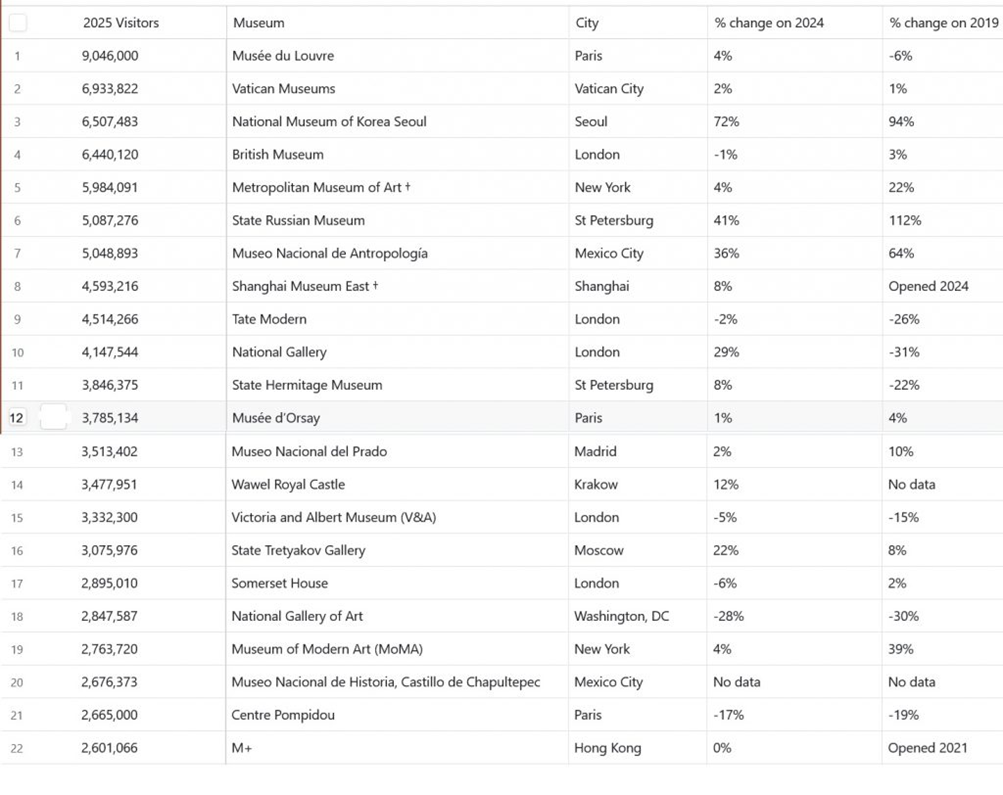
The global museum map is being quietly redrawn. Once again, The Art Newspaper, edited by Lee Cheshire and Elena Goukassian, has released its annual ranking of the world’s 100 most visited museums, offering not just a list of numbers, but a snapshot of deeper cultural shifts. Overall, 2025 marks a milestone: the museum sector has largely completed its post-pandemic recovery. More than 200 million visits were recorded across the top 100 institutions - still below the 230 million peak of 2019, but a remarkable leap from the collapse to just 54 million in 2020. Look closer, however, and a more complex picture emerges. The rankings reveal a world still anchored in its traditional cultural powerhouses, especially across Europe, yet increasingly shaped by new centers of gravity. Asia, in particular, is no longer just catching up; it has become an indisputable protagonist in the global cultural landscape.
Europe Still Leads, but Recovery Remains Incomplete
Europe still holds a leading position in the global museum landscape, with six institutions ranking among the world’s top ten. At the top once again is the Louvre Museum, which welcomed over 9 million visitors in 2025. This is especially notable given a difficult year, with a major jewellery theft, ticketing fraud issues, and a leadership change from Laurence des Cars to Christophe Leribault. Despite this, the museum has not yet fully returned to pre-pandemic levels, remaining about 6% below 2019 figures.
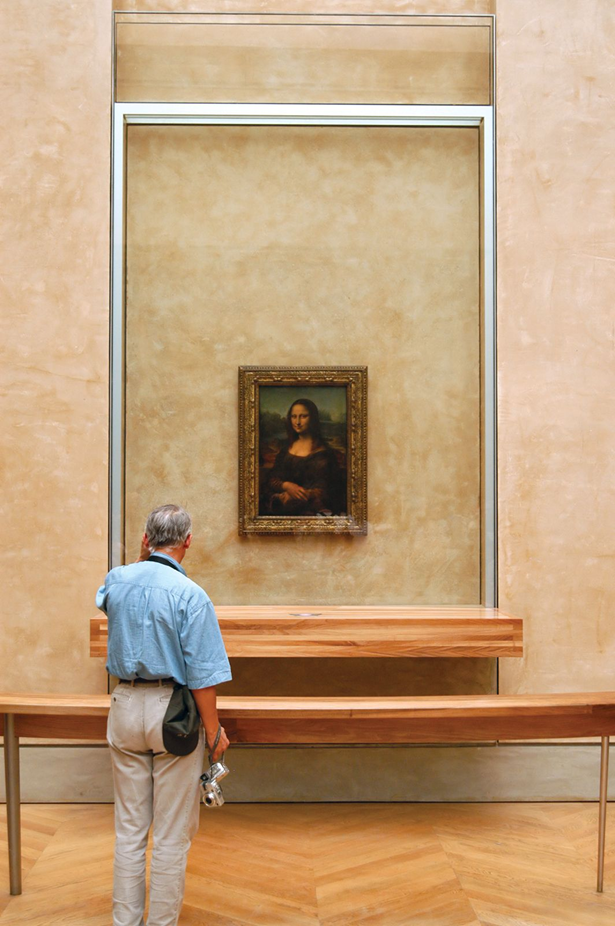
Despite the scandals and challenges of the past year, the Louvre Museum has once again confirmed its position as the most visited museum in the world. Source: https://www.britannica.com/topic/Louvre-Museum#ref1251889.
In second place, the Vatican Museums confirm their global appeal with more than 6.9 million visitors. Italy also performs strongly overall. The Uffizi Galleries reached 5.3 million visitors across their network, though the lack of detailed data excluded them from the ranking. Other Italian museums in the global top 100 include the Galleria dell'Accademia, the Museo Egizio, and the Capitoline Museums.
London further reinforces its role as a global cultural hub, with three museums in the top ten: the British Museum, the Tate Modern, and the National Gallery. However, recovery has not been uniform. Both the Tate Modern and the National Gallery remain below 2019 levels, despite recent renovations. The broader UK picture is more mixed: the British Museum remains stable at around 6.4 million visitors, slightly above pre-pandemic figures, while others are seeing strong rebounds. The Natural History Museum reached a record 7.1 million visitors, and university museums such as the Ashmolean Museum and the Fitzwilliam Museum have also grown significantly.
One institution that recorded a modest increase was the Museo del Prado, which surpassed the 3.5 million visitor bar for the first time. Nonetheless, director Miguel Falomir, rather than celebrating the milestone, adopted a more cautious stance, telling the press in January: “The Prado doesn’t need a single visitor more. We feel comfortable with 3.5 million. A museum’s success can collapse it, like the Louvre, with some rooms becoming oversaturated. The important thing is not to collapse.”[1]
The Americas: Between Disruptions and Cultural Expansion
Museum attendance in the United States followed an uneven path. The Metropolitan Museum of Art in New York remained the country’s leading institution and the only one in the global Top 10, attracting nearly 6 million visitors, up about 22% from 2019. Other major museums, including the National Gallery of Art and the MoMA, continued to perform strongly. However, natural disasters and political turmoil affected many other USA cultural institutions, especially in Los Angeles, where both wildfires and federal government shutdown led to a 58% drop at the Getty Villa. In Washington, D.C., the federal shutdown also reduced attendance, with the National Gallery of Art and the National Museum of African American History and Culture both recording significant declines.
Latin America recorded strong growth, with Mexico confirming its role as the regional main cultural hub, placing two museums in the global Top 20. Mexico City is the center of this trend, thanks to the Museo Nacional de Historia, Castillo de Chapultepec and the Museo Nacional de Antropología, which reached a record 5.1 million visitors in 2025, ranking seventh worldwide. In Brazil, the Museu de Arte de São Paulo Assis Chateaubriand (MASP) more than doubled its visitors to 1.2 million, helped by a popular Claude Monet exhibition. Other Brazilian museums, such as the Instituto Tomie Ohtake and the Casa Fiat de Cultura, also saw strong increases.
MENA: The Impact of Regional Tensions on Culture
The situation in the Middle East is far more uneven and closely linked to geopolitical tensions. The ongoing war in Gaza has clearly affected museum attendance across the region. The Israel Museum, for example, recorded a drop of around 40% in visitors compared to 2024. Similarly, the Tel Aviv Museum of Art faced major problems, including cancelled international exhibitions and limited opening hours for security reasons. Despite these challenges, it still attracted over one million visitors, showing a degree of resilience even in a difficult context.
The Louvre Abu Dhabi has remained stable at around 1.4 million visitors, confirming its role as a key regional cultural hub; however, ongoing tensions in the Persian Gulf and Iranian attacks on the United Arab Emirates may lead to a significant decline in attendance during 2026. The drones attacks have raised concerns in France as well, with experts questioning the safety of around 250 French artworks on loan and suggesting their possible repatriation. France's Culture Ministry has sought to reassure critics, telling AFP that the French authorities were "in close and regular contact with the authorities of the United Arab Emirates to ensure the protection of the works on loan from France to the Louvre Abu Dhabi". It is worth recalling the agreement between the two countries, under which France committed to providing expertise, lending artworks, and organizing exhibitions in exchange for €1 billion, including €400 million for the use of the “Louvre” name. In 2021, the deal was extended until 2047, for an additional €165 million.[2]
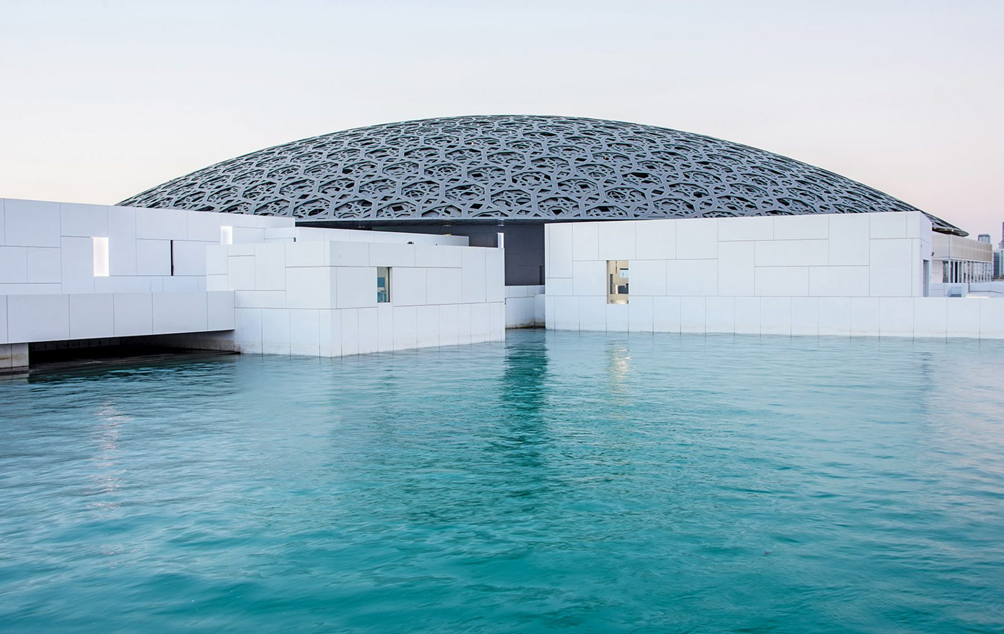
Opened in 2017, the Louvre Abu Dhabi stands as the Arab world’s first universal museum, embodying the UAE’s growing cultural ambitions. Source: https://metamodernarchitect.com/project/louvre-abu-dhabi/.
At the same time, the region continues to invest in ambitious cultural projects. One of the most anticipated is the Grand Egyptian Museum, which is already drawing significant attention: although official figures are not yet fully available, early reports suggest it has been receiving up to 18,000 visitors per day since opening in last November, equivalent to roughly 6.5 million annually - numbers which would place it in the global top 5.
Looking ahead, much will depend on how the geopolitical situation evolves. Cultural tourism in the region remains highly sensitive to broader political dynamics, making growth less predictable than in other parts of the world.
A New Cultural Geography: Asia’s Museums Rise
The global museum map is changing, and it is moving east: while Europe still dominates, Asia is quickly becoming the most dynamic and fast-growing region in the museum world. The National Museum of Korea, for instance, saw its visitors jump by more than 70% in a single year, reaching around 6.5 million and climbing to third place worldwide. In China, the newly opened Shanghai Museum East has already attracted over 4.6 million visitors, securing a spot among the global top ten almost immediately. The growth is spread across the whole region: in Hong Kong, both M+ and the Hong Kong Palace Museum continue to draw steady crowds, while in mainland China the real scale of growth is likely even bigger than global rankings suggest, given that many state-run museums, some with nearly 7 million visitors annually, are not fully accounted for in the ranking.
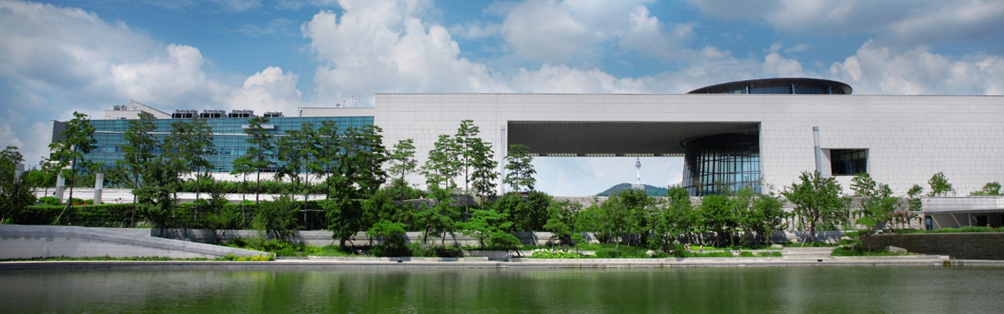
The National Museum of Korea is the largest museum in South Korea, located in Seoul, and houses an extensive collection of Korean art and cultural heritage, spanning from prehistoric artifacts to modern works. Source: https://www.museum.go.kr/ENG/contents/E0605010000.do.
This rise can be explained by the fact that, across East Asia, museums are becoming central tools of cultural strategy, driven by state investment, global cultural influence, and new approaches to visitor experience. China, for example, is not just expanding its museum sector, it is strategically building it: with a plan to become a global “museum powerhouse” by 2035,[3] the country is investing heavily in cultural infrastructure, supported by large urban populations and accessible pricing that keeps museums open to a wide public. “We have placed cultural advancement at a prominent position in governing the country since the 18th CPC National Congress,” Xi Jinping stated, adding that a number of significant measures have been introduced, contributing to the development of a vision of socialist culture with Chinese characteristics for a new era: while Marxism should remain the “fundamental guiding principle“, cultural policies should also take root in the extensive and profound Chinese civilization and heritage, and adapt to the rapid evolution of information technologies.[4][5] In South Korea, the global success of pop culture, from music to film, has sparked growing international curiosity about the country’s heritage, turning museums and historic sites into “must-see destinations”.[6] Japan, meanwhile, offers yet another model: here, the focus is less on scale and more on experience. From immersive digital exhibitions to carefully curated spaces that blend tradition with innovation, Japanese museums are redefining what a museum visit can feel like, attracting both local audiences and global tourists.[7]
Taken together, these trends point to something bigger than just rising visitor numbers. They reveal a broader transformation in how museums function across Asia. Backed by strong public investment, growing domestic audiences, and the global reach of cultural industries, museums are becoming key tools for tourism, economic development, and international influence. In other words, they are no longer just places to display the past, they are increasingly central to shaping the future.
References
Cheshire, Lee, and Elena Goukassian. “The World's 100 Most Visited Art Museums in 2025: New Venues a Big Hit with Visitors.” The Art Newspaper, March 31, 2026. Exclusive | The world's 100 most visited art museums in 2025: new venues a big hit with visitors - The Art Newspaper - International art news and events.
China’s State Council, “Xi Stresses Building China into Cultural Powerhouse by 2035.” The State Council of the People’s Republic of China, October 28, 2024. https://english.www.gov.cn/news/202410/28/content_WS671f930bc6d0868f4e8ec5e7.html.
Duchêne, Serge. “Fears over French art loans to the Louvre Abu Dhabi as war rages in the Middle East.” Euronews, March 16, 2026. https://www.euronews.com/culture/2026/03/16/fears-over-french-art-loans-to-the-louvre-abu-dhabi-as-war-rages-in-the-middle-east.
Hardy, Rebecca. “The 20 most visited museums in Asia.“ Blooloop, April 17, 2026. https://blooloop.com/museum/in-depth/most-visited-museums-asia/.
Ishida, Michiyo and Darrelle Ng. “Japan’s museums struggle with shrinking revenue despite record tourism boom.” CNA, August 13, 2024. https://www.channelnewsasia.com/east-asia/japan-museums-struggle-shrinking-revenue-despite-tourism-boom-4543506.
Midam, Heo. “Growing Global Interest in Korean Traditional Culture Amid K-Culture Boom...Museums Attract Foreign Visitors [K-Holic].” The Asia Business Daily, March 16, 2026. https://www.asiae.co.kr/en/article/2026031315011341341.
Notes
[1] Cheshire and Goukassian. “The World's 100 Most Visited Art Museums in 2025: New Venues a Big Hit with Visitors.” The Art Newspaper, March 31, 2026.
[2] Duchêne, Serge. “Fears over French art loans to the Louvre Abu Dhabi as war rages in the Middle East.” Euronews, March 16, 2026.
[3] China’s State Council, “Xi Stresses Building China into Cultural Powerhouse by 2035.” The State Council of the People’s Republic of China, October 28, 2024.
[4]Ibid.
[5] Hardy, Rebecca. “The 20 most visited museums in Asia.“ Blooloop, April 17, 2026.
[6] Midam, Heo. “Growing Global Interest in Korean Traditional Culture Amid K-Culture Boom...Museums Attract Foreign Visitors [K-Holic].” The Asia Business Daily, March 16, 2026.
[7] Ishida, Michiyo and Darrelle Ng. “Japan’s museums struggle with shrinking revenue despite record tourism boom.” CNA, August 13, 2024.