
Close to the Portuguese capital Lisbon, and to the east of it, the city of Santarém, known in Arabic as Shantarin, is located on a high hill overlooking the banks of the Taga River. The city has had a prominent Islamic presence for nearly four centuries, as it was a fortified military center that contributed to the military expansions in the Andalusian west.
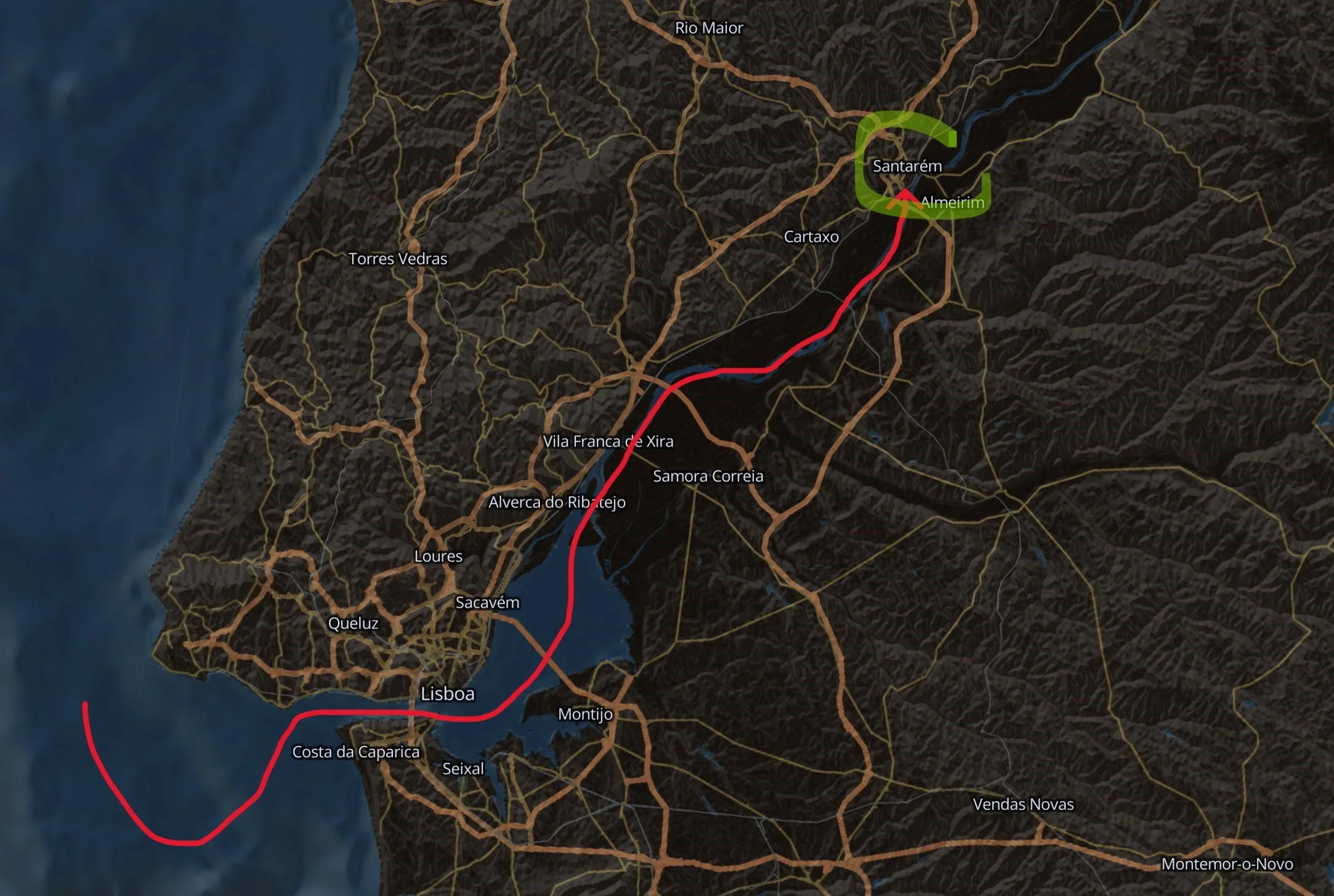
Location of Santarém, mapforge.org.
A. Nusair 2025
The importance of Santarém is not limited to the remaining Andalusian material heritage, but also extends to the intangible heritage, which is manifested in the personality of one of its literary figures, Ibn Bassām Al-Shanatrini (Santarém). This writer left behind a rich literary legacy, which has remained preserved in the memory of the Andalusian city, and formed part of the cultural identity that links Santarém to its Islamic history. The beauty of the city and its charming nature had a great impact on the inspiration of writers and poets, whose poetic genius exploded in describing its picturesque landscapes, as they wandered among the waters Softness, lush greenery, and gentle breezes (Al-Alawi & Darwish, 2023).
There are various Arabic historical sources that describe the city of Santarém; Al-Idrisi, for instance, says "The city of Shantarin is on a very high mountain, and it has a great edge on the side of the qibla [Mecca direction], and it has no wall, and below it is a bed along the river, and its people drank from the water of the springs and from the water of the river as well. It has many orchards, general fruits, baked goods, and overall abundance and goodness" [translation by author] (al-Idrisi, 1154).
The author of Dictionary of Countries, Yaqut al-Hamawi, wrote: "Shantarin is a city connected to the works of Beja in the Andalusian west, to the west of Cordoba, and on the river Tajja (Tagus) close to its empty into the surrounding sea, and it is fortified, between it and Cordoba is fifteen days, and between it and Beja four days, and it is now for the Franks (Christians)" [translation by author] (Al-Hamawi, 1229).
What is interesting in some of these sources is the comparison of the Tagus River, which overlooks the city of Santarém, to the Nile River in Egypt! As al-Himyari said in his book al-Rawd al-Ma'tar, "It has many orchards, fruits, and vineyards, and between it and Batalius (Badajoz) are four stages. It is one of the most honorable of the two lands, and its river overflows over its banks like the flood of the Nile of Egypt" [translation by author] (Al-Himyari, 1327).
The poet Khalaf ibn Yusuf, who is known as Al-Abrash al-Nahwi and who is from Santarém, said in praise of his city and its river (Al-Alawi & Darwish, 2023):
رأيتُ ثلاثةً تحكي ثلاثاً - إذا ما كنتَ في التشبيهِ تنصِف
فتاجو النيلٌ منفعةً وحُسناً - ومصر شنترينُ وأنت يوسُف
I saw three things resembling three others - if you are fair in your comparisons
The Tagus is as beneficial and beautiful as the Nile - and Egypt is Santarém, and you are Joseph
[translation by author]
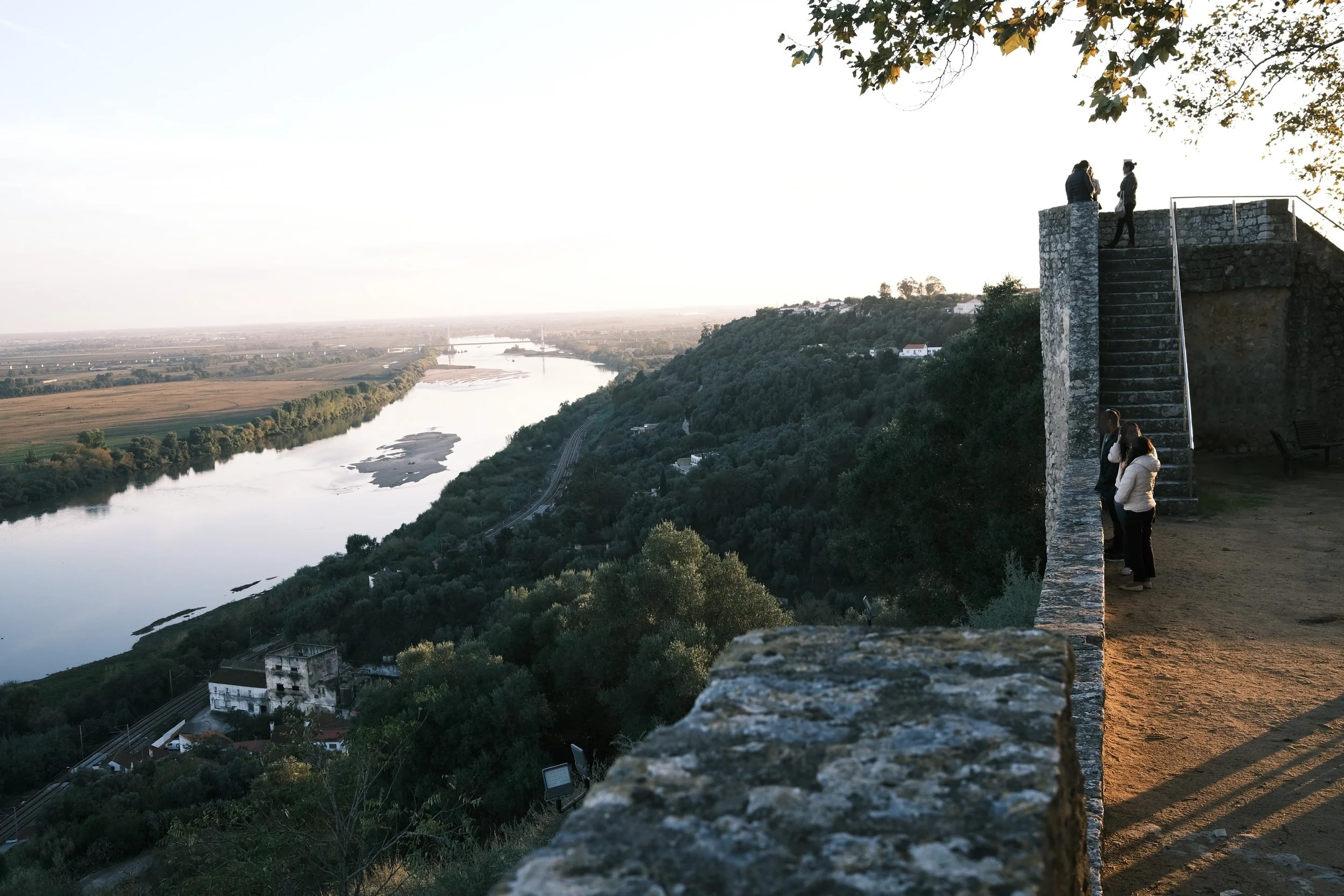
Sunset over the Tagus River as seen from the Andalusian fortress of Santarém,
A. Nusair, 2025.
The history of the Andalusian city of Santarém began around 713 AD, at the beginning of the Islamic conquest of the Iberian Peninsula, and as with the city of Coimbra (Qulmarya), advancing Muslims entered it peacefully rather than through war. During this period, the city witnessed remarkable economic and cultural prosperity, inhabited by Arabs and Amazighs who mixed with the local population, creating a pluralistic environment rich in diversity.
Although western al-Andalus experienced a rich cultural fusion during the Islamic period, major historical sources (such as those by Ibn Hayyan, Ibn ‘Idhārī, and Ibn al-Abbār) that documented political events rarely gave Santarém a prominent place in their narratives. The city began to appear more distinctly in historical records with the rise of the Taifa kingdoms around 1031 AD, following the collapse of the Umayyad Caliphate in Córdoba. The most detailed accounts of Santarém come from Ibn Bassām himself, a native of the city, who preserved its memory in his literary anthology al-Dhakhīrah fī Maḥāsin Ahl al-Jazīrah.
At this stage, Santarém began to take its place as an independent political entity, as it came under the rule of the Bani al-Aphtas, who took Badajoz as their center, and their authority included large parts of the Andalusian west, including Santarém and Lisbon. The two cities experienced a golden age, as the Banu al-Aphtas were able to impose a kind of political stability, which allowed intellectual and cultural life to flourish. They took care of scholars and writers, and they were from families that supported the intellectual movement, making Santarém a fertile environment for the growth of literature and science (Al-Alawi & Darwish, 2023).
With the fragmentation of the Taifa kingdoms and their declining military and political strength in al-Andalus, Castilian King Alfonso VI seized the opportunity to expand southward. In 1093 AD, he captured the city of Santarém, exploiting internal divisions among the Taifa rulers. In response to this escalating Christian threat, the Andalusians turned to the Almoravid state in Morocco for support. The Almoravids acted swiftly, taking control of the strategically vital city of Badajoz in 1094 AD, which they established as a military base for further operations in the region.
The Almoravids launched a series of military campaigns to reclaim Andalusian cities one after another, with Santarém standing out as one of the most significant among them. Its strategic location along the Tagus River made it a key military objective in the broader struggle against the advancing Christian kingdoms. The recapture of Santarém was not only a tactical victory but also a symbolic assertion of Almoravid strength in the western frontier of al-Andalus.
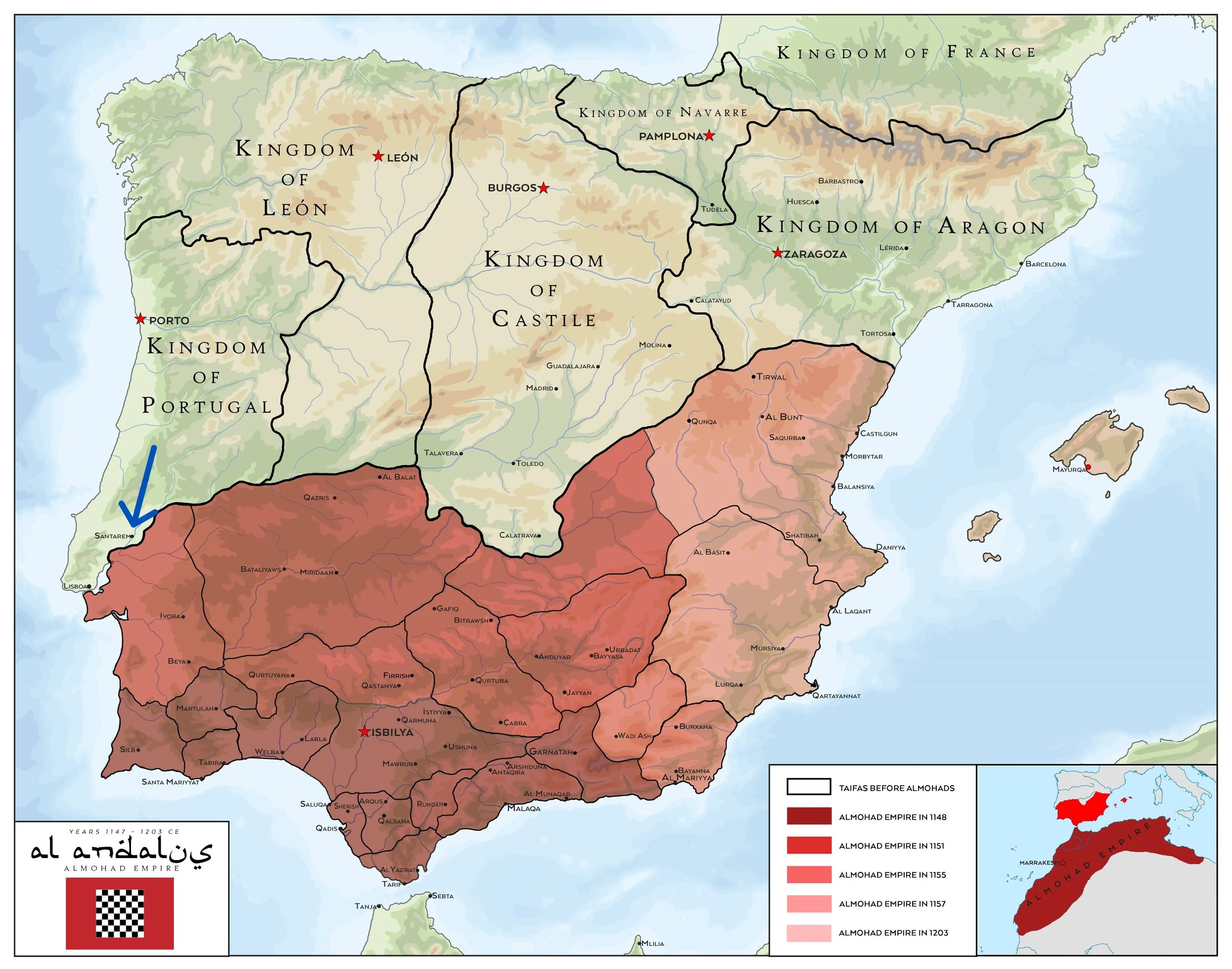
Over time, the persistent internal conflicts in al-Andalus, along with the rise of the Almohad movement in Morocco under the leadership of Muhammad ibn Tumart, contributed to the gradual decline of the Almoravid state. This weakening culminated in its complete collapse by the mid-twelfth century. In its place, the Almohads emerged as a new political and religious force, entering al-Andalus and initiating a new phase of rule marked by reform and consolidation.
Santarém remained under Islamic rule for approximately 447 years, until it fell in 1147 AD to King Afonso Henriques of Portugal following a prolonged and intense siege. This marked the beginning of a new chapter in the city’s history under Christian control. In response, Almohad Caliph Yusuf ibn Abd al-Mu'min launched a military campaign aimed at reclaiming the western territories of al-Andalus. Santarém, considered one of the most fortified cities in the region, was besieged by Almohad forces, yet despite their efforts, they failed to retake it (Abu Saeed Al-Masri, 2019).
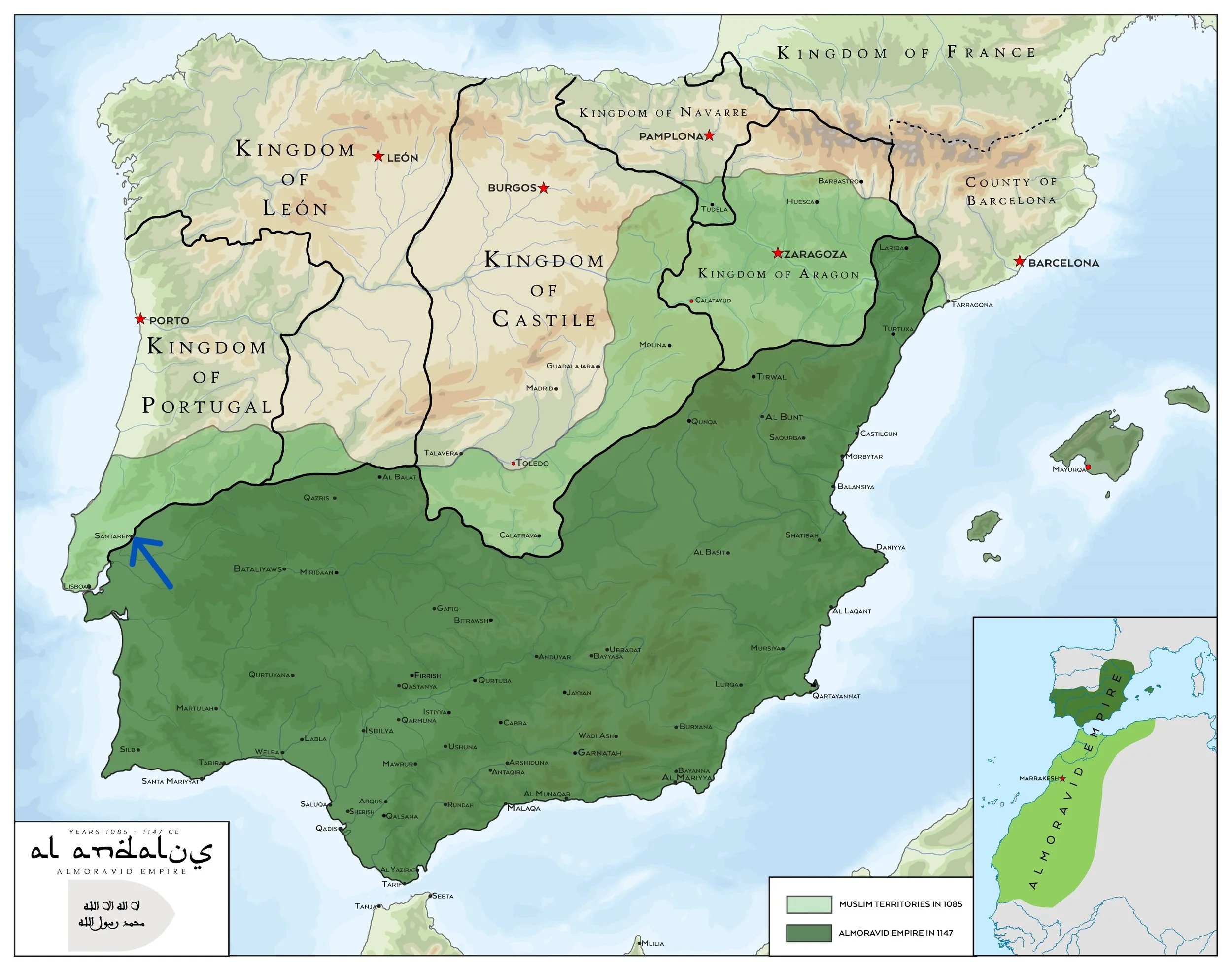
Santarém during the Almoravid (upper) and Almohad periods (lower).
Sales World, 2017.
Centuries after its fall, the city of Santarém continues to preserve traces of its Andalusian heritage. Among the most notable remnants are the old city walls, the Andalusian fortress (Kasbah), and the Porta da Atamarma, an Arab style gate located beneath the fortifications. The architectural character of the city, with its narrow winding streets and historic buildings, reflects a distinct Andalusian influence, particularly evident in the Moorish quarter adjacent to the Arab gate through which Afonso Henriques entered the city in 1147. These monuments serve as lasting traces of the Islamic legacy that shaped Santarém’s identity. The city’s strategic location along the banks of the Tagus River made it a natural hub for scholars and poets.
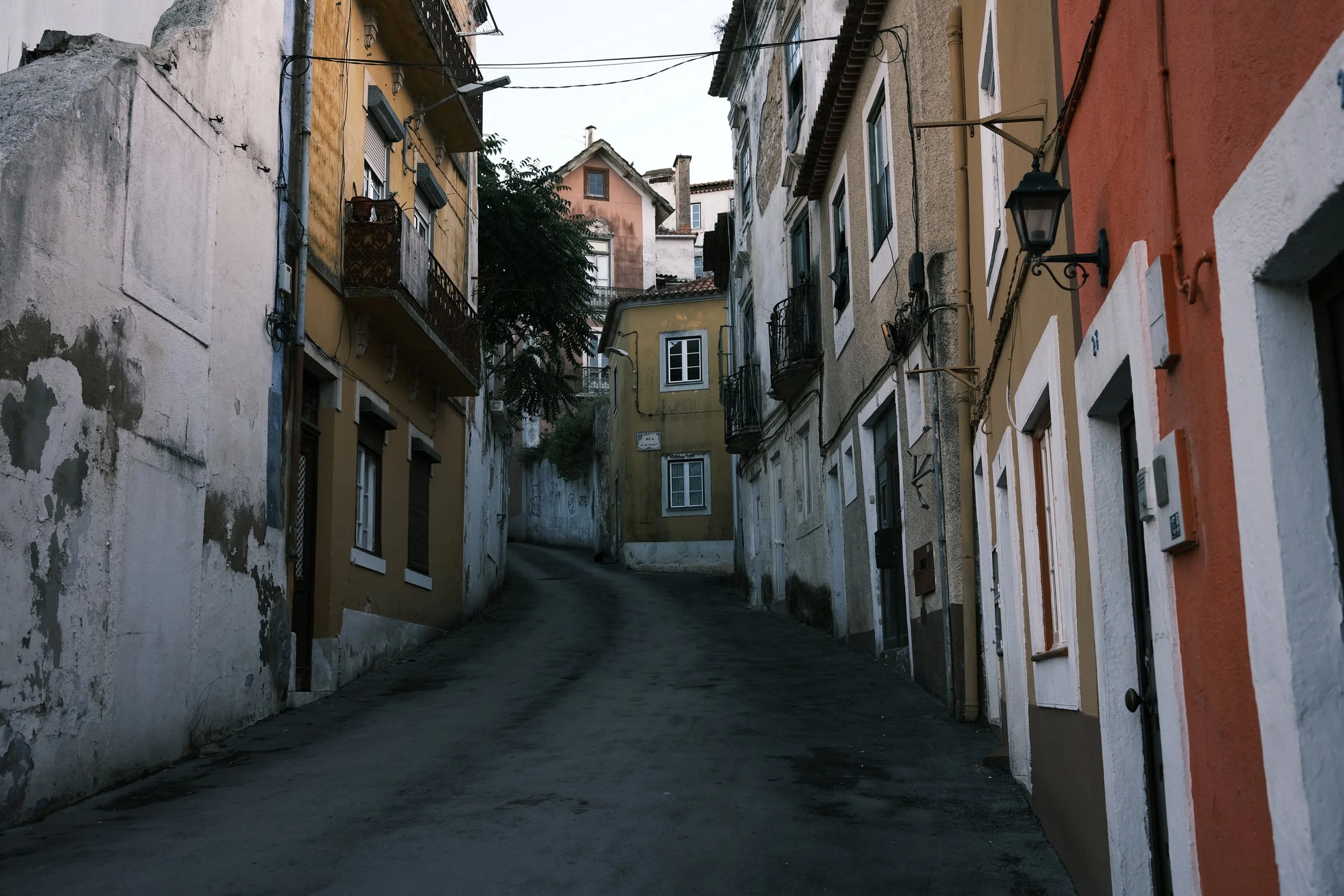
The Porta da Atamarma, located in the historic Moorish quarter of Santarém.
A. Nusair, 2025.
Ibn Bassām al-Shanṭarīnī is one of Santarém’s most distinguished figures, having immortalized his city within a broader literary and intellectual framework through his celebrated work al-Dhakhīrah fī Maḥāsin Ahl al-Jazīrah. In this anthology, he preserved vivid portraits of Andalusian intellectual life, offering a rare and invaluable glimpse into the cultural richness of the period. He was both a witness to Santarém’s glory and to its first fall in 1093 AD. In the introduction to his book, he writes: “I was from Shanṭarīn in the far west... We were rich there with the generosity of affiliation for the misfortune of the country, and we dared to store the equipment for the fluctuation in the country until the Romans (Christians) scattered that system on us.” These words reflect the trauma of displacement and the collapse of a once thriving society.
Ibn Bassām fled to Córdoba after that, leaving behind everything in his native city. He describes this painful departure from Santarém with deep emotion: “And God Almighty knew that this book was issued only from the chest of a mourned man, and a mind of dormant intelligence, in the midst of a colorful age that colored the chameleon.” His writing is not merely a literary pursuit; it also represents a deeply personal gesture of grief to the loss of homeland and the urgency of preserving its memory.
His book al-Dhakhīrah fī Maḥāsin Ahl al-Jazīrah is one of the most significant sources of Andalusian literature. In this monumental work, he compiled biographical entries of prominent Andalusian figures - poets, writers, and orators - alongside selections of their literary output. The book is a foundational reference for the study of Andalusian literature, particularly in its later periods, preserving many texts from authors whose complete works have not survived.
Beyond its literary value, the book reflects the author’s profound sense of patriotism and emotional attachment to his homeland. This is especially evident in the introduction, where Ibn Bassām expresses his grief over the fall of his native city, Santarém. His writing is also a personal work of cultural preservation.
We stand before a striking example of 12th century literary effort dedicated to preserving heritage and identity at a time when the Islamic cultural presence in Andalusia was under threat.
When I approached a staff member at the tourist information office to ask whether any books or publications introduced Ibn Bassām, I was met with silence despite his legacy. That encounter left me with a painful question: How would Ibn Bassām feel if he knew that the people of his own city no longer remembered him, despite his tireless efforts to preserve their memory and history in his writings?
Contemporary Portugal is missing out on the opportunity to identify itself because of its denial of crucial stages of its Islamic history, which formed part of its current cultural identity. The city of Santarém, which was once a beacon of science and knowledge in the Andalusian west, can only be understood today through the legacy of its figures, led by Ibn Bassam al-Shintrini and other scholars. What Portuguese history lacks today is self-recognition, because the denial of this past obscures the true image of Portugal from the mirror of history.
References
Al-Alawi, H. J., & Darwish, J. Y. (2023). The Intellectual Movement in the Andalusian City of Santarem. Journal of the Islamic University College, 73, 55–82. https://iujuic.com/index.php/juic/article/view/2841.
Al-Hamawi, Yaqut bin Abdullah. (1229). Dictionary of Countries. Dar Sader, Beirut. Retrieved from https://islamweb.net/ar/article/222286/ Dictionary-Countries-Liaquat-Al-Hamwi.
Al-Humairi, Muhammad Bin Abdel Moneim. (1327). Al-Rawd Al-Ma'tar in Khabar Al-Qatar. Research by Ihsan Abbas. Beirut: Dar Sader.
Al-Idrisi, Muhammad Bin Mohammed. (1154). The Mushtaq's Picnic in Breaking the Horizons. Egyptian Culture Library.
Abu Saeed al-Masri. (2019). The Brief Encyclopedia of Islamic History. Noreen Media. Retrieved on 10 November 2025 from https://books.islam-db.com/book/ Summary_Encyclopedia_in_the_Islamic_History/2278.
Ibn al-Abbar, (1259). Muhammad ibn Abdullah. The Next Masterpiece. p. 23. The Comprehensive Library.
Ibn Bassam Al-Shantarini. (1147 AD). Al-Dhakhira fi Hahsin Ahl al-Jazira. Investigation of Ihsan Abbas. Arab Book House.
SalesWorlds. (2017). Al-Andalus: Almoravid Empire (1085–1147) [Digital map]. DeviantArt. https://www.deviantart.com/salesworlds/art/Al-Andalus-Almoravid-Empire-1085-1147-715060844.
SalesWorlds. (2017). Al-Andalus: Almohad Empire (1147–1203) [Digital map]. DeviantArt. https://www.deviantart.com/salesworlds/art/Al-Andalus-Almohad-empire-1147-1203-715369321.
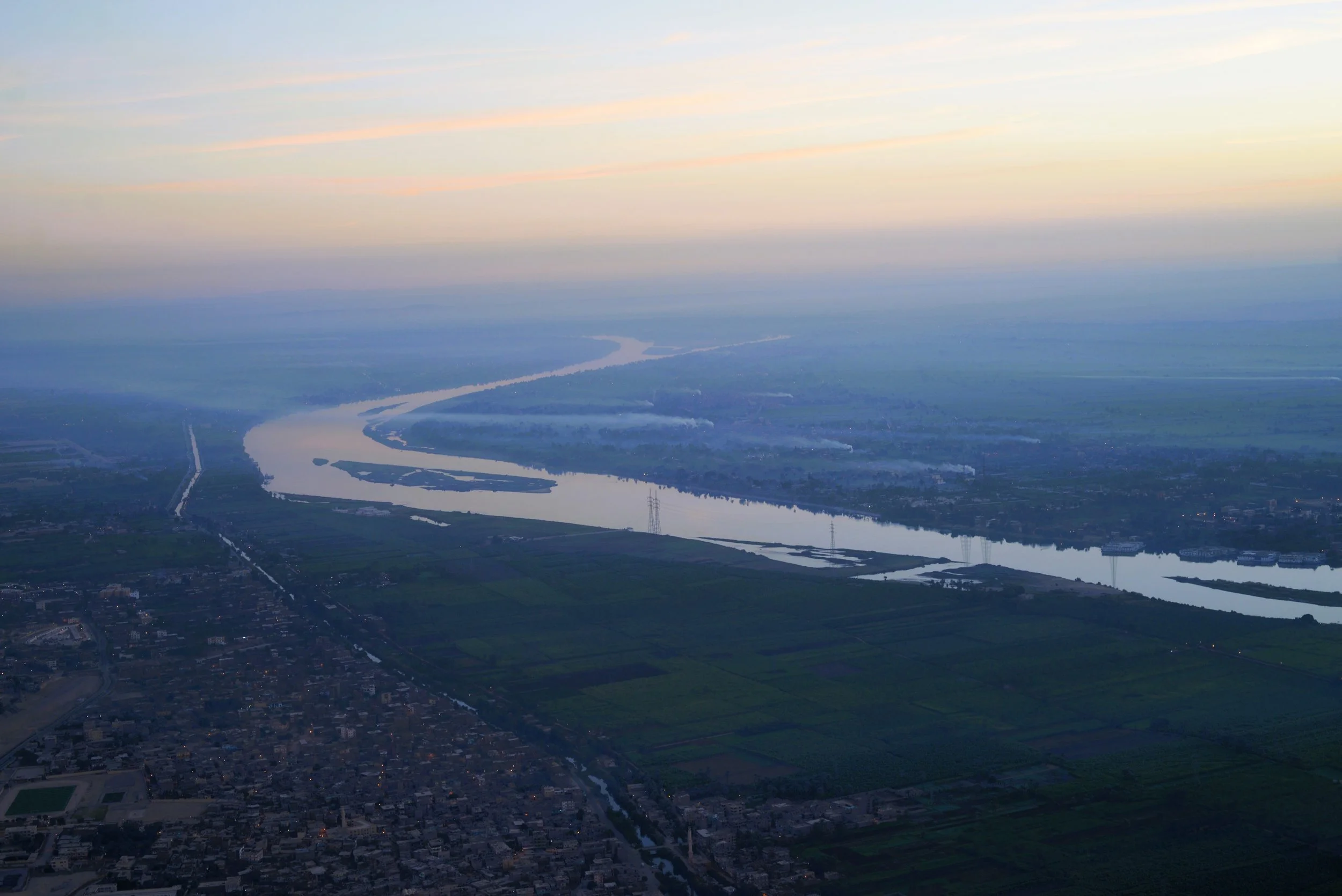
Sunrise over the Nile River in Luxor, Egypt.
A. Nusair, 2018.
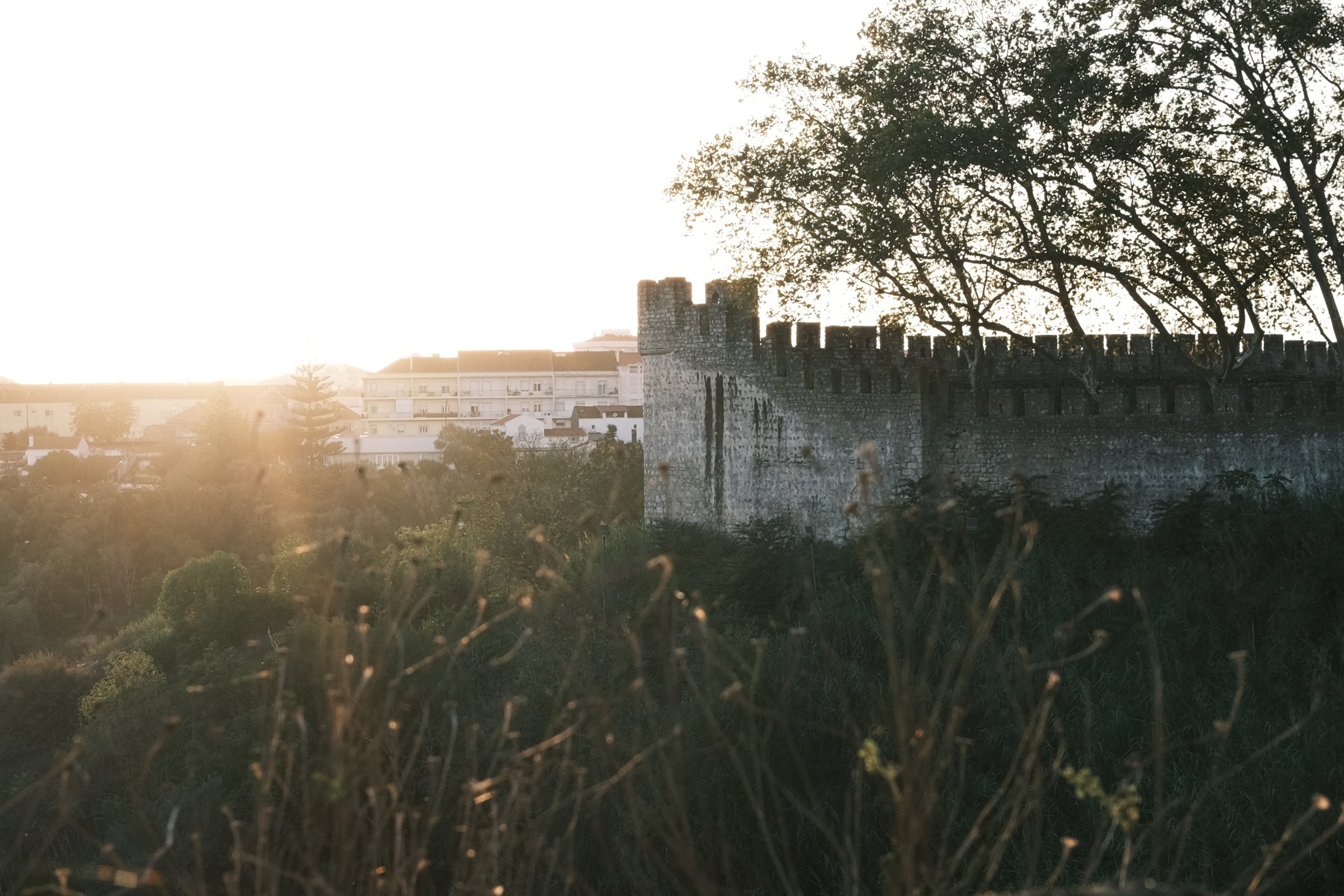
The city walls of Santarém stand silent sentinels of a bygone era. These fortifications were once part of a thriving Andalusian military and cultural landscape.
A. Nusair, 2025.