Beyond Oil and Trade: The Saudi-Chinese Cultural Year 2025
Thirty-five years after establishing diplomatic ties, Saudi Arabia and China are opening a new chapter with the Saudi-Chinese Cultural Year 2025. Announced in March by the Saudi Ministry of Culture, the year-long program highlights culture as a bridge between two civilizations with ancient roots and global ambition. This approach reflects the soft-power policies that both nations have embraced, using culture, art, and education to reinforce political and economic ties as a part of larger strategies: for Saudi Arabia, this aligns with Vision 2030; for China, it resonates with the Belt and Road Initiative.
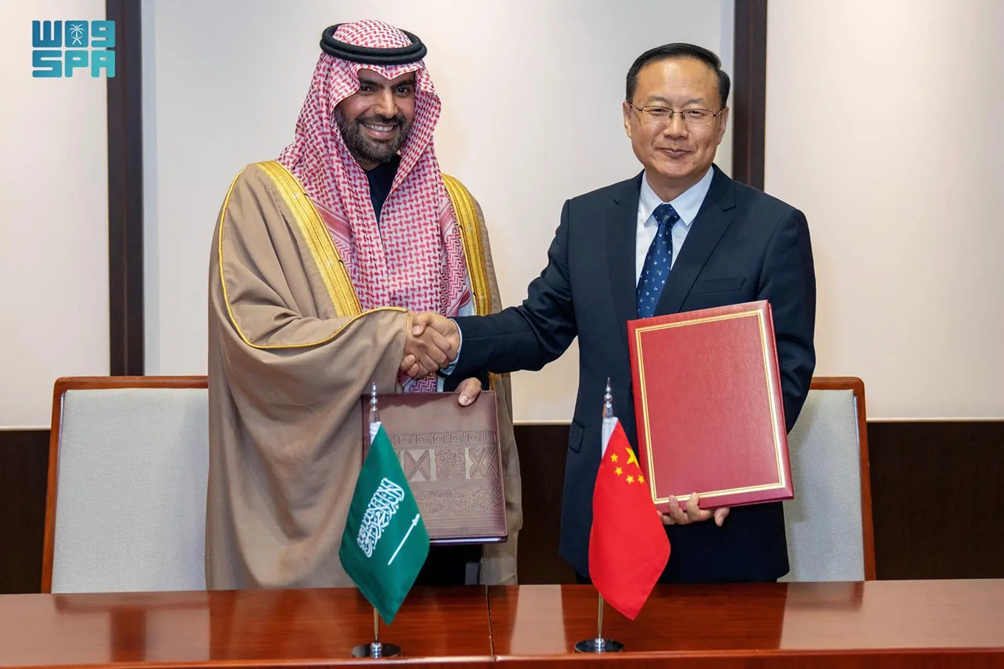
Saudi Culture Minister Prince Badr bin Abdullah in talks with his Chinese counterpart, Sun Yeli, in Beijing. Photo: spa.gov.sa.
A Modern Dialogue through Art and Heritage
Over the past 35 years, China and Saudi Arabia have evolved from marginal ties to a significant economic and diplomatic partnership. Since establishing relations in 1990, cooperation has focused on oil, trade, infrastructure, and technology (Fulton 2020). However, more recently, the partnership has extended beyond these dimensions into culture, with the Saudi-Chinese Cultural Year 2025 marking the peak of this rapprochement. This shift reflects changing global power dynamics and the recognition by both countries that cultural diplomacy is central to international relations, using heritage and contemporary creativity to foster understanding and reinforce ties rooted in trade and investment (Akbarzadeh and Saba 2025).
These intentions became even more clear during the visit of Saudi Arabia’s Minister of Culture, Prince Badr bin Abdullah, to Beijing in March 2024. The trip led to agreements covering libraries, cultural institutions, visual and performing arts, theater, architecture, design, and traditional crafts, starting “a new chapter” in the cultural relations between the two countries (Mosly 2024). That day, at the King Abdulaziz Public Library in Beijing, the Ministry launched the Prince Mohammed bin Salman Award for Cultural Cooperation, honoring research, artistic creation, translation, and literature. By celebrating Arab-Chinese scholarship and creativity, the award both encourages cultural exchange and elevates it to a matter of national prestige. That visit also included a stop at the AlUla, Wonder of Arabia exhibition at Beijing’s Forbidden City, symbolically connecting two UNESCO heritage sites across continents (Mosly 2024).
Marking the 35th anniversary of diplomatic relations, the launch of the Saudi-Chinese Cultural Year 2025 underscored how far the partnership has come. The Writings of Today Are a Promise for Tomorrow exhibition, organized by the Saudi Ministry of Culture’s Museums Commission, introduced contemporary Chinese artists to Saudi Arabian written heritage in a deeply engaging way. By celebrating the shared reverence for calligraphy in both traditions, it highlighted deep cultural and spiritual parallels between the two civilizations, reflecting the “aspiration towards future possibilities and ongoing dialogue”.
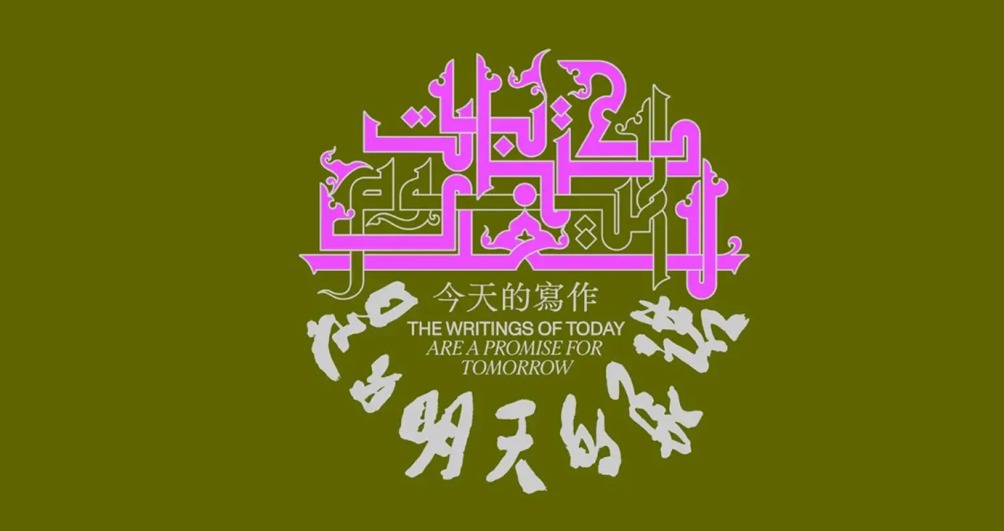
Hosted at The Saudi Arabia Museum of Contemporary Art at Jax, the exhibition brings together over 30 artists of Chinese origins. Photo: jaxdistrict.com.
In March, Shanghai’s UCCA Edge hosted Antenna, a major solo exhibition by acclaimed Saudi artist Ahmed Mater, while Beijing’s Saudi embassy celebrated the Founding Day with calligraphy, crafts, and performances.
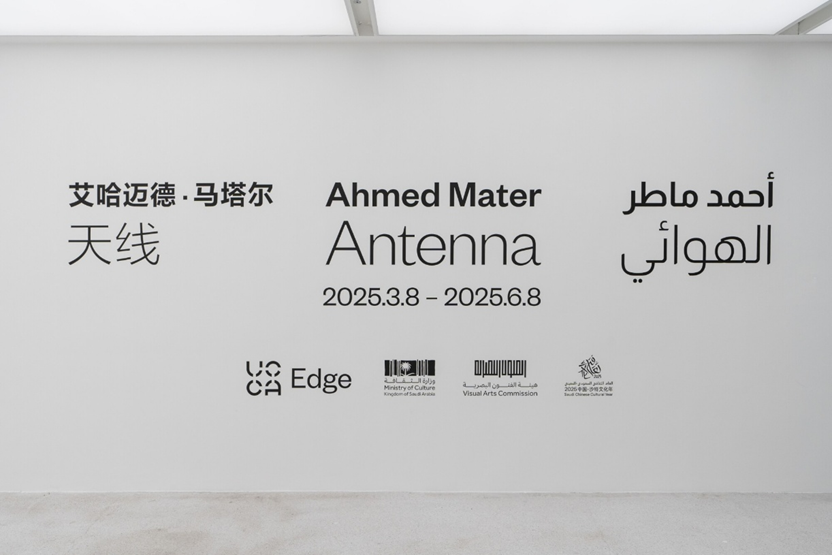
From March 8 to July 8, 2025, Shanghai’s UCCA Edge hosts Antenna, the first major solo show in China by Ahmed Mater, one of Saudi Arabia’s most influential contemporary artists, whose work has shaped both the Kingdom’s art scene and its global presence. Photo: ucca.org.cn.
The cultural agenda expanded further in May 2025, with the launch of the Saudi-Chinese Cultural Relations Research Grant to fund studies in history, heritage, literature, and performing arts. Designed to produce publications in peer-reviewed journals, the grant embeds cultural dialogue directly into academic exchange. Finally, on June 30, 2025, in historic Diriyah, Deputy Minister Maha Abdullah Alsenan and Cheng Wei of Beijing International Studies University signed an executive program committing to joint research, archeological projects, bilateral symposia, and academic fellowships. More than ceremony, it appeared as a roadmap to shared intellectual horizons, an ambitious signal that cultural diplomacy between Saudi Arabia and China is here to stay (Ran 2025, SPA 2025).
Vision 2030 Meets Belt and Road
What connects exhibitions, research programs, and academic exchanges to oil trade, technologies, and infrastructures? Two overarching strategies that define both nations’ ambitions. For Saudi Arabia, Vision 2030 aims to reduce oil dependence by investing in culture, creative industries, and tourism. China’s Belt and Road Initiative (BRI), launched in 2013, also includes a cultural “people-to-people” pillar, expanding Beijing’s influence through education, art, and heritage projects such as Confucius Institutes and cultural festivals. The Saudi-Chinese Cultural Year 2025 brings these visions together. This makes the partnership more than transactional, embedding identity into trade and diplomacy: culture now shapes their relationship. In this sense, the Cultural Year reflects a broader multipolar shift, with Saudi Arabia and China acting not only as economic partners but also as cultural interlocutors (Fulton 2020; Lons 2024).
When Culture Meets Politics: The Fragile Side of Saudi–China Ties
Still, the growing partnership between Riyadh and Beijing is far from perfect. Some see the cultural dimension as a diplomatic showcase rather than genuine people-to-people exchange (Guzanski and Lavi 2020). Geopolitical tensions and human rights concerns also weigh in: closer ties with Beijing raise questions in Washington, a longtime Saudi ally, which fear that China could replace the U.S. security role (Ali and Nian 2025). Moreover, in 2019, Mohammed bin Salman endorsed China’s “anti-terrorism” measures in Xinjiang against Uyghurs, a stance widely condemned by Muslim-rights groups as inconsistent with Saudi Arabia’s claim to defend Muslim communities (Al Jazeera 2019). Such controversies cast shadows over the celebratory language of cultural diplomacy. The Saudi-Chinese Cultural Year 2025 may highlight shared ambitions, but it also exposes the fine line between symbolism and substance (Riedel 2020).
References
Al Jazeera. “Saudi crown prince defends China’s right to fight ‘terrorism’”. February 25, 2019. https://www.aljazeera.com/news/2019/2/23/saudi-crown-prince-defends-chinas-right-to-fight-terrorism.
Ali, Ghulam and Nian, Peng. 2025. “The China Factor in US-Saudi Talks for a Defense Pact”. Middle East Policy, Volume 32, Issue 1, https://doi.org/10.1111/mepo.12806.
Fulton, Jonathan. 2020. "China-Saudi Arabia Relations Through the ‘1 + 2 + 3’ Cooperation Pattern." Asian Journal of Middle Eastern and Islamic Studies 14 (4): 516–527. https://doi.org/10.1080/25765949.2020.1841991.
Guzansky, Yoel, and Galia Lavi. 2020. “Saudi Arabia–China Relations: A Brave Friendship or Useful Leverage?” Strategic Assessment – A Multidisciplinary Journal on National Security 23 (2): 108–114.
Lons, Camille. 2024. “East Meets Middle: China’s Blossoming Relationship with Saudi Arabia and the UAE.” European Council on Foreign Relations, May 20.https://www.ecfr.eu/publication/east-meets-middle-chinas-blossoming-relationship-with-saudi-arabia-and-the-uae/.
Riedel, Bruce. “Saudi Arabia’s Relations with China: Functional, but Not Strategic.” Brookings, August 24, 2020. https://www.brookings.edu/articles/saudi-arabias-relations-with-china-functional-but-not-strategic/.
Saudi Press Agency. “Ministry of Culture Launches Saudi–Chinese Cultural Year.” March 28, 2025. https://www.spa.gov.sa/en/N2276856.
Shahram Akbarzadeh, Arif Saba. 2025. “China’s Soft Power: Views from Saudi Arabia and the UAE”, Global Studies Quarterly, Volume 5, Issue 1, https://doi.org/10.1093/isagsq/ksae090.
Yang Ran. 2025. “Ambassador: S. Arabia Seizes Chance to Deepen Cultural Ties with China.” China Daily Hong Kong, March 20.