Between Empire and Modernity: Turkish Dizi as Instruments of Soft Power
Walking today through the streets of Istanbul, it is easy to come across a film crew, a costumed actor, or an improvised set just around the corner. This goes far beyond mere urban folklore or entertainment; it is a tangible sign of a broader transformation that has turned the city into one of the beating hearts of a new global cultural industry. Cinema and television have long been powerful tools for presenting a country to the world, as demonstrated by Hollywood, Bollywood, and more recently South Korea. Today, however, Türkiye has also carved out a leading role. Its television series, also known as dizi, have attracted millions of viewers far beyond national borders, reaching most of the world.
What is their secret? Universal stories, troubled romances, family intrigues, betrayals, investigations, and adventures that resonate with diverse audiences. The main narrative lines are primarily romantic, historical, and action based, each portraying a different facet of the country. Over time, Türkiye has recognized the strategic potential of these productions and has increasingly supported them. A recent example is the announcement of public incentives of up to 100,000 Turkish lira per episode. To qualify for government funding, productions must meet a set of criteria, including promoting Türkiye and the Turkish language, targeting countries identified as priority markets for Turkish tourism, and achieving strong ratings and viewership figures. The news was confirmed by the Minister of Culture and Tourism, who described dizi as a “global brand that touches the lives of nearly one billion people across approximately 170 countries, spanning a vast geography from Asia to America, and from Africa to Europe” (France24 2026).
This success transcends linguistic barriers and is rooted in a rich and hybrid culture, suspended between East and West, capable of attracting audiences in South America, the Middle East, North Africa, the Balkans, and Europe. Today, dizi do not only sell stories; they narrate a country, spread its language, and promote its image. In other words, dizi have become one of the most effective instruments of Turkish soft power.
Short Story of a Global Success
Dizi have not always been a global phenomenon. Their origins date back to the 1960s, with the emergence of public television through TRT. At that time, productions were limited, state controlled, and designed for a national audience, often consisting of literary adaptations with an almost theatrical style. The first real shift came in the 1990s, when the liberalization of the television system and the arrival of private broadcasters brought greater competition, investment, and diversity. It was in the early 2000s, however, that a decisive leap occurred. Series became more ambitious, with longer episodes, complex storylines, and a strong focus on family and emotions, gradually beginning to cross national borders. From the 2010s onward, dizi evolved into a global product, spreading across the Middle East, the Balkans, and Latin America, also thanks to the success of series such as Diriliş: Ertuğrul and Muhteşem Yüzyıl. Nowadays, these series represent much more than just entertainment: they have become a tool of soft power capable of shaping Türkiye’s image worldwide (Ağırseven and Örki 2017). The data confirms the scale of this phenomenon: Turkish series are distributed in around 170 countries and reach nearly one billion viewers (Akgun and Yilmaz 2025). According to Parrot Analytics (2024), global demand grew by 184 percent between 2020 and 2023, placing Türkiye among the top three exporters of television content worldwide, along with the United States and the United Kingdom. Export revenues have exceeded one billion dollars, making the sector a significant economic pillar.
What truly makes these series unique? Dizi share many similarities with soap operas and telenovelas, yet they have distinctive features of their own. They draw on Anatolian and Ottoman folklore, are filmed in natural locations with a dynamic visual style, and unfold at a slow pace, with very long episodes that can reach 120 to 150 minutes. As observed by Öztürkmen (2018), “in its contemporary version, dizis have come to offer a hybridity of different narrative forms including musical, spatial, cinematographic and visual as well as textual … Dizis rely heavily on Turkish lieux de mémoire and display a familiar ethnographic imagery, pouring scenes from Turkish”.
Their success is also driven by an extremely fast and efficient production system, especially in the initial phase. “The writing, shooting, editing, and broadcasting process is incredibly fast at the beginning,” explains director Yusuf Pirhasan, creator of the series Taş Kağıt Makas (Rock Paper Scissors). “Three two hour episodes are aired one week apart, and then ratings and audience reactions come into play. If the series performs well, production gives the green light to continue. In the best cases, the story ends up on streaming platforms and is broadcast abroad” (Didonna 2024).
Ottoman is the New Cool
One of the series that truly changed the rules of the game is Muhteşem Yüzyıl (2011–2014), which emerged at a time when global productions such as Game of Thrones dominated the market. By portraying the life of Suleiman the Magnificent through a mix of political intrigue and family drama, it captured millions of viewers worldwide. In Türkiye, however, the series also sparked controversy. Its more “intimate” portrayal of the sultan drew criticism, including from major members of the AKP party. President Recep Tayyip Erdoğan himself strongly condemned the show, using particularly harsh words:
But I think our forefathers are the ones on the television, on that documentary Magnificent Century. We have no such forefathers...The Suleyman the Magnificent we know was not like that. He spent 30 years of his life on horseback, not at the palace like in the shows you see... In the presence of my people, I condemn the series directors and the television channel owners. We have warned authorities on this issue, but we also expect the justice system to take the necessary decision. (Birch 2012)
However, the immense success of the show ultimately convinced party leaders to invest more heavily in historical television series, giving rise to a long wave of productions, more or less historically accurate, centered on Ottoman history.
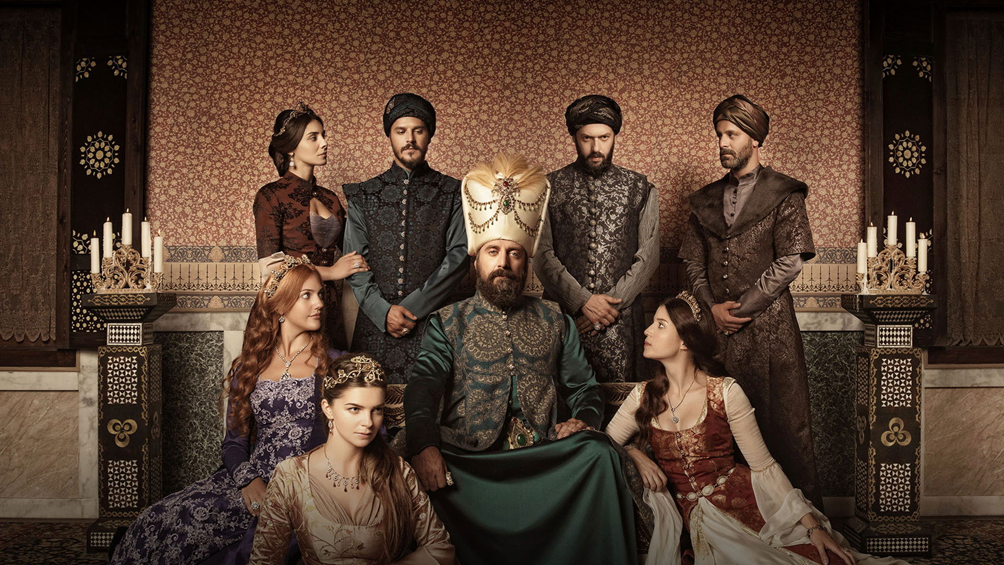
Figure 1- Promotional image of the TV series Muhteşem Yüzyıl (The Magnificent Century), inspired by the life of Ottoman Sultan Suleiman the Magnificent, the longest-reigning ruler of the empire, and Hürrem Sultan, a former slave who rose to become his wife. The series also explores the historical period known as the Sultanate of Women. Source: pinterest.com
Following this wave came Diriliş: Ertuğrul (2014–2019), an epic narrative on the origins of the Ottoman Empire often described as the “Muslim Game of Thrones.” Even more epic and value driven, it found a global audience also thanks to international streaming platforms. Aina J. Khan (2020) noted that the series “has all the hallmarks of a blockbuster, but what has turned this Turkish saga into a global phenomenon is its nuanced portrayal of the Islamic world.” Part of its success, especially among Muslim audiences, lies precisely in the possibility of recognizing themselves in representations that differ from widespread stereotypes. As shown by the research of Yasin et al. (2021), the series achieved remarkable popularity among Pakistani youth, as it “connects people more with Islam, its history, and culture. The series shows truly Islamic heroes, their history and culture and also educates masses regarding Islam. Dirilis Ertugrul engaged Muslims, especially youth, into being passionate about their Muslim faith and identity.” The study also highlights a clear demand among the interviewed Pakistani youth for more films and television series focused on Muslim heroes, history, and culture, aimed at presenting a more authentic image of Islam to the world. At the same time, such productions are seen as tools to educate younger generations about their own history and religion through the idealization of historical figures such as Ertuğrul or Osman, “rather than fictional heroes like Batman or Spiderman” (Yasin et al. 2021).
Over time, these productions have helped build a form of “neo-Ottoman cool” (Al Ghazzi and Kraidy 2013). Rather than merely recounting the past, they reinterpret it for the present, strengthening symbolic ties and turning actors and narratives into tools of national branding. There is little doubt that Türkiye has succeeded in fostering nostalgia for the Ottoman past, particularly among Muslim audiences, while also attracting viewers in other parts of the world. In this sense, historical dizi have become a central component of Turkish soft power, contributing to the portrayal of Türkiye as a bridge between East and West. Not surprisingly, these historical dramas “reflect the political elite’s populist nationalism” and align with the neo-Ottoman agenda of the Justice and Development Party (Çevik 2019, p. 227), also as an attempt to counter forms of cultural imperialism by promoting local and national identities. In this sense, President Erdoğan said:
We need much more work and sweat to become a power of culture. We must rediscover and rebuild our indigenous and national values against cultural imperialism in a universal language … People and organizations that are nourished by our own history and values need to make a quality cultural education that flows towards the global. If we break away from our civilization, we will lose everything; if we lose our culture, we will perish. If we abandon our identity, personality, and freedom, we will disappear in the years. We call it one flag, one country, one nation, one state at every opportunity. (Hurriyet, 2017)
A Hybrid Modernity
Contemporary dizi, such as Kara Sevda, Yargı, and Bir Zamanlar Çukurova, are today among the main tools through which Türkiye presents itself to the world. Mostly set in urban environments, with Istanbul often taking center stage, they portray a balance between tradition and modernity. Values such as family, loyalty, and honor coexist with individual autonomy and female emancipation. Intense and often troubled love stories become the space where inequalities and social tensions surface, offering a portrait of a society in transformation.
Their global success is also driven by a recognizable narrative formula. Turkish soap operas represent a clear example of cultural hybridization, showing how a television format of Western origin can be reinterpreted by non-dominant actors, giving rise to products marked by a dual cultural belonging. On the one hand, they share universal elements of melodrama, with intense plots, long serial formats, and frequent twists that make them recognizable everywhere. On the other hand, they stand out for their strong grounding in regional preferences and sensibilities, becoming an expression of a desire to differentiate and to resist a possible homogenization to Western cultural models (Benovska 2024).
In its television series, Türkiye presents itself as a land of a distinctive form of modernity, one that is also accessible, especially to the wider MENA region. It offers a hybrid model that combines Western elements with local traditions, portrayed as both concrete and attainable. It is precisely this balance that allows these series to speak to diverse audiences, ranging from more traditional productions such as Yemin to more universal ones like Sen Çal Kapımı. The appeal of this “in between” position between Europe and the Islamic world thus becomes a key element of their strength. Dizi emerge as vehicles of the Turkish model, a way of life in which modernity is presented as compatible with religious principles (Berg 2023). Atay (2016) explains the global appeal of Turkish TV series through what he calls a carefully calibrated balance of “moderated modernity” and “moderated religiosity.” In his view, these productions succeed because they project a hybrid socio-cultural model, often described as a secular-Islamic synthesis, onto the screen, combining compelling narratives with strong performances. This formula resonates particularly strongly across Muslim-majority societies, where audiences, especially women, engage with these series with a sense of fascination and aspiration.
The modernity portrayed in Turkish dizi is primarily expressed through urban lifestyles, consumer culture and evolving gender roles, in a lifestyle that is fast, connected, and cosmopolitan, usually using a global metropolis such as Istanbul as its stage. However, these elements are consistently embedded within enduring moral frameworks centered on family, loyalty, and social responsibility, resulting in a hybrid form of modernity that remains grounded in culture. Indeed, traditional elements remain central, particularly the importance of honour and family, often linked to patriotism, as clearly illustrated in Gümüş, where a character says:
... of course, I accept this award not on my behalf but on behalf of the Şadoğlu family, which is the most important entity in my life. When the family is united, the homeland is united, and the nation is united and strong... (Arslan and İşman 2025).
Despite this type of modernity being “moderate”, in which traditional and religious values - even if they don’t always appear prominently - still form the main background framework in most cases, the “Turkish way” is not fully accepted across the entire Islamic world and is therefore often subject to adaptations and censorships. For instance, dizi are frequently edited before airing in Morocco, especially when broadcast on major public channels, to remove scenes of intimacy such as kissing (more explicit sexual content is already prohibited in Türkiye). The same occurs in Saudi Arabia, where Turkish TV series are often censored to mitigate their potentially “offensive” visual content. However, these limitations can easily be bypassed thanks to the widespread availability of original subtitled versions on streaming platforms, a practice that is becoming increasingly common in many countries, especially among the youngest generation (Rafi 2020, Elouardaoui 2024).
Censorship and Criticism
Dizi have clearly emerged as a defining feature of contemporary Türkiye. They not only reinforce the country’s internal sense of identity, but also function as a strategic instrument of foreign policy. In doing so, they portray Türkiye as the heir to a shared and significant Islamic past, while advancing a vision of modernity that feels both familiar and aspirational across much of the MENA region.
For this reason, the Turkish government has imposed significant censorship on audiovisual productions, particularly domestic ones. At first, the emergence of platforms such as BluTV, Netflix, and Disney+ generated expectations of increased creative freedom within a tightly controlled media environment, with hopes for more diverse storytelling and less political interference. Initially, both domestic and international platforms have delivered series distinguished by strong aesthetic quality and a deeper engagement with complex and politically sensitive themes. Notably, Ethos and The Club challenged industry norms by portraying minority experiences, including Kurdish and LGBTQ+ communities, and addressing forms of discrimination and nationalist violence. These productions highlighted the capacity of streaming platforms to create new avenues for both creative expression and political engagement within an otherwise restrictive media environment.
However, state intervention eventually followed. Since the 2019 regulation, streaming platforms have been required to obtain licenses, pay fees, and comply with government requests to remove content. In 2020, President Erdoğan stated:
Such platforms do not suit this nation, this country. We ask our parliament to ban and control such social media channels completely. Do you understand why it matters that we are against social media such as YouTube, Twitter, Netflix and such? To eliminate indecencies. (Ildır 2024)
It comes as no surprise that one of the clearest example of these constraints concerns Netflix, which cancelled the production of If Only and relocated it to Spain following reported objections by Turkish authorities to the inclusion of a gay character. More broadly, regulatory pressure remains evident. In 2023, the Radio and Television Supreme Council (RTSC, de facto an ideological apparatus of the government) imposed fines on Netflix, Disney+, and BluTV for violating “national and moral values” and content deemed incompatible with the “Turkish family structure” (BirGün 2023). In the same context, Disney+ withdrew from the Turkish market, removing a large share of its local productions (Bulut 2025). Reports also indicate that, prior to its exit, the platform instructed translators to flag sensitive topics, including references to Islam, the Armenian Genocide, the Kurdish issue, and Cyprus, as well as LGBTQ+ representation or portrayals of the Turkish president as a dictator (Susma24 2022).
Turkish dizi ultimately reflect a tension between creative openness and political control. While streaming platforms have expanded narrative possibilities, these gains remain constrained by state intervention. As a result, dizi emerge as hybrid cultural products that, while projecting a captivating and “seductive” image of Türkiye abroad, ultimately reveal the limits of expression at home and expose the divisions that continue to shape Turkish society today.
Bibliography
Ağırseven, Nehir, and Armağan Örki. “Evaluating Turkish TV Series as Soft Power Instruments.” OPUS International Journal of Society Researches 7, no. 13 (2017): 836–853. https://doi.org/10.26466/opus.353287.
Akgun, Aise Humeyra, and Asiye Latife Yilmaz. “Turkish TV Series Captivate Audiences in Nearly 170 Countries.” Anadolu Agency. December 26, 2025. https://www.aa.com.tr/en/turkiye/turkish-tv-series-captivate-audiences-in-nearly-170-countries/3781806.
Al-Ghazzi, Omar, and Marwan Kraidy. “Neo-Ottoman Cool 2: Turkish Nation Branding and Arabic-Language Transnational Broadcasting.” International Journal of Communication 7 (2013): 2341–2360. https://repository.upenn.edu/asc_papers/743.
Arslan, Şerif, and Aytekin İşman. “Turkish TV Series as a Soft Power Tool.” Galactica Media: Journal of Media Studies 7, no. 1 (2025): 69-106. https://doi.org/10.46539/gmd.v7i1.543.
Atay, Tayfun. “A Secret That Opens Turkish TV Series to the World: The Dream of Being Both a Muslim and a Secular.” MediaCat, April 1 2016. https://mediacat.com/turk-dizilerini-dunyaya-acan-bir-sir-hem-musluman-hem-laik-olma-hayali/.
Benovska, Milena. “Turkish TV Dramas, Visual ‘Seduction’, and Cultural Diplomacy.” Contemporary Southeastern Europe 11, no. 2 (2024): 158–179. https://doi.org/10.25364/02.11:2024.2.9.
Berg, Miriam. Turkish Drama Serials: The Importance and Influence of a Globally Popular Television Phenomenon. Exeter: University of Exeter Press, 2023. https://doi.org/10.47788/AGLL1722.
Birch, Nicholas. “Suleyman the Embarrassment.” Al-Majalla. December 26, 2012. https://en.majalla.com/2012/12/article55236906/suleyman-the-embarrassment.
BirGün. “RTÜK’ten Dijital Platformlara En Üst Sınırdan Ceza.” July 26 2023. https://www.birgun.net/haber/rtuk-ten-dijital-platformlara-en-ust-sinirdan-ceza-456109.
Bulut, Ergin. “Globally Connected, Nationally Restrained: Platform Ambiguities and Censorship in Turkey’s Drama Production.” International Journal of Cultural Studies 28, no. 1 (2025): 99–115. https://doi.org/10.1177/13678779241254541.
Çevik, Senem B. “Turkish Historical Television Series: Public Broadcasting of Neo-Ottoman Illusions.” Southeast European and Black Sea Studies 19, no. 2 (2019): 227-242. https://doi.org/10.1080/14683857.2019.1622288.
Didonna, Giuseppe. “Dal ‘Boom’ al Soft Power: I Segreti del Successo delle Serie TV in Turchia.” AGI. March 15 2024. https://www.agi.it/estero/news/2024-03-15/serie-tv-turche-il-segreto-del-successo-25711896/.
Elouardaoui, Ouidyane. “Censored Entertainment Drama on Arab Television: The Case of the Turkish TV Series Ask ve Ceza.”The International Journal of Cross-cultural Communication and Media Studies (CMS) 1, no.1 (2024) DOI: https://doi.org/10.34874/PRSM.cms-vol1iss1.791.
France24. “Turkey to Give Cash for Soap TV Series That Boost National Image.” France24. February 18 2026. https://www.france24.com/en/live-news/20260218-turkey-to-give-cash-for-soap-tv-series-that-boost-national-image.
Hürriyet. “Erdoğan’dan ‘Diriliş Ertuğrul’ Açıklaması.” Hürriyet. March 3 2017. https://www.hurriyet.com.tr/gundem/erdogandan-dirilis-ertugrul-aciklamasi-40383307.
Ildır, Aslı. “Breaking the Chains of Television: Streaming and the ‘Netflix Effect’ in Turkey.” International Journal of Cultural Studies 27, no. 1 (2024): 47–64. https://doi.org/10.1177/13678779231202040.
Khan, Aina J. “Ertuğrul: How an Epic TV Series Became the ‘Muslim Game of Thrones’.” The Guardian. August 12 2020. https://www.theguardian.com/tv-and-radio/2020/aug/12/ertugrul-how-an-epic-tv-series-became-the-muslim-game-of-thrones.
Öztürkmen, Arzu. “‘Turkish Content’: The Historical Rise of the Dizi Genre.” TV/Series 13: 2018. https://doi.org/10.4000/tvseries.2406.
Parrot Analytics. “How Turkish Drama Is Conquering the World.” January 21 2024. https://www.parrotanalytics.com/press/how-turkish-drama-is-conquering-the-world/.
Rafi, Ouafaa. “Reinventing Hybridity in a Globalized Context: The Case of Turkish Soap Operas and Their Reception in Morocco.” Insight Turkey 22, no. 2 (2020): 197-217. https://doi.org/10.25253/99.2020222.12.
Susma24. “Disney+ Türkiye İçin Çalışan Şirketten Altyazı Çevirmenlerine ‘Uyarı’ Metni.” July 18 2022. https://susma24.com/disney-turkiyeden-altyazi-cevirmenlerine-uyari-metni/.
Yasin, Zaeem, Naveed Iqbal, Hareema Tariq, Maha Fareed, and Ilsa Islam.“Role of ‘Dirilis Ertugrul’ in Creating Awareness and Understanding of Islam Among Pakistani Youth.” Journal of Management Practices, Humanities and Social Sciences 5, no. 1 (2021): 40–49. https://global-jws.com/ojs/index.php/global-jws/article/view/46.